2025 Aston Martin DBX707: Recommended by F1 Doctors
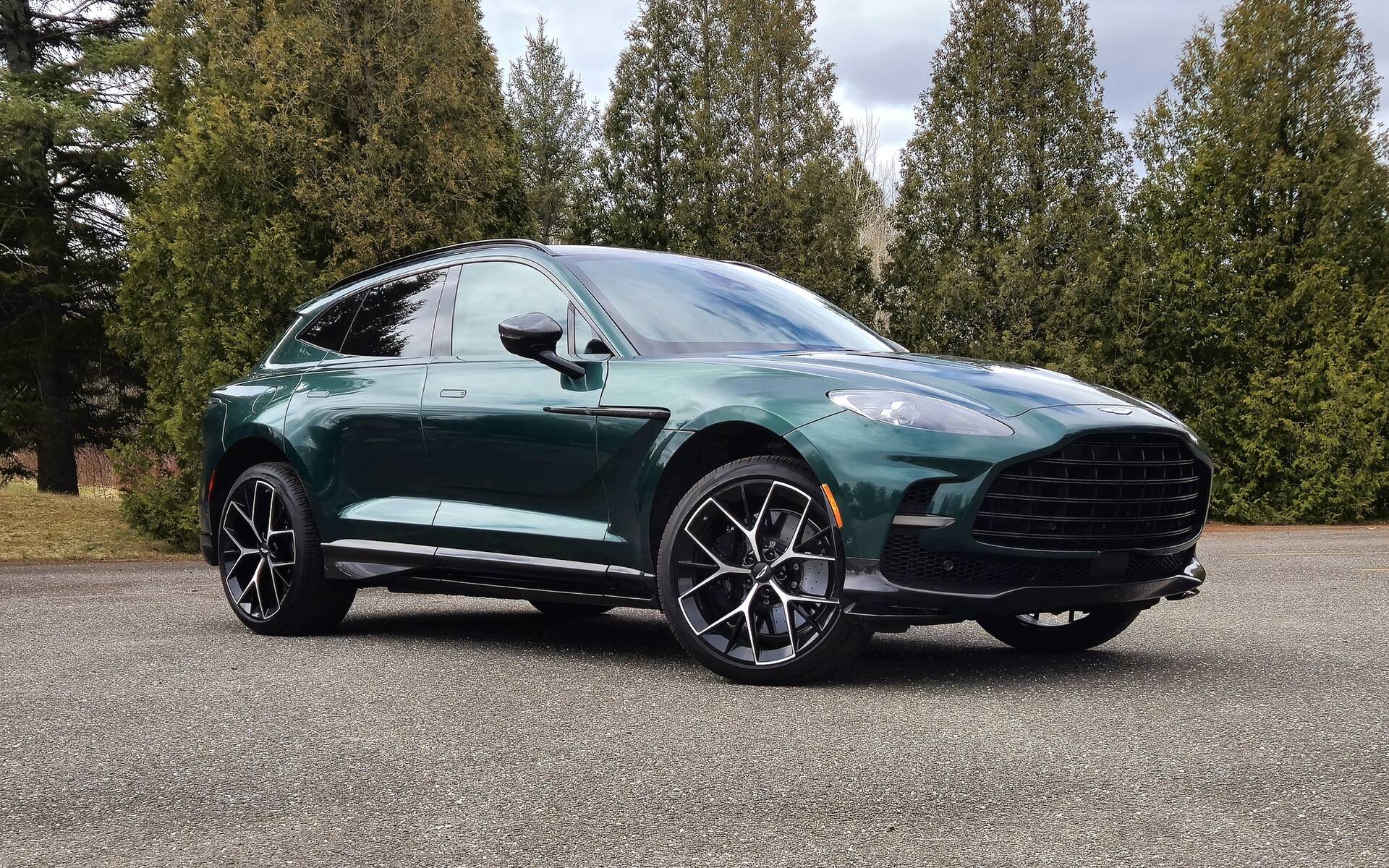
The heat is on in the exotic, high-power SUV segment. In order to keep up with the likes of the Ferrari Purosangue and Lamborghini Urus SE, not to mention the Porsche Cayenne Turbo GT/Turbo E-Hybrid, BMW XM Label Red and Audi RS Q8 Performance, Aston Martin first decided to eliminate the 542-horsepower version of its masterful DBX, retaining only the stronger-selling, 697-horsepower DBX707.
Then, the British manufacturer recently announced the addition of the DBX S—lighter, more expressive and with 20 extra horsepower—for the 2026 model year. Obviously, that one’s going to be a real treat, but for now let’s focus on the 2025 model, which benefits from a few tweaks and enhancements yet has some more work to do.
- Also: 2026 Aston Martin DBX S Sheds Weight, Packs 717 Horsepower
- Also: 2025 Aston Martin DBX to Come Exclusively With 697 Hp, New Interface
$121,000 Worth of Options
Before we go any further, it's important that you realize the full measure and value of the DXB707 entrusted to us for this spring test. While the manufacturer’s suggested retail price of $300,100 is one thing, the list of options totalling nearly $121,000 is quite another. Add to that the inevitable taxes, including the federal luxury tax, and you're looking at a bill of more than half a million dollars.
The signature Malachite Green body colour ($7,900) and various carbon fibre exterior accents ($37,300) accounted for a good chunk of that six-figure premium. Let’s not forget the striking 23-inch Fortis wheels ($9,200), Forest Green semi-aniline leather interior by Q ($8,700) or the powerful 23-speaker Bowers & Wilkins audio system ($15,000). And while Aston Martin and towing don’t usually go hand in hand, our tester featured a two-inch receiver ($3,600).

Racy Looks Still Turning Heads
Now in its fifth year on the market, Aston Martin's SUV offers updated colour and wheel selection, the spoiler above the rear window fully matches the rest of the body, and a new mirror design with improved, fully integrated cameras supports the 360-degree parking camera functionality, among other things.
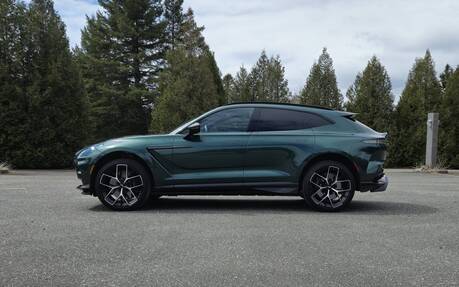
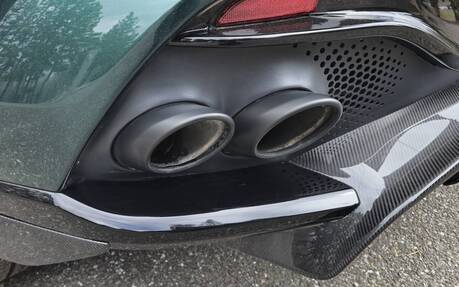
Of course, when it comes to styling, there's something for everyone in this select club. The DBX707 boasts a unique and properly flamboyant silhouette, from the gaping, in-your-face front grille (which some people may understandably not like) to the ducktail rear spoiler, and everything in-between such as the hood scoops, large vents on the front fenders and prominent diffuser in the rear. The headlamps could do with a redesign, in our opinion, and while the flush door handles make for a cleaner appearance, the same cannot be said about the roof rails—a required appendage on the most utilitarian of all Aston Martins.
Improved New Interface
The biggest change can be found inside the DBX707. Aston Martin has addressed one of the main issues with its SUV, namely the human-machine interface. Gone is the frustrating touchpad inherited from Mercedes-Benz. Also, the transmission buttons atop the dashboard are replaced by a stubby yet handy shifter on the console, and other controls are more conveniently and more elegantly arranged than before.
The company’s new infotainment system, which first debuted in the DB12, is a major improvement and pretty easy to use—when sunlight doesn’t get in the way, that is. The 10.3-inch touchscreen also has that unpleasant habit of showing fingertips all over it, and while wireless Apple CarPlay compatibility is included, Android Auto still requires a USB cable. For those users, having a more readily accessible wireless charging pad for 2025 feels bittersweet.
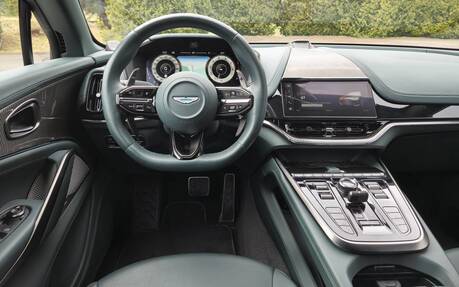
The new steering wheel has a more modern look, but the tiny touch-sensitive controls on it should definitely be replaced by physical controls, if you ask us. We love the attractive 12.3-inch digital instrument cluster, even though a head-up display is missing. Redesigned air vents and door handles round out the interior.
707: A Licence to Thrill
Aston Martin is often associated with James Bond a.k.a. 007 due to the cars used in several movies, so we don’t really blame people forgetting that the DBX707’s name comes from its output expressed in metric horsepower (707 PS = 697 hp). Derived from Mercedes-AMG, the twin-turbo 4.0-litre V8 and nine-speed automatic gearbox remain unchanged for 2025, so acceleration from 0-100 km/h still takes 3.3 seconds. For owners who drive on German autobahns or fancy a trip to the race track, top speed is 310 km/h.
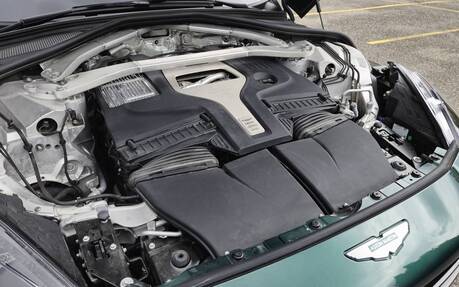
The engine fires up with modest or serious fanfare depending on whether you press and hold the left-hand steering wheel paddle or not when pushing the start button. Alternatively, you can amplify the sound coming from the active exhaust system at any time with a simple click on the console or by activating Sport+ mode. The latter makes the DBX707 particularly explosive and frantic, so you need to choose your opportunities carefully... and keep both hands firmly on the steering wheel, especially when taking off from a standstill as the massive power delivery to the rear axle causes the vehicle to prance.
Whatever the drive mode (GT and Sport are two other options), every acceleration becomes an event—and a treat for the ears. We wish Aston Martin would expand the rev range where the 664 lb-ft of maximum torque are available (2,750-4,500 rpm) and reduce turbo lag in the process, but the DBX707 has plenty of firepower to respond to an insistent right foot, no doubt about it.
50 Shades of Firmness
We have to thank Aston Martin engineers for revising the suspension with new calibration for the electronic dampers and air springs, which results in better handling in spirited driving. At any time, you can easily adjust the firmness of the suspension using the dedicated button on the console. Incidentally, the DBX707 also includes an Individual mode that allows you to set the powertrain, exhaust, damping and steering according to your preferences and road conditions. As for the seats, they are beautifully sculpted up front, but unfortunately not that comfortable in the rear.
While the steering wheel has a good feel and the vehicle is more agile than its size would suggest at first glance, aided by the high-performance Pirelli Scorpion Zero tires (285/35ZR23 front, 325/30ZR23 rear), the ride is fairly stiff on anything other than slick asphalt. On many roads across Canada, and Quebec’s in particular, this is a major problem most of the time. From our experience, that stiffness also brings out some undesirable and inexcusable noises and creaks for such an expensive vehicle. In our opinion, the DBX707 could do better in terms of comfort and build quality. Smaller wheels usually help in that regard, but the standard ones come in at 22 inches.

Our Verdict
Before we wrap up this review, a word about fuel consumption (in case you're interested). The official NRC ratings are 12 L/100 km on the highway, 15.7 L/100 km around town and 14 L/100 km combined. We easily beat the first figure with a score below 11 L/100 km, and by the end of the week, the computer was reading 13.8 L/100 km. Granted, a good part of the test drive took place on Highway 20 between Montreal and Quebec City, but we also didn't shy away from stomping on the gas pedal at every opportunity, as most owners surely would.
It’s safe to say that no one really needs such a brawny, high-performance SUV—without any form of electrification on top of that. However, the prestige and exclusivity brought by the Aston Martin DBX707 (which costs at least twice as much as a Dodge Durango SRT Hellcat and about half as much as a Ferrari Purosangue, both with similar power ratings) carry a lot of weight. Also, depreciation should be slower now that the old base model is gone.
You may never get the opportunity to sit in a Formula One car, but you can drive the series’ official medical car. #braggingrights
| Test drive report | |
| Test model | 2025 Aston Martin DBX |
|---|---|
| Trim level | 707 |
| Price range | $302,100 |
| Price as tested | CA$425,600 |
| Warranty (basic) | 3 years/unlimited |
| Warranty (powertrain) | 3 years/unlimited |
| Fuel economy (city/highway/observed) | 15.7 / 12.0 / 13.8 L/100km |
| Options | Bowers & Wilkins Audio System, Signature Metallic Paint, Gloss Black Grille, Contemporary Alcantara Headlining, Q Special Leather Colour, Acoustic Privacy Glass, Dark Chrome/Carbon Interior Jewelry Pack, Smoked Taillamps, Twill Carbon Fiber Upper Exterior Pack, Carbon Fiber Lower Exterior Pack, Inspire Sport Monotone Interior, Twill Carbon Fiber Trim Inlay, 2-inch Tow Hitch Receiver, 23” Fortis Wheels |
| Competitive models | Bentley Bentayga, BMW XM, Ferrari Purosangue, Lamborghini Urus, Mercedes-Benz G-Class, Rolls-Royce Cullinan |
| Strong points |
|
| Weak points |
|
| Editor's rating | |
| Fuel economy | The lack of electrification doesn’t help, but the DBX707 is more fuel-efficient than many rivals. |
| Comfort | It all depends on road conditions. Some irritating noises marred our experience. |
| Performance | Hard to ask for more. The DBX707 is one of the most explosive SUVs on the planet. |
| Infotainment | The system was improved for 2025, but the screen layout sometimes makes it hard to read. Wireless Android Auto is not available. |
| Driving | Ferociously stable yet surprisingly nimble, the DBX is a joy to drive. |
| Overall | We dig the looks, prestige and performance, not so much the harsh ride and outrageously priced options. |