Electric Ford Bronco Revealed, But This One’s Not For Us

While Ford is scaling back its EV ambitions here in North America, one of its flagship models is going fully electric over in China.
Slated to hit the market this winter, joining the Mustang Mach-E that’s already on sale there, the so-called Bronco New Energy is revealed today via a series of pictures and specs shared by China's Ministry of Industry and Information Technology.
- Also: Ford Recalls 160,000 Vehicles in Canada, Bronco Hit Four Times
- Also: 2025 Ford Bronco Sport : Now With More Bronco!
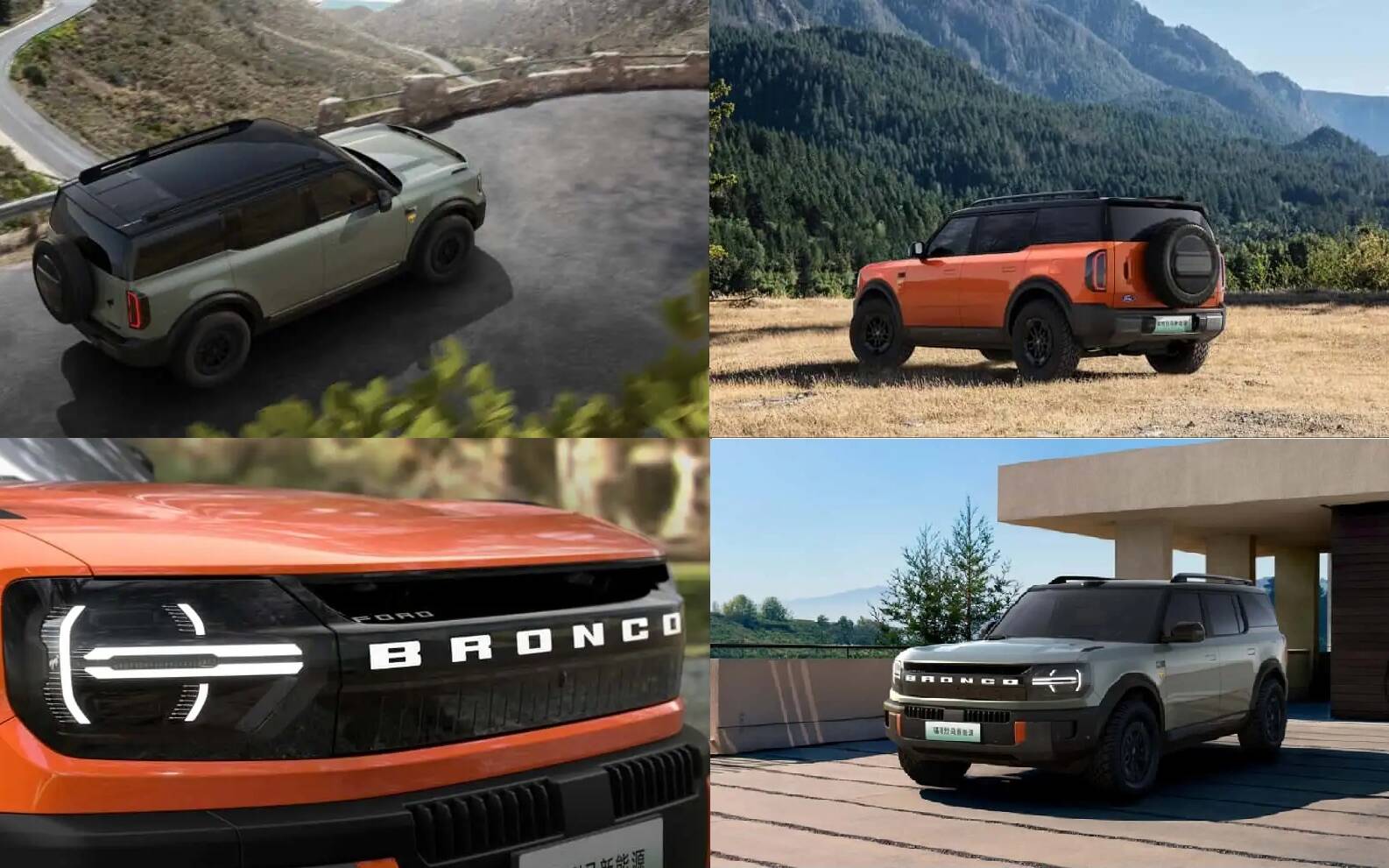
Designed by Ford's Chinese partner Jiangling Motors, the vehicle is perhaps closer to the Bronco Sport in terms of styling (except for the side-opening tailgate on which the spare tire is mounted), but its size is definitely comparable to that of the rugged Bronco. In fact, the 2,950mm wheelbase is identical. It’s not a direct rival to the Tesla Model Y, for sure.
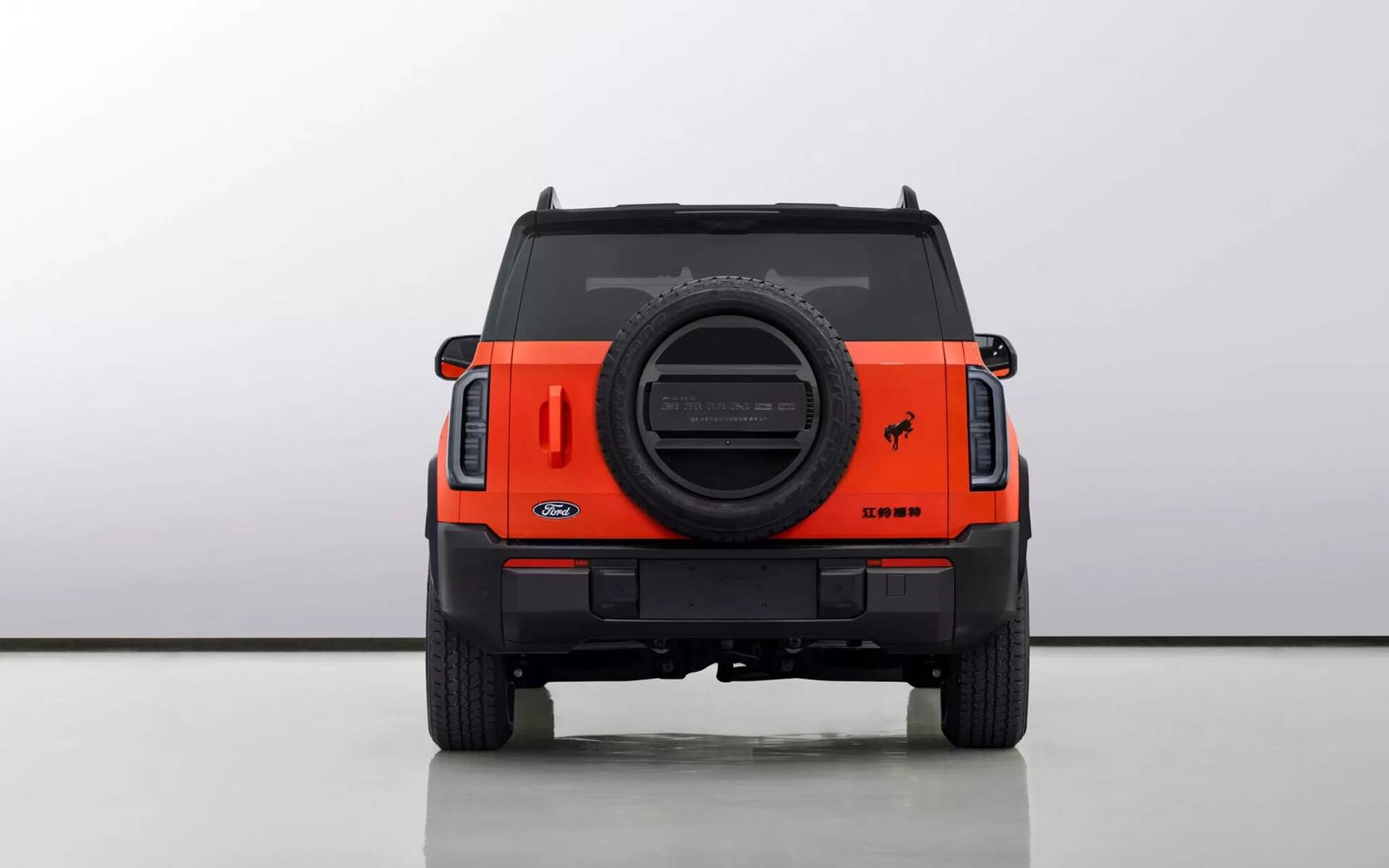
It's not clear whether the doors and/or roof are removable. However, some images show a glass roof with a Lidar sensor on top.
The body and tracks are wider than those of most of gar-burning Broncos, while the weight of 2,630 kg trumps all models, even the Bronco Raptor. From what we’re able to tell, there will be an extended-range (EREV) variant that uses a smaller battery and tips the scales at just 2,510 kg.
More precisely, the EREV has a 43.7kWh battery that is said to provide a pure electric range of 220 km according to the highly optimistic Chinese standards. Once it runs out of electrons, a turbocharged 1.5-litre engine acts as a generator. Meanwhile, the all-electric Bronco uses a 105.4kWh battery and is reportedly capable of driving 650 km on a full charge.
Power outputs are 241 hp and 271 hp, respectively, which is less than the 275-418 hp delivered by conventional Bronco models. Other specs such as torque and towing capacity are not yet available. Incidentally, it appears this new Bronco comes with front-wheel drive only. Oh, and there are no shots of the interior.
Still, do you think customers in North America would embrace such an SUV? Unfortunately, we'll have to wait until the next decade to find out.