2025 Lotus Emira: When Passion Prevails
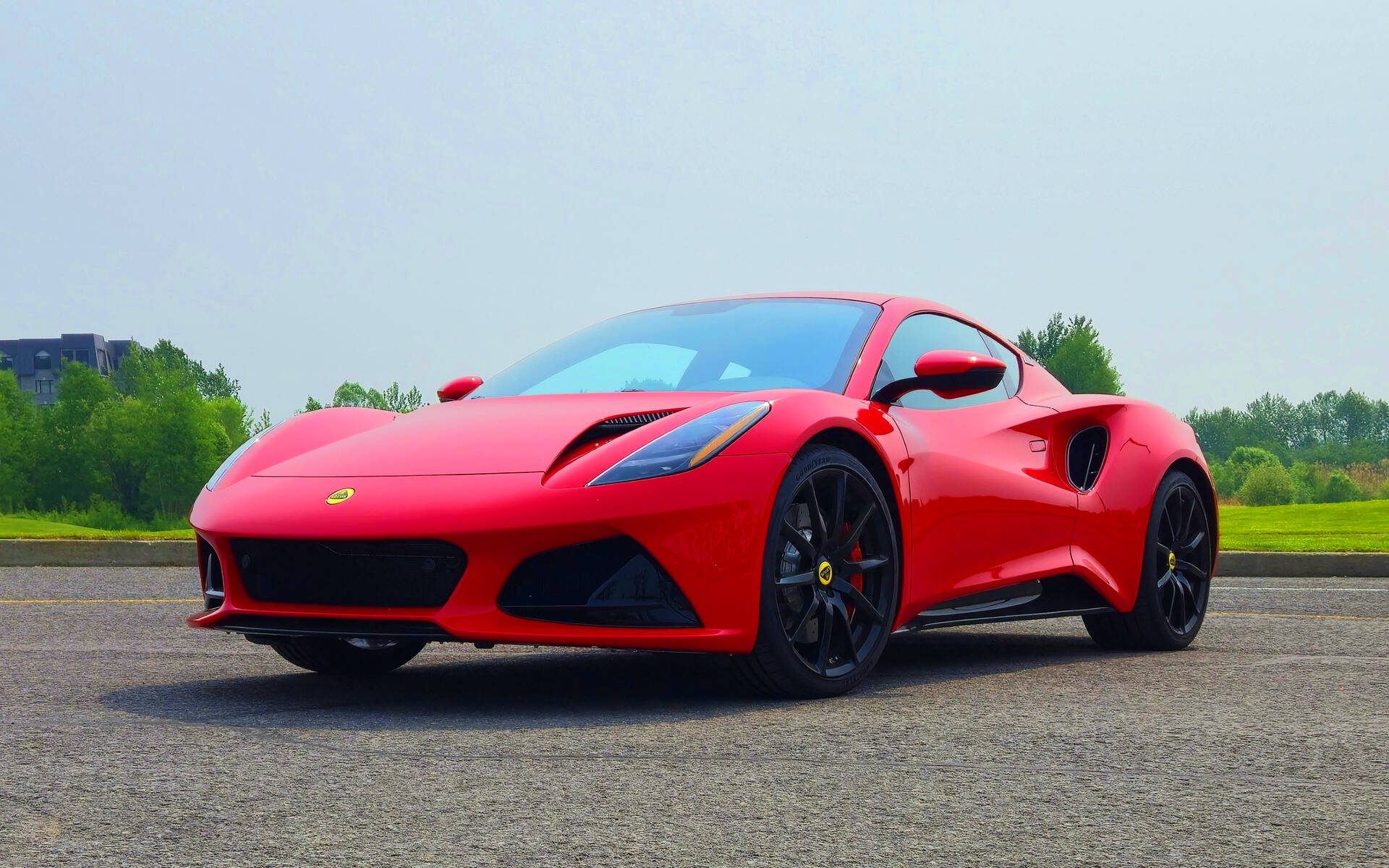
The evolution of sports cars from British manufacturer Lotus has led us to the Emira, unveiled four years ago (but launched in Canada in 2023) as an exclamation point on the combustion era. However, the small mid-engined coupe that replaced the Evora will play a bigger role than expected given the irrationality of importing models such as the Eletre and Emeya to North America due to the 100-percent tariffs on electric vehicles made in China.
Remember, Lotus is owned by Chinese giant Geely. Despite record global sales in 2024, the company is experiencing major financial difficulties, which has led to numerous rumours including the imminent closure of the Hethel plant in England, quickly denied by management. One thing is certain: all options must be explored in order to remain afloat and competitive. Believe it or not, that even includes replacing the Toyota-sourced, supercharged V6 in the Emira with a V8 engine—which would be a first since the end of the Lotus Esprit in 2004—because the former will not comply with the upcoming Euro 7 emissions standards (effective November 2026).
- Also: Manual Gearbox to Survive in These Vehicles for 2025
- Also: Lotus Theory 1 is a Stunning Three-Seater Concept With Unreal Tech
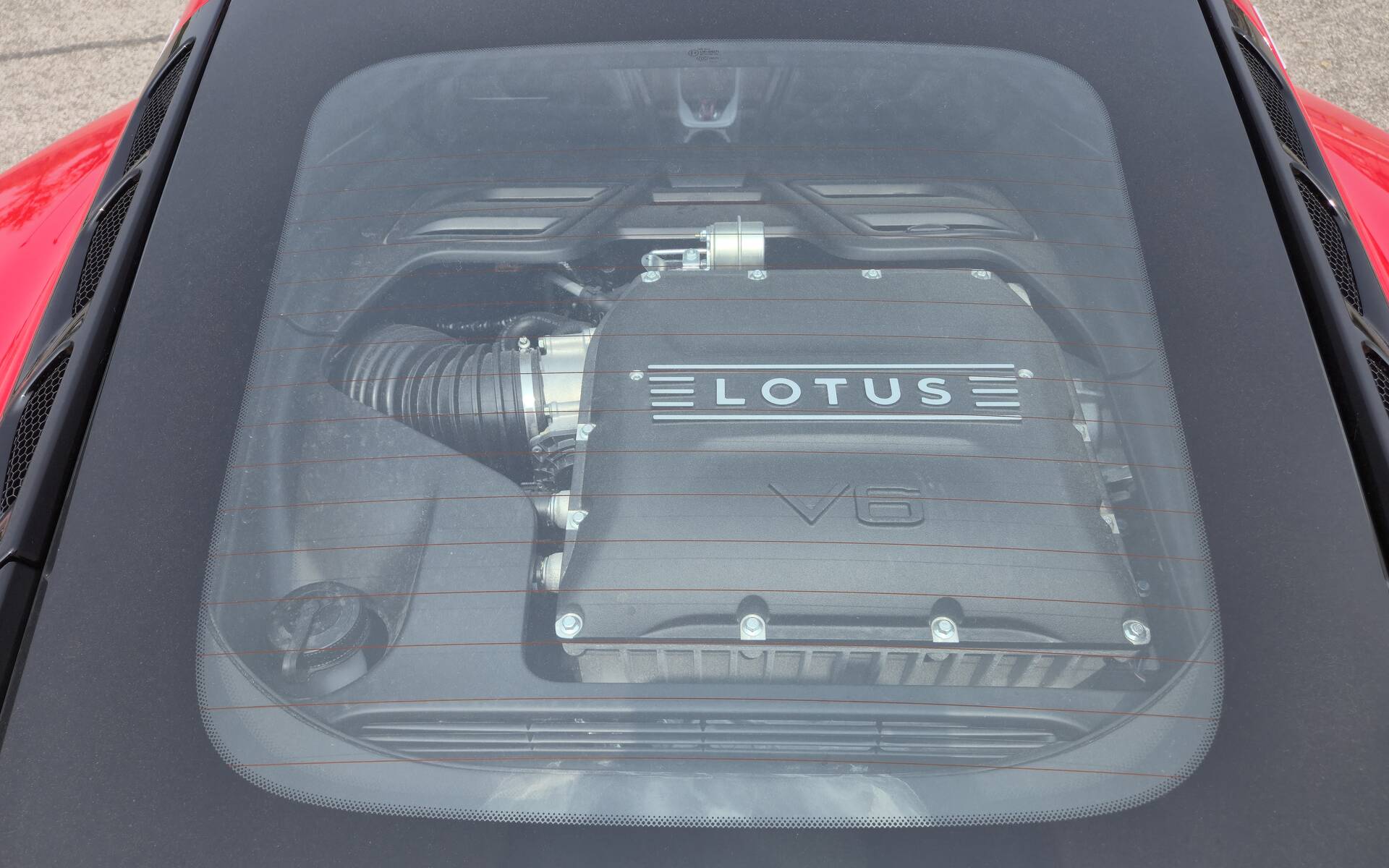
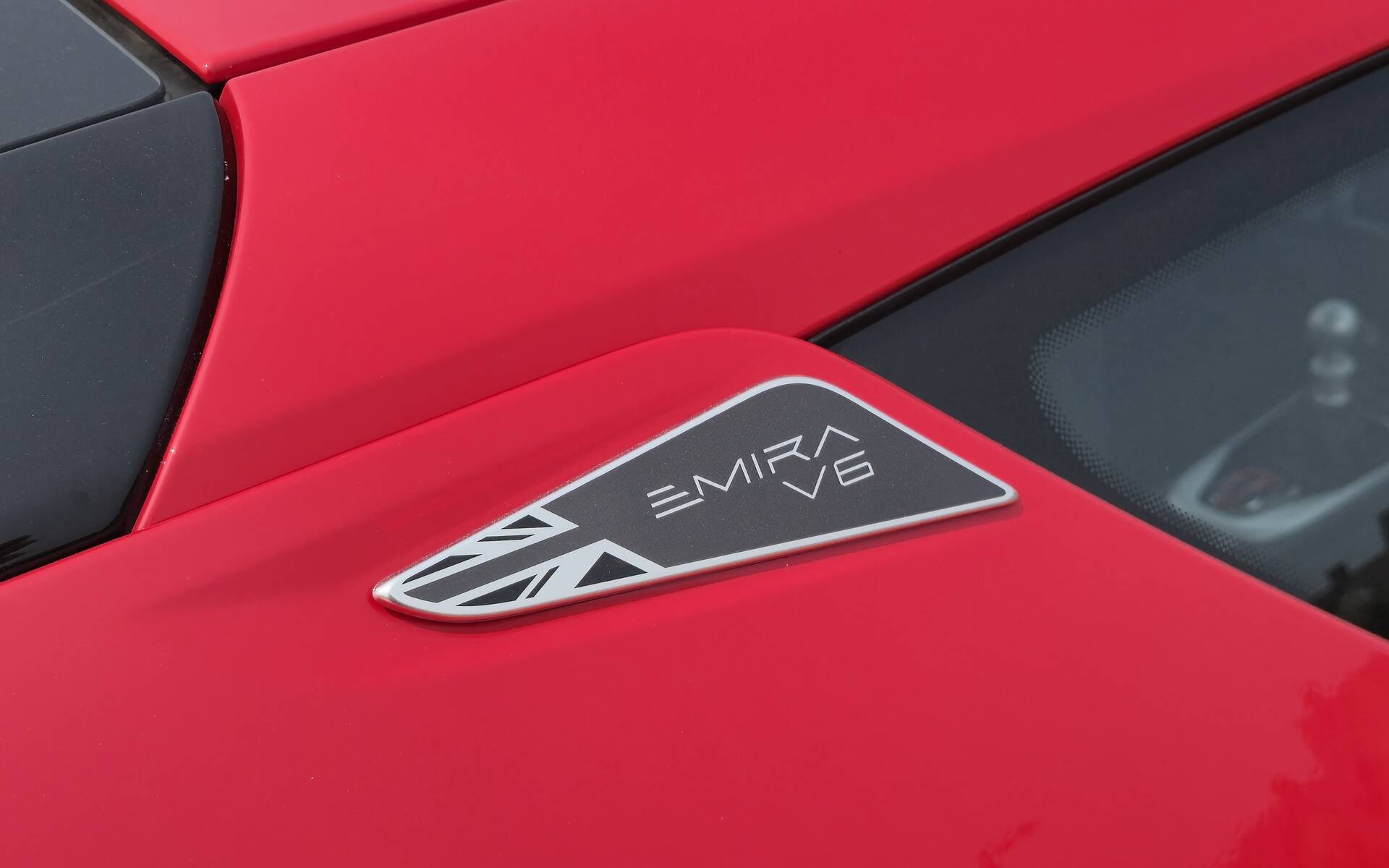
Until then, the Japanese six-cylinder engine continues to be the preferred choice of a majority of customers, especially in the United States but also in Canada. It’s the one that was found under the rear window of the 2025 Lotus Emira we tested earlier this summer.
Addictive
As you know, Lotus has built its reputation with ultra-lightweight cars, so we understand why some customers turn to the turbocharged 2.0-litre four-cylinder from Mercedes-AMG. It’s lighter, packed with a solid 360 horsepower (and similar torque), almost as quick and more fuel-efficient. However, the experience isn't the same for several reasons.
Unlike the smaller mill, which only comes with an eight-speed dual-clutch transmission and excels at medium revs (3,000-5,500 rpm), the Emira's supercharged 3.5-litre V6 is available with a six-speed manual or automatic gearbox and needs to be pushed to nearly 7,000 rpm (6,800 to be exact) in order to extract all 400 horsepower. Peak torque, meanwhile, is rated at 310 or 317 lb-ft depending on the transmission.
The official figures reveal an improvement of just one or two tenths of a second in the 0-100 km/h sprint, but the V6’s intoxicating sound makes it more rewarding to exploit, especially with the stick shift and the active exhaust that automatically kicks in when Track mode is selected. Furthermore, throttle response is immediate regardless of engine speed.
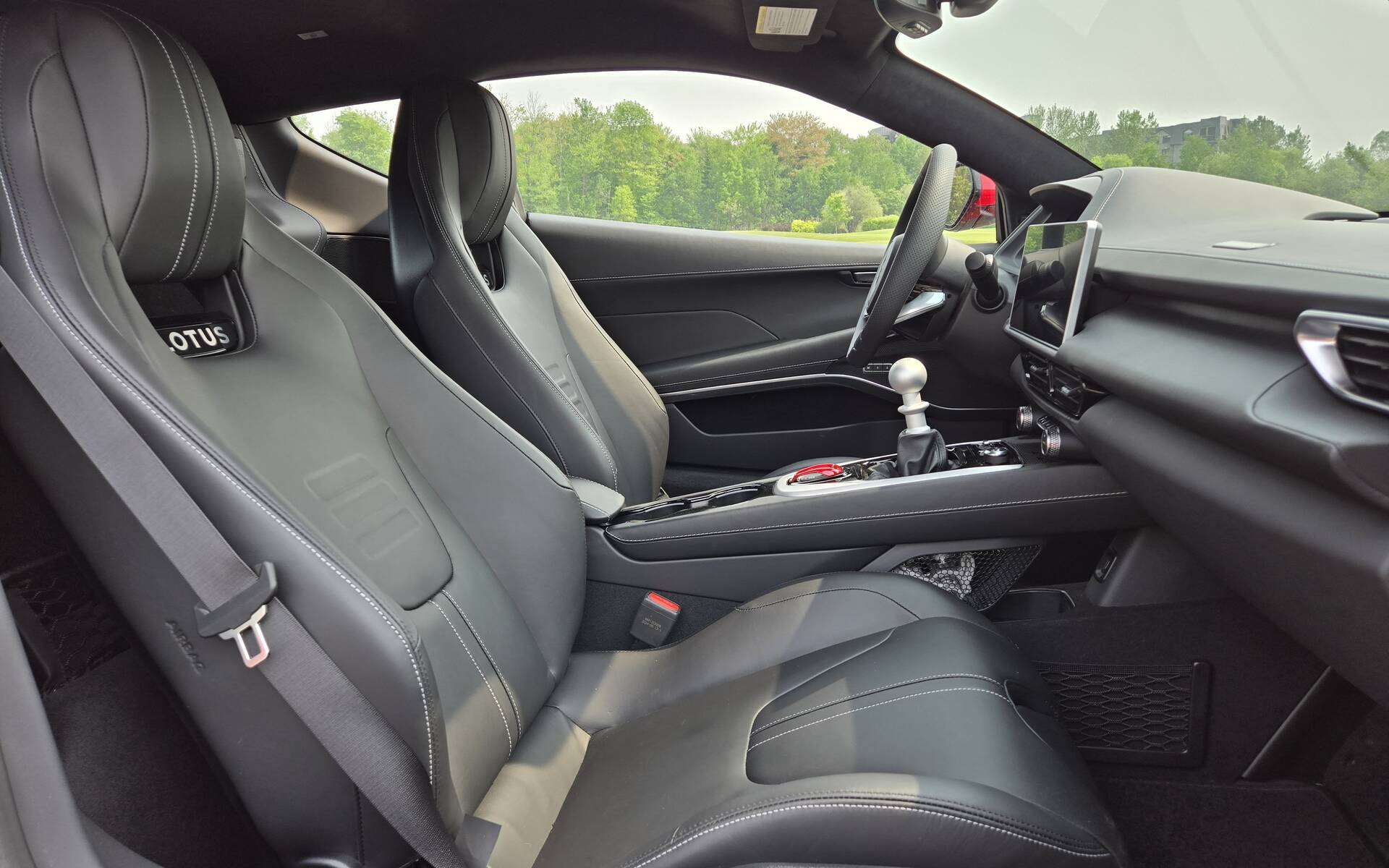
Granted, the heavier engine adds a bit of understeer on the track when the car is not equipped with the sports suspension, as The Car Guide found in a previous test drive at Mécaglisse in Notre-Dame-de-la-Merci, Quebec. But how exhilarating it is to rev the V6, to play with the smooth clutch, to grab the ball-type shift knob (although the shifter can be jerky at times), and to watch in the rearview mirror as the engine butterfly does its thing under acceleration—a detail that will not escape purists, just like the exposed shifter mechanism behind the mesh on the centre console.
On the flip side, and if you care at all, the Emira's V6 is quite thirsty, averaging 19 mpg (12.3 L/100 km) according to the official EPA fuel consumption rating in the United States (Natural Resources Canada does not publish figures for Lotus). Our latest yet all-too-brief test doesn't give a good enough picture, but know that other sports cars with comparable power burn less fuel.
One of a Kind
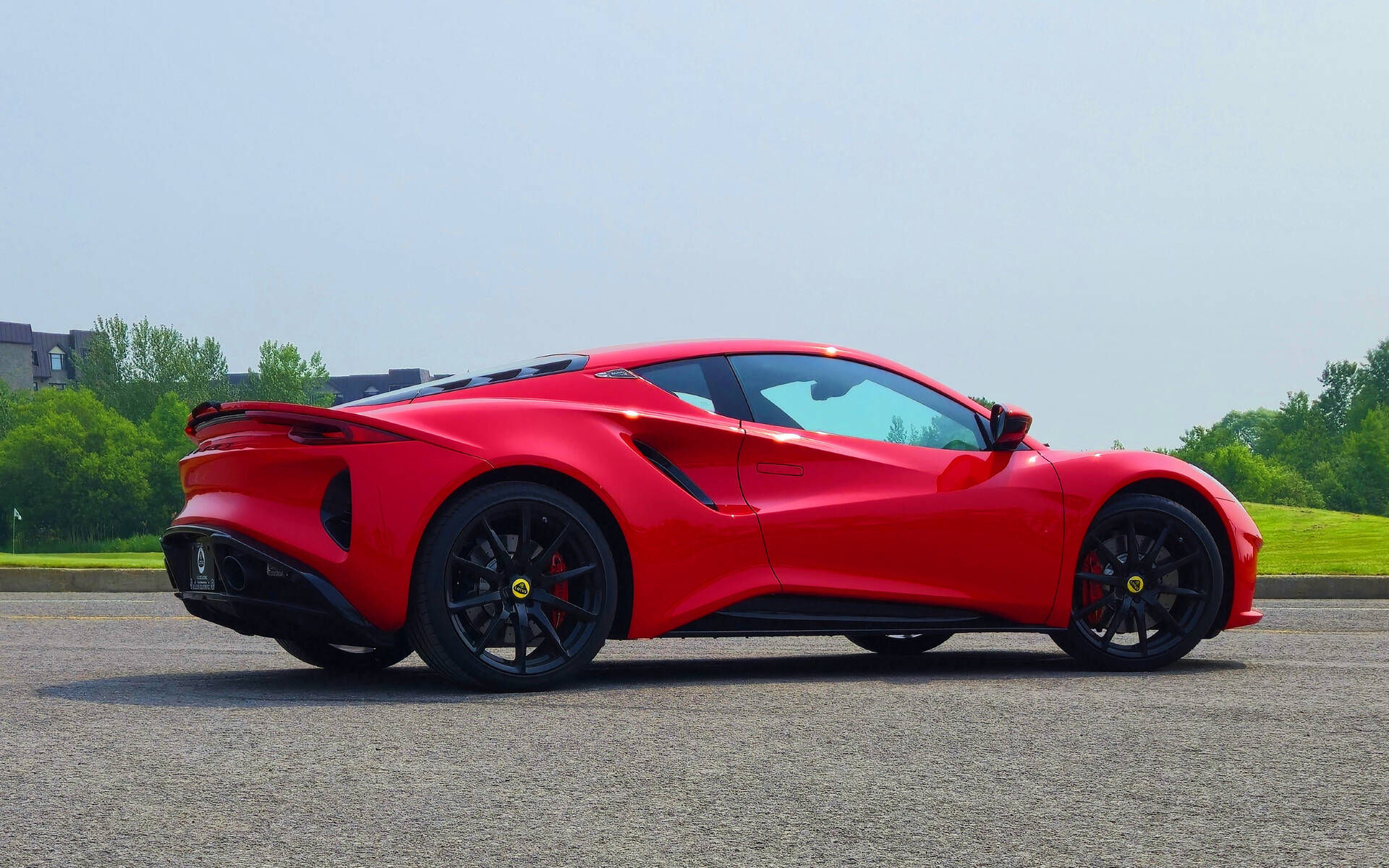
Although modern safety standards and other requirements have added significant weight compared to previous Lotuses and its main rival, the Porsche 718 Cayman, the Emira remains one of the lightest sports cars in the segment. More mature and more sophisticated than its predecessors, it also sports a sexier silhouette, in our opinion. Getting in and out is no hard task, either.
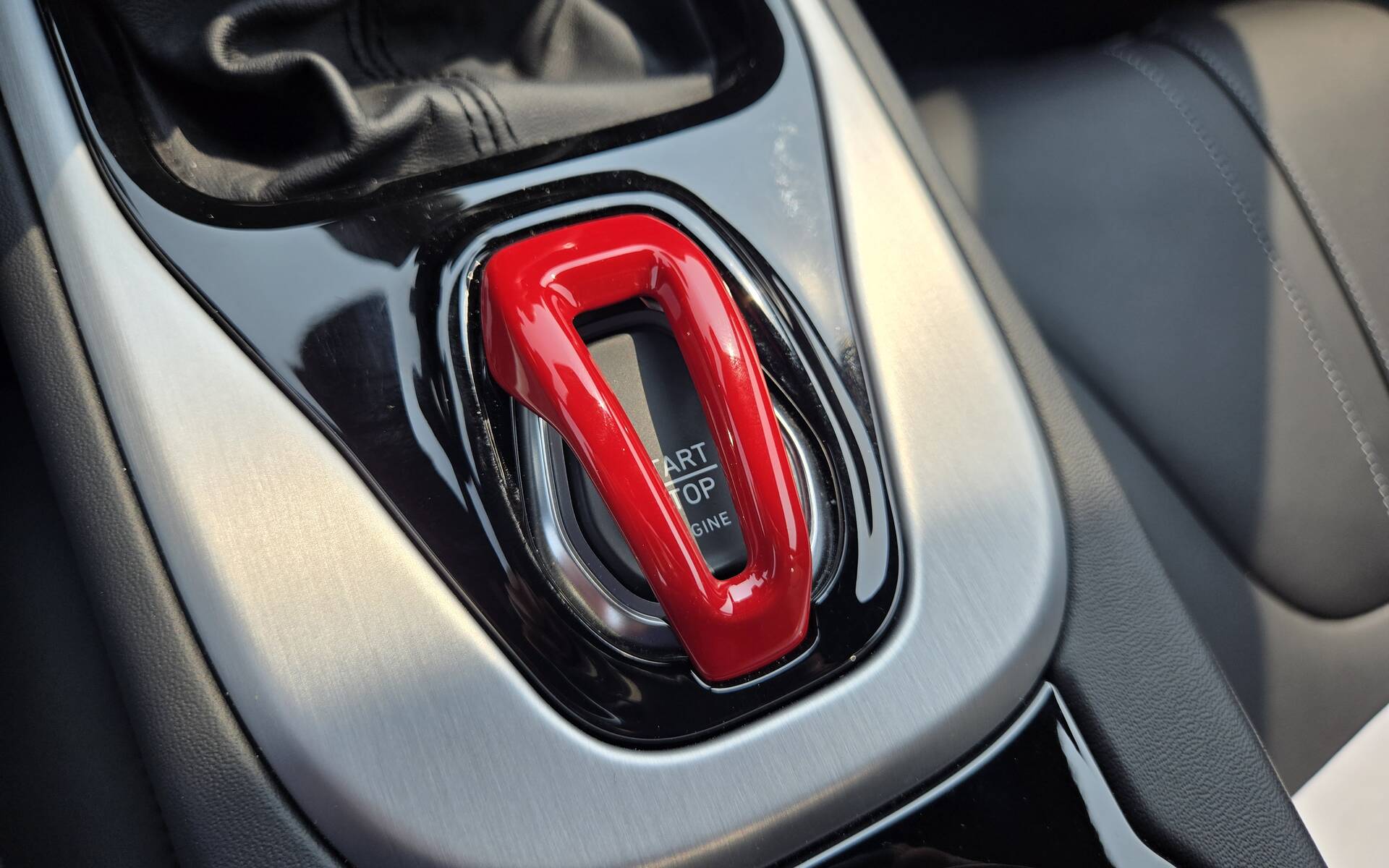
Nestled in a supportive seat (with a low hip point) that's more comfortable than you'd expect, the driver enjoys an ergonomic driving position and excellent visibility to the front and sides (it’s a slightly different story in the rear, obviously). Awakening the engine requires lifting a red cover that protects the start/stop button, as if you were about to launch a missile. We think it’s cool, others may not agree.
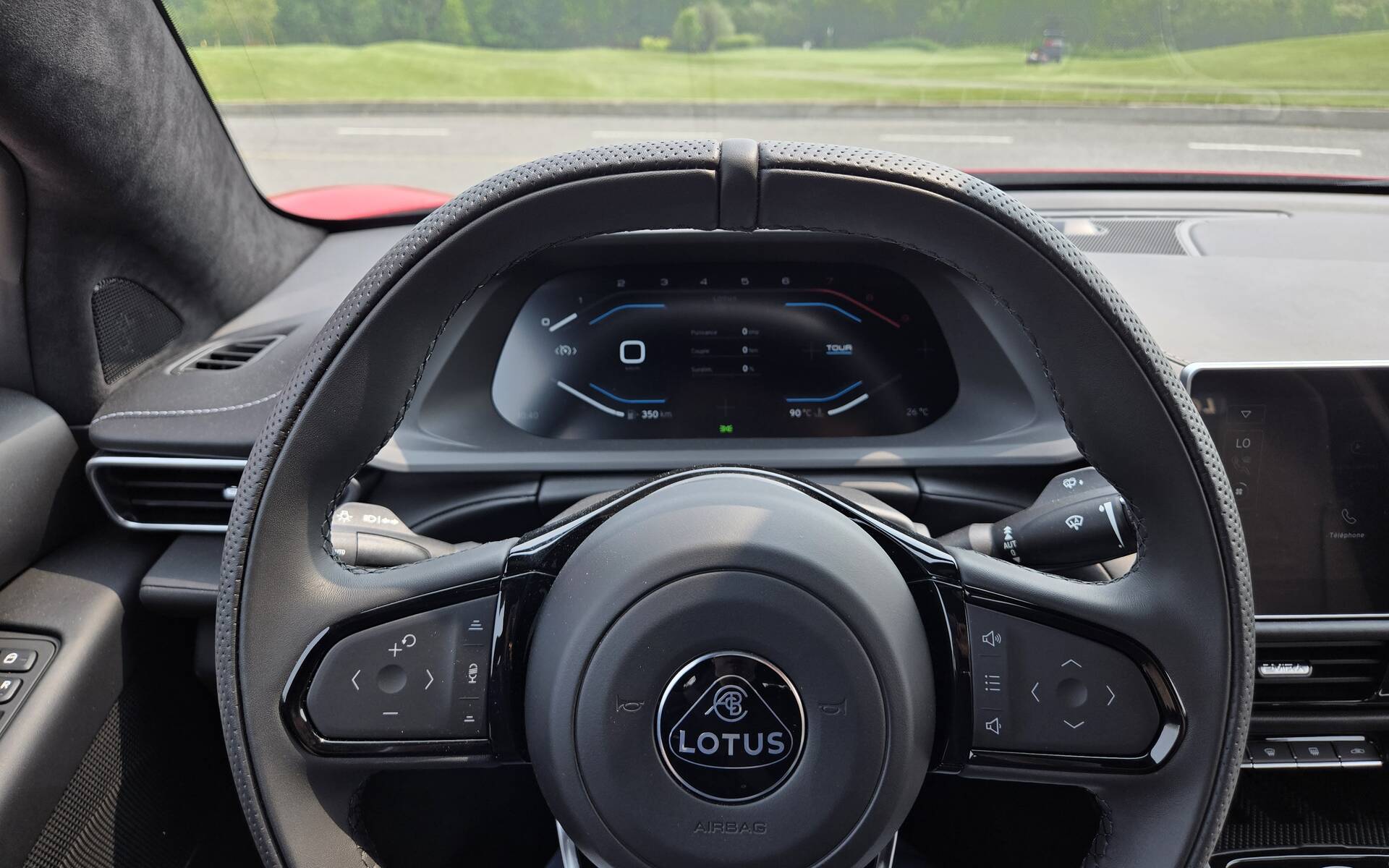
Higher up, the centre touchscreen is depressingly plain (nearly bordering on obsolescence) but allows quick access to the various settings. We found ourselves not paying attention to it most of the time, instead focusing on the road and driving. Isn’t that what Lotus is all about? The ultra-rigid and communicative chassis makes it easy to attack and savour every corner without any fear of going over the limit.
Away from the track, we preferred to engage Sport mode, or even Touring, in order to benefit from a better balance between performance and comfort, especially when traffic and speed limits slow down. The steering wheel is mostly perfect except for a few confusing buttons. Above all, it’s connected to a good old hydraulic steering (for real) that’s a marvel of precision and feedback—a refreshing contrast with today's electrically assisted systems. It does require a little more effort, of course, but in retrospect, nothing else pleased us more inside the Emira.
Our Verdict
Lotus' exotic coupe isn't exactly aimed at the same customers as a Chevrolet Corvette or BMW Z4. Starting at $126,900 (or $134,900 with the V6), it's also significantly more expensive than the Toyota GR Supra and Nissan Z despite offering similar output. As mentioned earlier, its closest competitor is the 718 Cayman, but this model will cease production in October so that Porsche can focus entirely on its electric successor.
Sure, we don't have the pure, extremely lightweight Lotuses we used to have anymore. Welcome to 2025. Still, the Emira remains an exciting toy delivering all kinds of thrills. A consolation prize if you can't afford a McLaren? Maybe. It certainly turns heads and gets the adrenaline pumping. Availability is limited, however, and resale value included, you may not get as much bang for your buck as you would with a Porsche or Corvette. Think of it as a more emotional purchase than a rational one.
| Test drive report | |
| Test model | 2025 Lotus Emira |
|---|---|
| Trim level | V6 (man) |
| Price range | $126,900 – $138,431 |
| Price as tested | CA$134,900 |
| Warranty (basic) | 3 years/60,000 km |
| Warranty (powertrain) | 3 years/60,000 km |
| Fuel economy (city/highway/observed) | 14.7 / 9.8 / N/A L/100km |
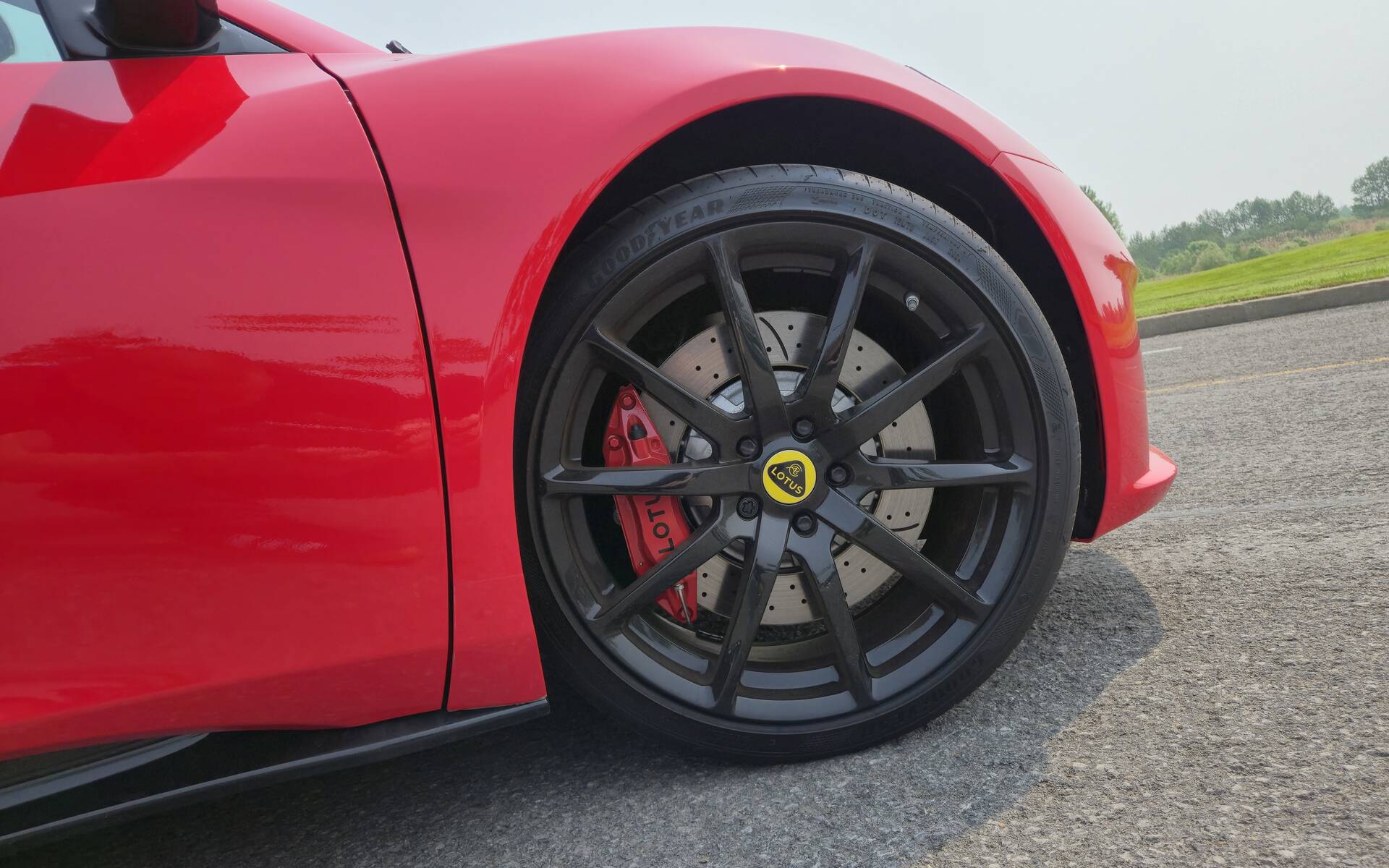
| Options | Extended lower black pack ($610), 20-inch, 10-spoke gloss black cast alloy wheels ($675), 2-piece high-performance brake discs with red callipers ($810) |
| Competitive models | BMW Z4, Chevrolet Corvette, Nissan Z, Porsche 718 Cayman, Toyota GR Supra |
| Strong points |
|
| Weak points |
|
| Editor's rating | |
| Fuel economy | Our all-too-brief test drive doesn't give us a clear picture. Officially, the V6 with manual transmission achieves 12.3 L/100 km on average, which leaves something to be desired. |
| Comfort | The seats aren't too firm, but the ride becomes stiff as soon as the road surface deteriorates. |
| Performance | Choose the V6 for sound, power and instant throttle response. |
| Infotainment | Undoubtedly a weak point of the Emira. |
| Driving | So fun thanks to a cleverly designed driving position, plus an engine and steering that provide a lot of thrills. |
| Overall | Exotic looks and an equally exotic driving experience… at a price. |