New Chip Supply Issue Has Ripple Effect on Canada
A supply issue involving semiconductors—electronic chips essential to the operation of multiple vehicle systems—is not only affecting Volkswagen, as we reported last week, but also other automakers.
Unlike the shortage that rocked several industries, including auto, during the COVID-19 pandemic, the issue this time stems from a trade war involving China.
- Also: Another Chip Shortage Threatens Production of Several Volkswagen Models
- Also: These Car Brands Have the Most Loyal Customers in 2025
Let's briefly review the facts: chip supplier Nexperia, based in the Netherlands but owned by a company (Wingtech Technology) that’s partly controlled by the Chinese government, was taken over on September 30 by Dutch authorities (under pressure from the U.S. administration) citing governance problems and intellectual property concerns. China was still able to order Nexperia to stop exporting semiconductors as a form of retaliation.
Negotiations have taken place between representatives of the two countries to reach an agreement, but none is expected for a while.
As a result, the Japan Automobile Manufacturers Association has warned its members that serious semiconductor shortages may be coming up. An American vehicle supplier group, MEMA, has also sounded the alarm. Canada will not be spared, as it turns out.
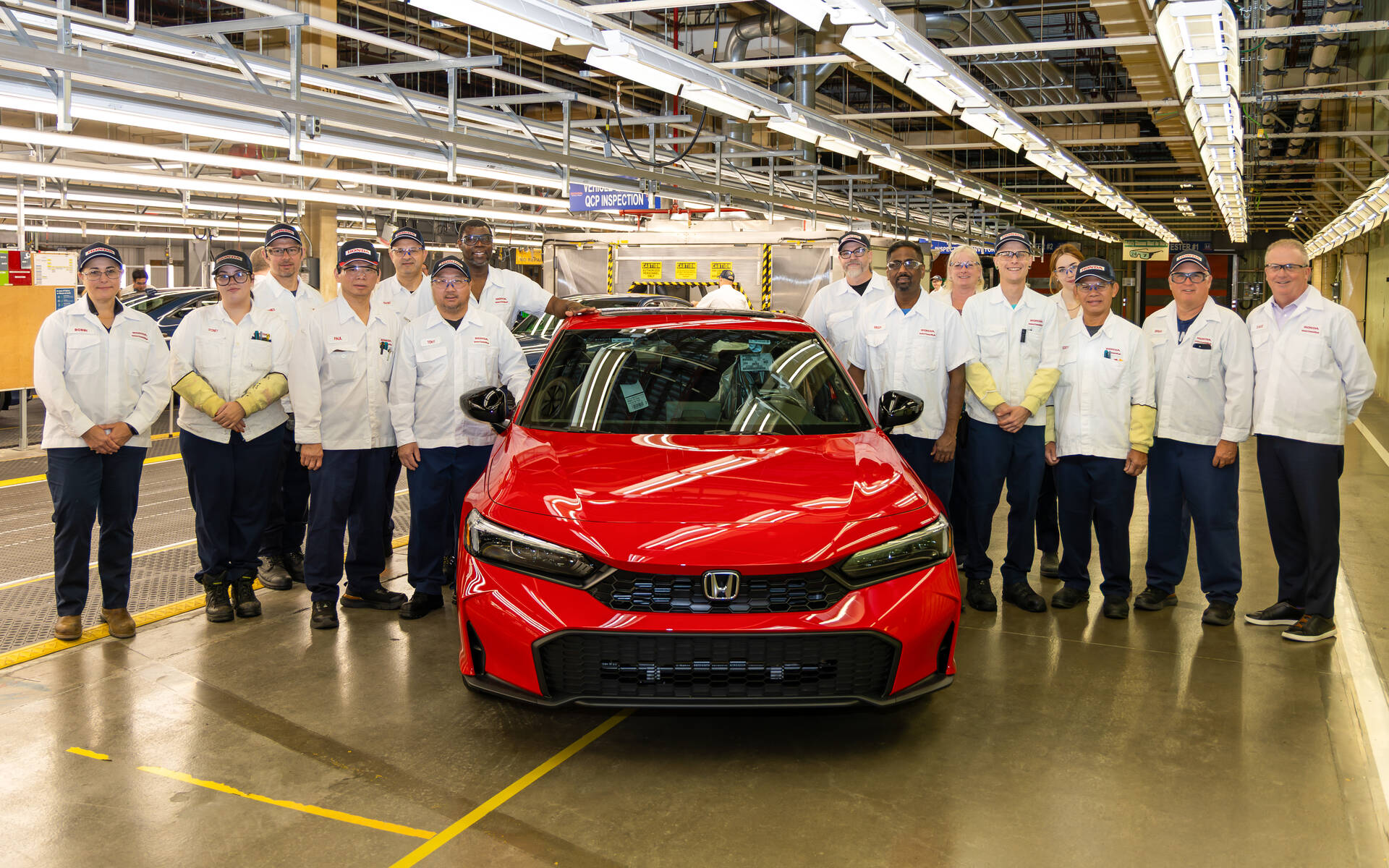
Indeed, Honda Canada executive Ken Chiu confirmed to Automotive News that production adjustments began Monday across North America. This includes the Alliston, Ontario plants. However, more specific details about the vehicles were not available. The company also did not speculate on how long the supply issues might last.
Honda builds the popular Civic and CR-V in Ontario, as well as the Accord, Pilot, Passport and Ridgeline in the U.S, not to mention several Acura models.