2026 Porsche 911 Turbo S: Electrified Weightlifter
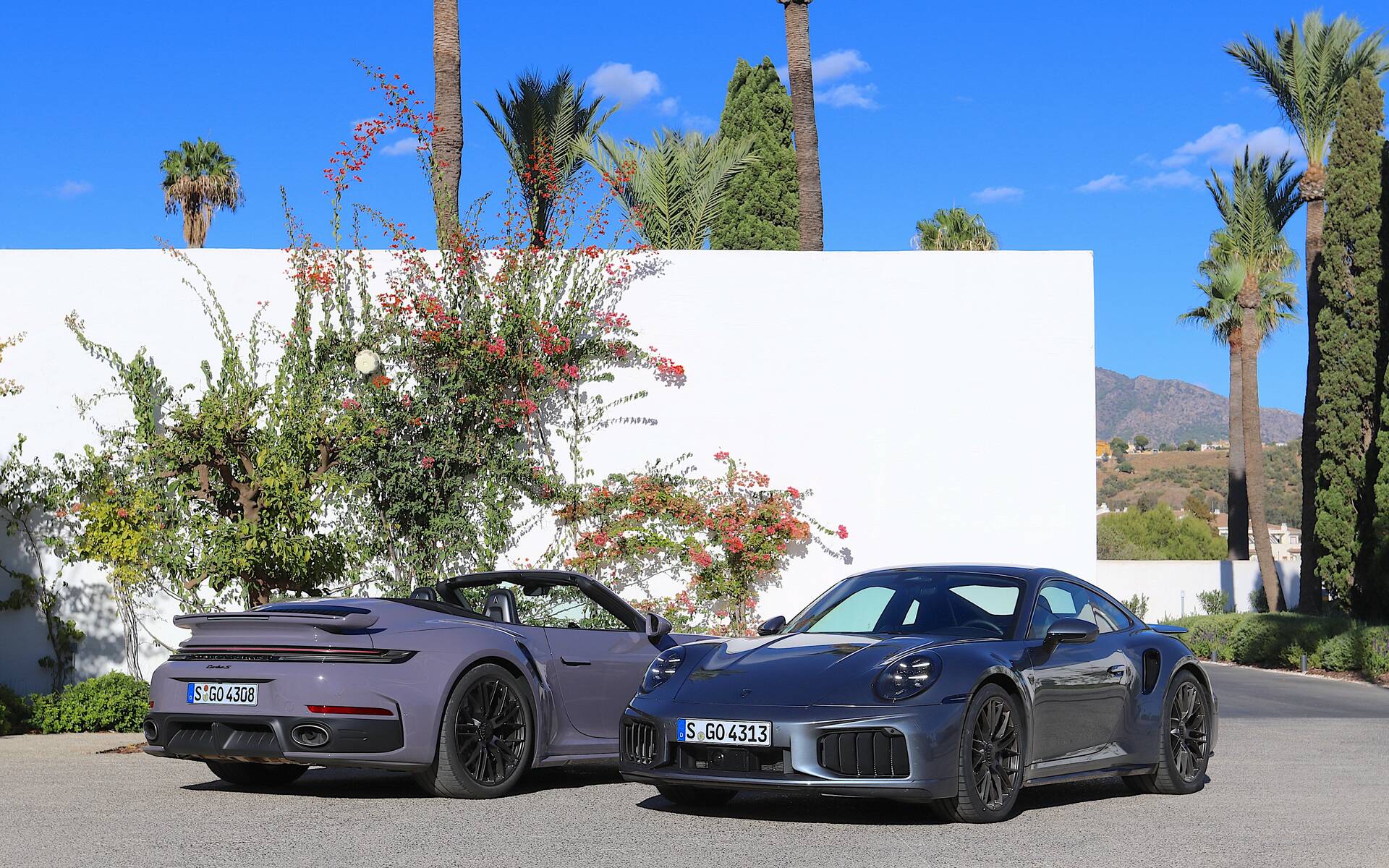
Malaga, Spain—Originally introduced in 1992 as part of the 964 generation, the Porsche 911 Turbo S has always stood at the top of the range. The latest one is no exception, boasting the most potent powertrain ever seen in a road-going Porsche 911.
For 2026, Porsche has made the decision to electrify its flagship model. The new hybrid technology, first applied to the 911 GTS T-Hybrid, puts electrification at the service of performance. It features an entirely new 3.6-litre flat-six engine paired with a dual-clutch transmission (PDK) that incorporates an electric motor, eliminating the need for a starter, alternator and accessory belts. In the GTS, the engine is boosted by a large, electrically assisted turbocharger.
- Also: 2026 Porsche 911 Turbo S Goes Hybrid, Becomes Most Powerful 911 Ever
- Also: 2026 Porsche 911 Lineup Expands With Three AWD Models
The resulting setup, which integrates an electric motor on the turbine shaft, positively eliminates turbo lag by instantly bringing the turbocharger to the correct speed. This system also does away with a wastegate, as the electric motor is used to brake the turbine and control its rotational speed. Not only that, but the turbocharger in this configuration can feed electricity back to the battery for later use.
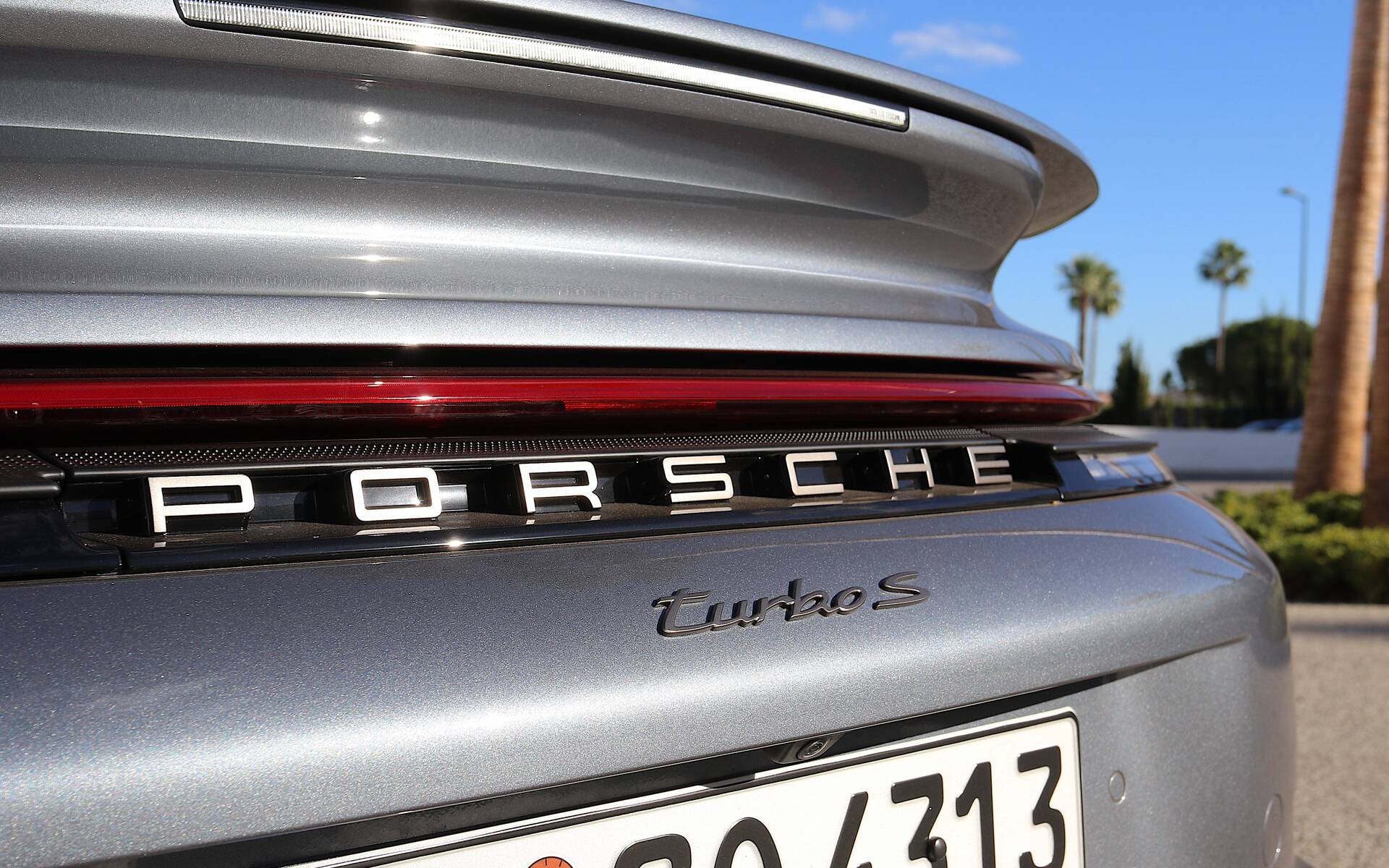
The new 911 Turbo S employs the same engine as the 911 GTS except for the pistons, which have been modified to increase the compression ratio in the cylinders. The other major change is the addition of a second turbocharger. These two turbos are also electrically assisted, but are slightly smaller than the one in the GTS, allowing them to have less inertia and spin faster (145,000 rpm compared to 125,000 rpm for the GTS). Meanwhile, the exhaust system is made entirely of titanium to help reduce the already significant weight over the car’s rear overhang.
The eight-speed PDK complete with an electric motor is also carried over to the Turbo S. Finally, a 1.9kWh battery (similar to that of the GTS) is mounted under the front hood to better distribute the weight.
It all adds up to a combined maximum output of 701 horsepower along with 590 lb-ft of torque. Fortunately, the 911 Turbo S benefits from all-wheel drive to put all that power to the ground, accelerating from 0-100 km/h in just 2.5 seconds. To give you some perspective, the 964 Turbo S took 4.6 seconds to complete the same sprint in 1992.
Docile Chassis
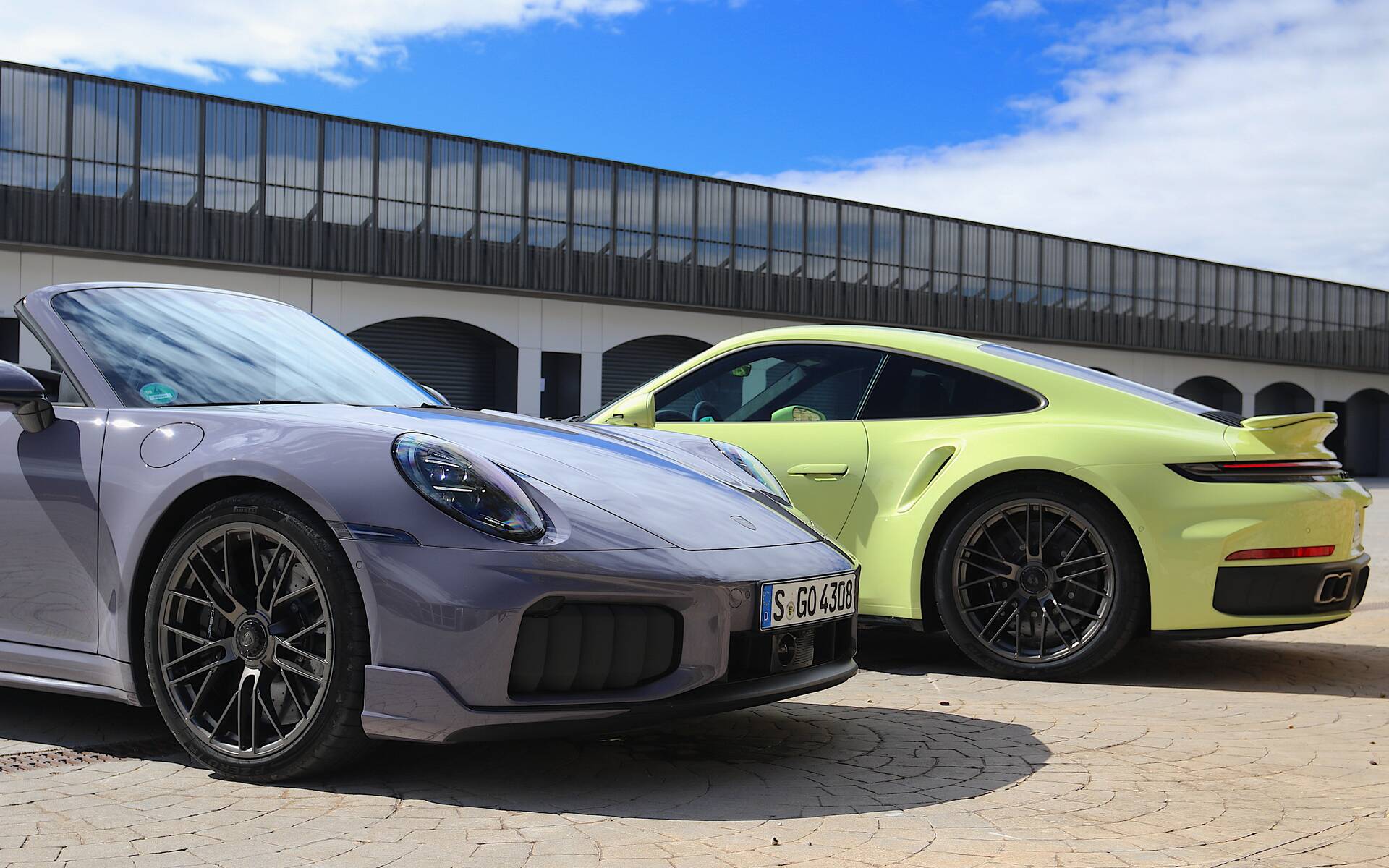
In order to manage such a massive amount of power, the rest of the car needs to keep pace, which is why Porsche has fitted the new 911 Turbo S with four-wheel steering, wider rear tires (325 mm instead of 315 mm), adaptive dampers and the ehPDCC system, which is an electro-hydraulic control system for the anti-roll bars. More specifically, an electrically powered, high-pressure oil pump sends fluid to actuators that can stiffen or soften the front and rear bars as needed. This allows for increased comfort in normal mode or sharper handling in Sport Plus mode.
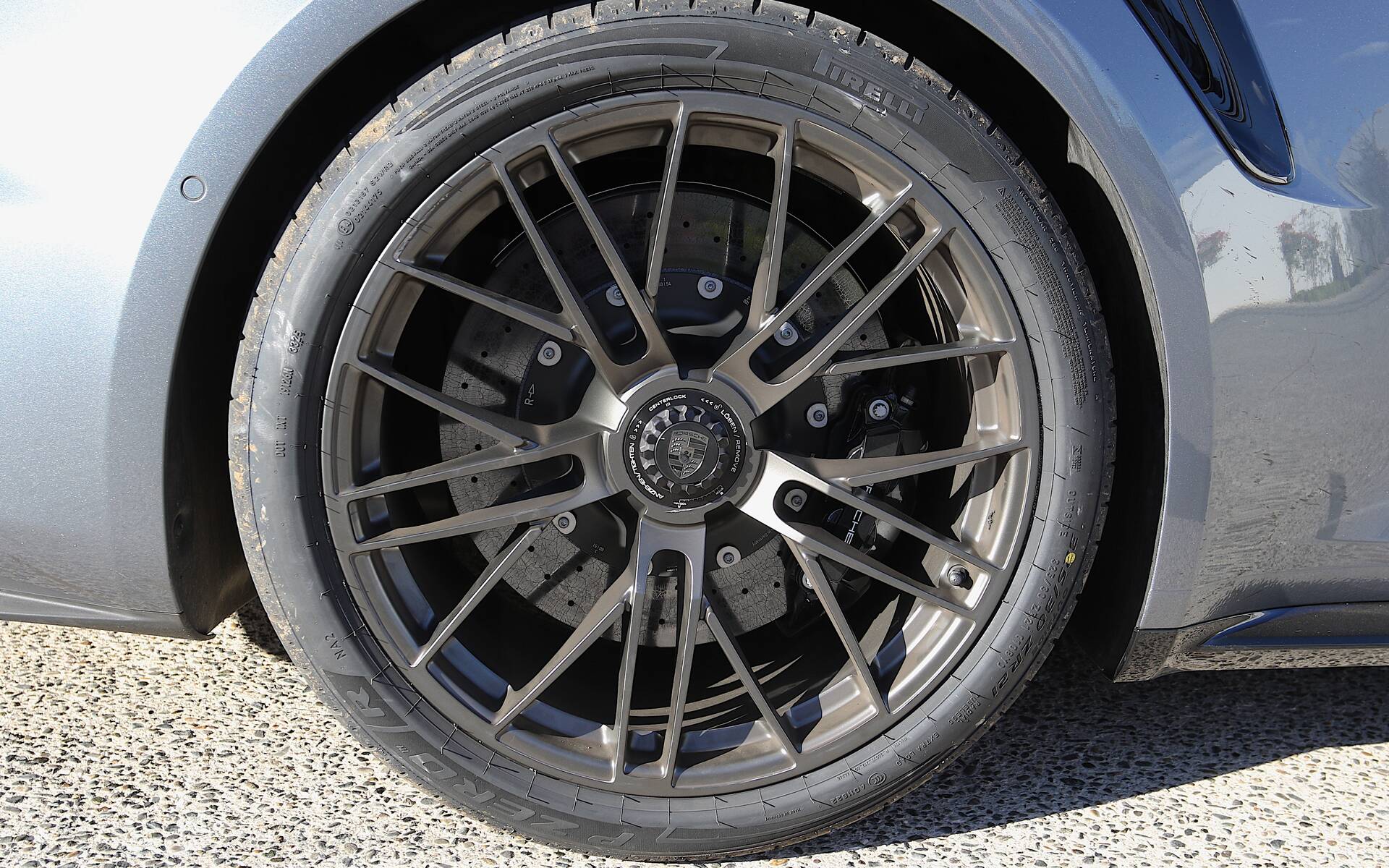
Regardless of the drive mode you select, the anti-roll bars can also be independently controlled on each wheel to improve corner entry, agility or traction when exiting corners. Finally, we need to talk about the brakes, because with a size of 420 mm at the front and 410 mm at the rear, or just over 16 inches if you prefer, the discs are slightly larger than the wheels of some compact cars. Imagine that.
Turbonite pour la Turbo S
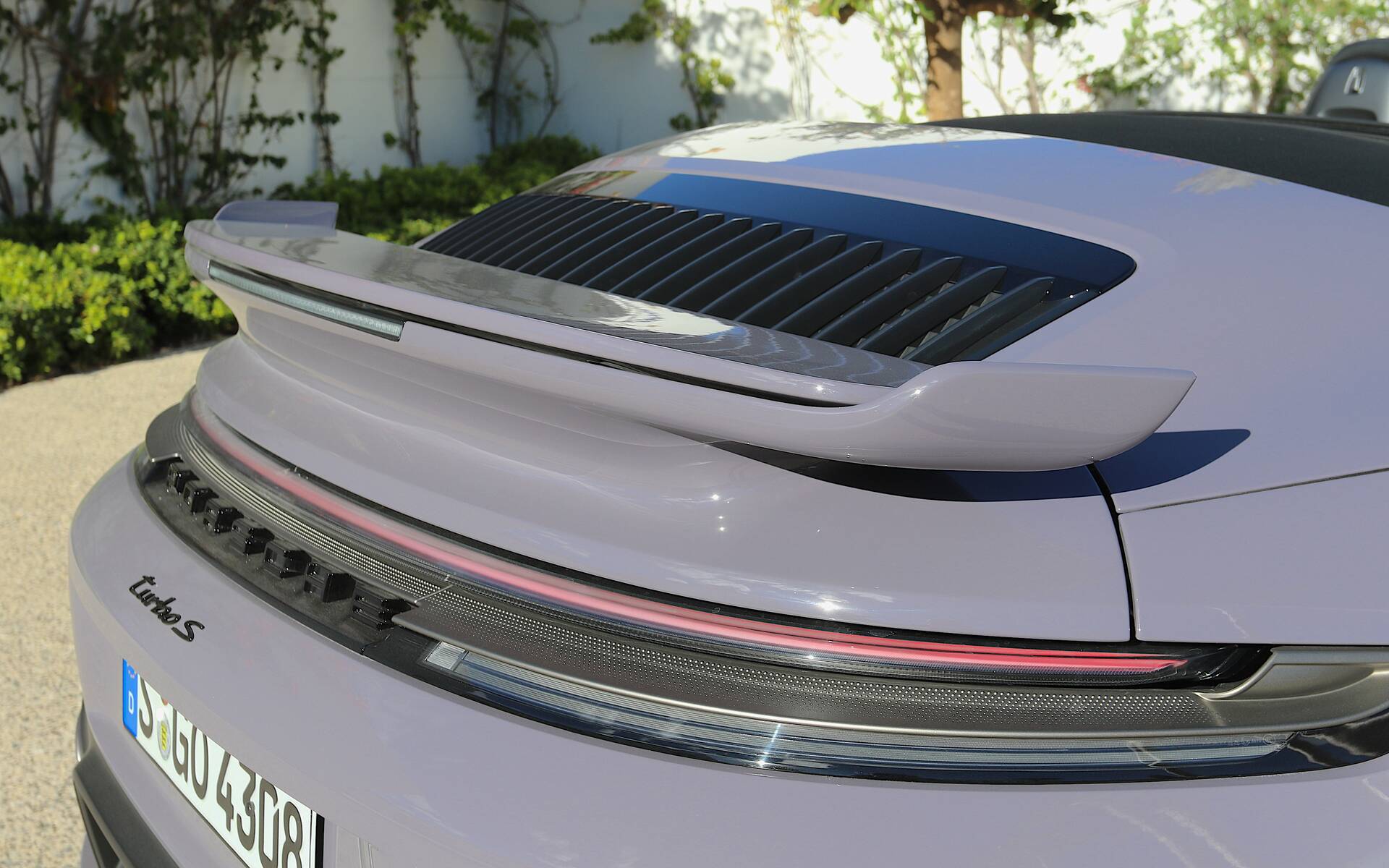
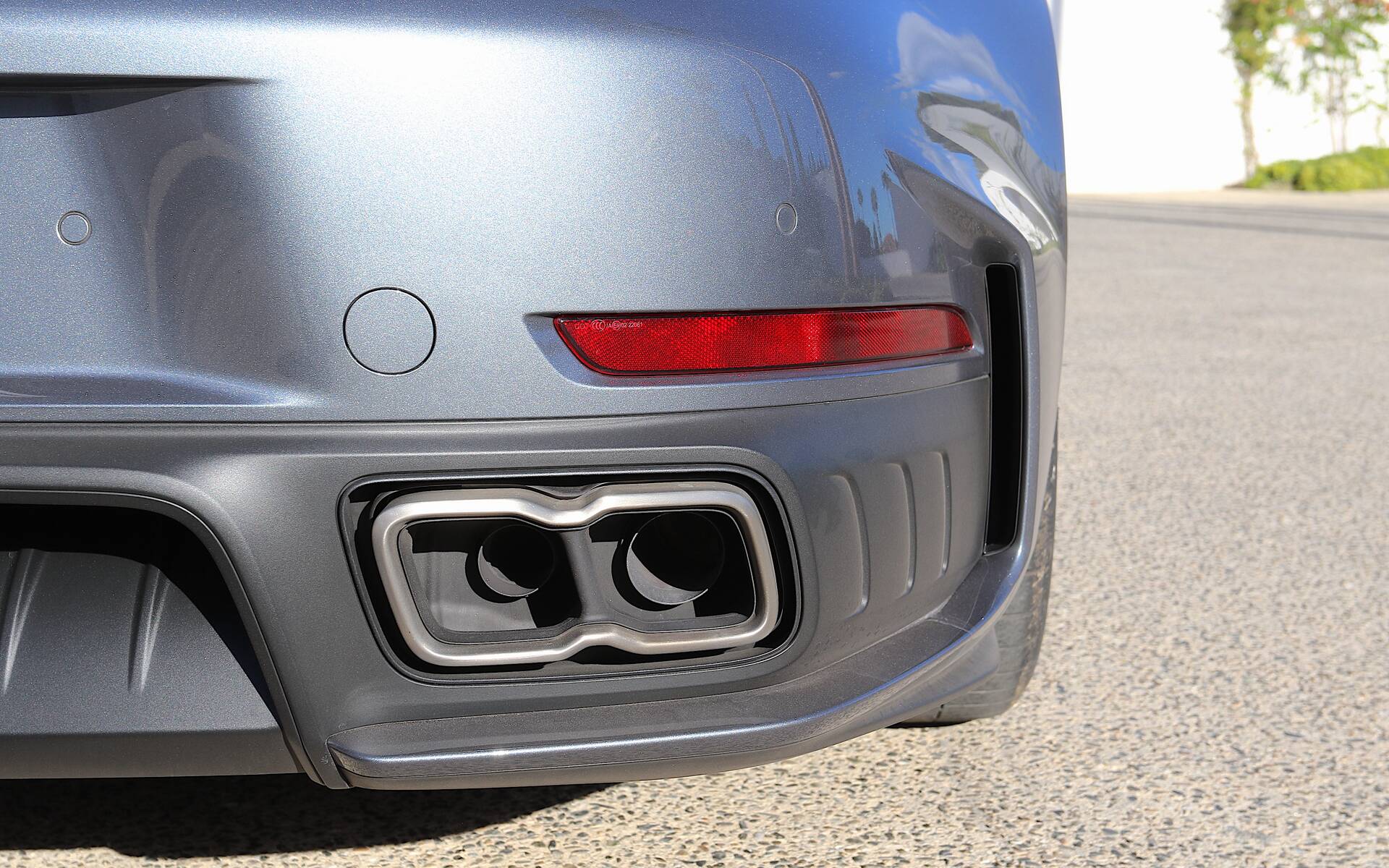
In addition to being wider than lesser 911 models, the new Turbo S receives some cosmetic alterations. These include variable-geometry flaps similar to those on the GTS at the front, standard LED matrix headlights, 20- or 21-inch center-lock wheels, redesigned taillights, a revised bumper and a unique dual exhaust. That’s on top of the inevitable Turbonite (grey) accents all around the car (badges, headlight surrounds, etc.).
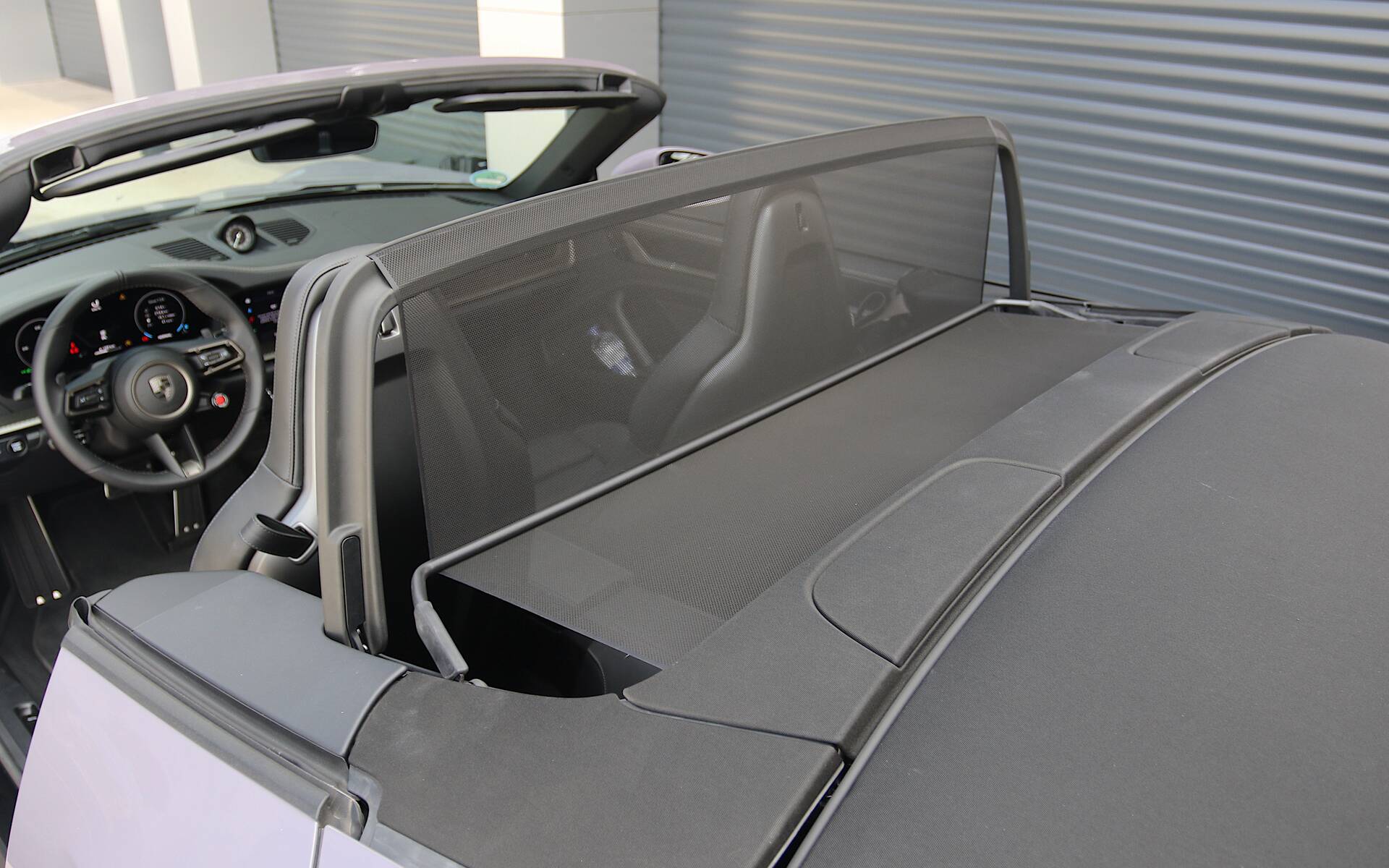
When it comes to aerodynamics, Porsche claims a 10-percent reduction in drag compared to the previous Turbo S thanks to a revised body, a retractable front splitter and an active rear wing. The convertible body style stands out with a power retractable soft top and a unique rear wing with upward-curving tips.
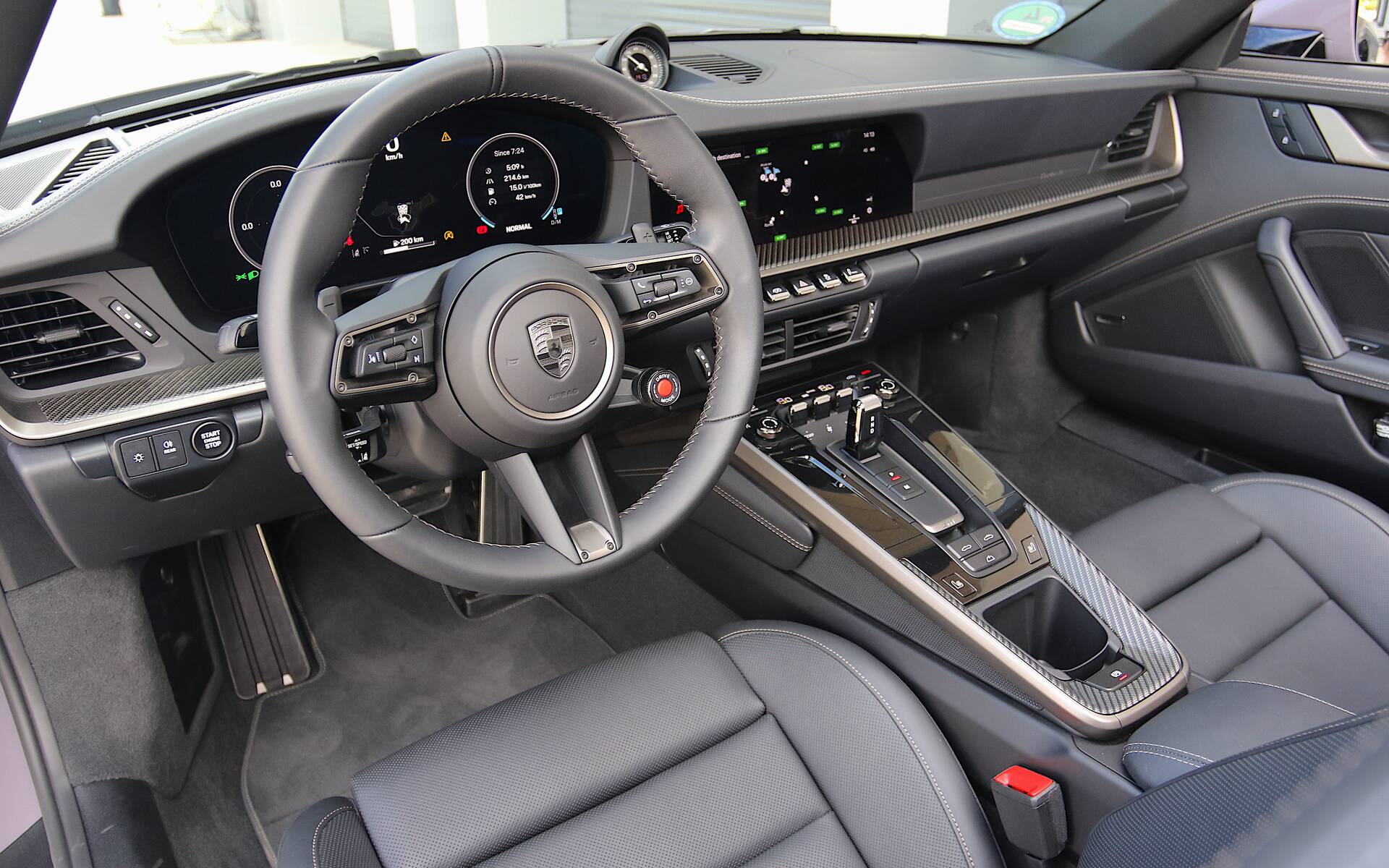
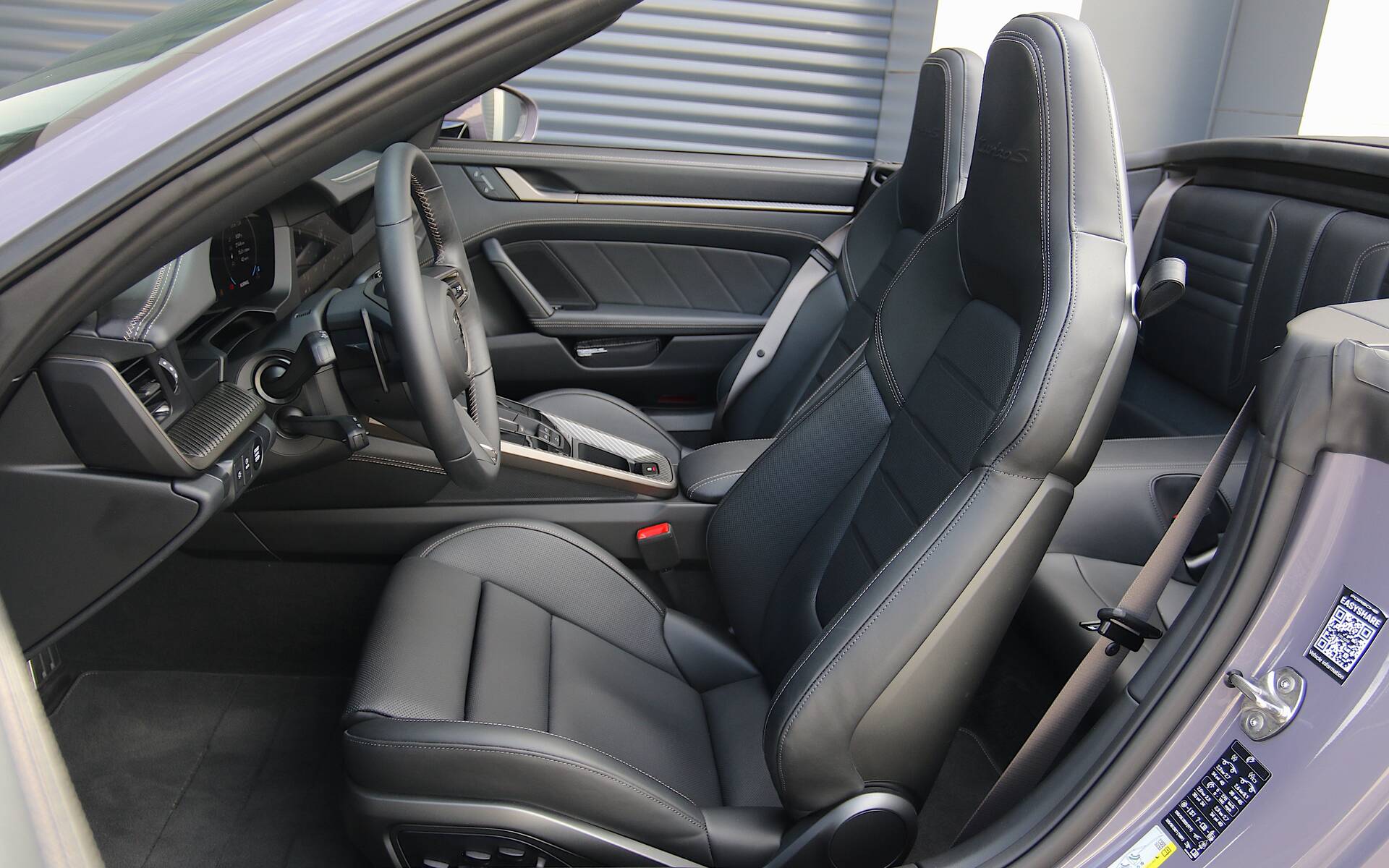
Inside, 911 owners will feel right at home, as the dashboard design is identical to other models in the lineup. Notable differences include standard 18-way adjustable seats, revised seat embossing, Turbo S logos on the headrests, matte carbon fibre trim and Turbonite accents (steering wheel badge and more).
From the Road…
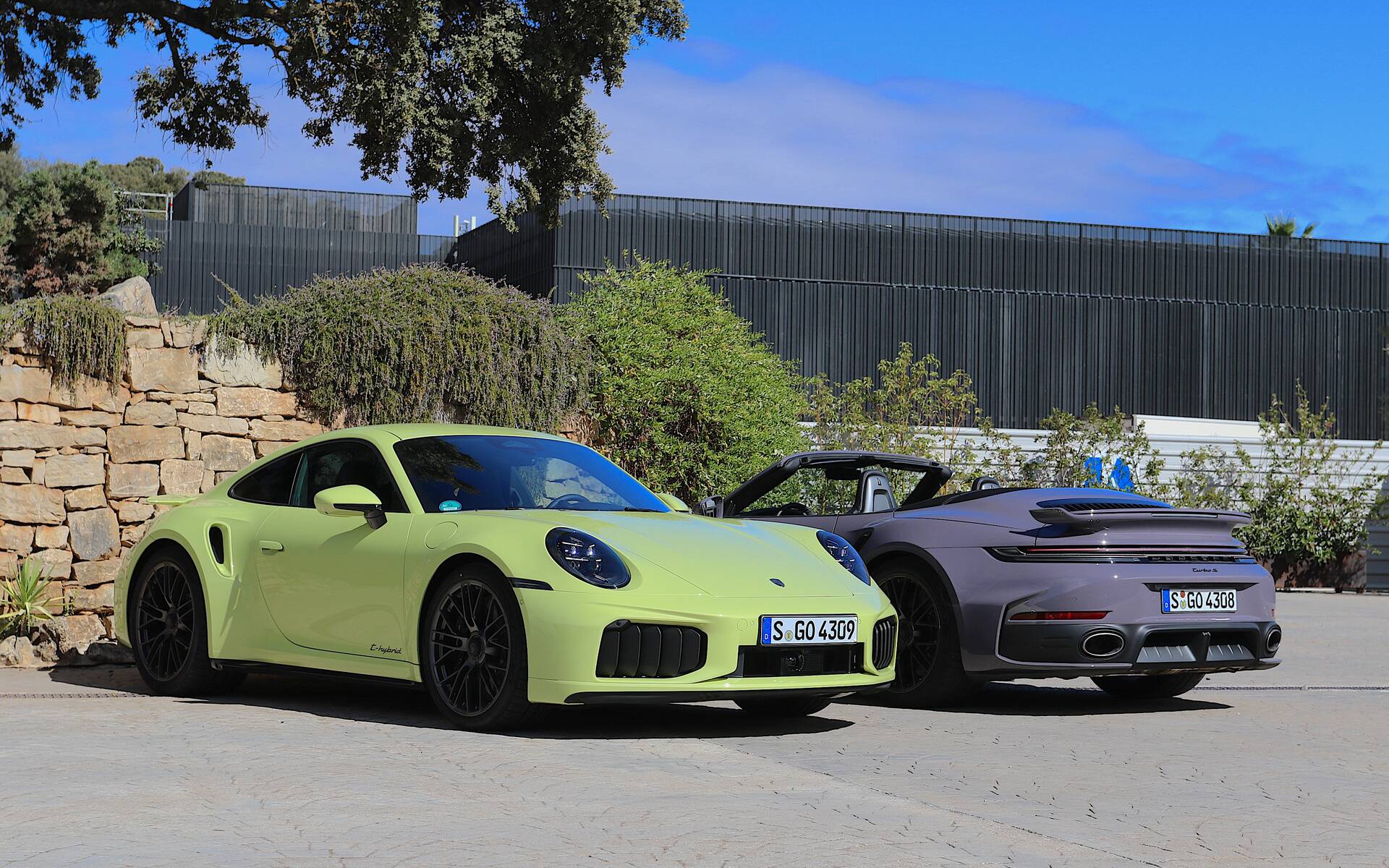
For our first experience with the 2026 Porsche 911 Turbo S, we got the opportunity to try both the coupe and convertible on the road as well as the hardtop on the track. Thanks to all the sophisticated systems mentioned above, the car proves civilized and easy to drive in Normal mode, then transforms into a razor-sharp rocket at the simple turn of a button.
Thanks to the contribution of the electric motor within the transmission and the turbos immediately revving at the correct speed, the Turbo S delivers a huge amount of torque as soon as you begin to depress the throttle. All of the 590 lb-ft are available between 2,200-6,000 rpm, whereas the previous Turbo S limited the same figure to a tighter rev range (2,500-4,100 rpm).
Consequently, the car feels like it has an inexhaustible reserve of torque, resulting in exceptional acceleration. No matter the drive mode, it never seems to lack power, especially beyond 4,000 rpm. Actually, peak power is delivered from 6,500-7,000 rpm, with a redline at 7,500 rpm. The flat-six is so eager at high revs that you can easily be caught off guard by the rev limiter when shifting manually. The acceleration pins you to your seat, and engaging launch control literally slams your head against the headrest.
The chassis is obviously up to the task, with sharp handling, perfectly responsive steering and surprising agility thanks to four-wheel steering. Braking, as always with Porsche, proved superb, with unerring effectiveness despite our heavy testing.
On super-twisty roads, you still have to respect the car’s weight, which can be felt when driving at a high pace. As for ride quality, we found the suspension quite firm, even though we drove on absolutely pristine roads. We’re not sure we want to imagine what it will be like on less-than-perfect Canadian roads.
Life on the fast lane is obviously quieter inside the coupe than the convertible with the top down. That being said, the electric wind deflector worked wonders, effectively neutralizing turbulence on the highway.
…To the Track
On the technical and hilly Circuito Ascari in Andalusia, the 911 Turbo S demands a slightly different driving style. With such a surge of torque from the lowest revs, patience with the throttle is essential to avoid running wide. When exiting corners, the car's acceleration is impressive, topping 200 km/h seemingly in the blink of an eye. Just like they do on the road, the composite brakes prove remarkably effective despite repeated use.
In Sport mode, we noticed that Porsche allows the car to exhibit some body roll, but this is significantly reduced when switching to Sport Plus mode. Although we weren't allowed to disable the driver assistance systems, we can tell you that Sport Plus mode already provides plenty of fun. The 911 manages to be sharp and safe at the same time without being overly demanding to drive.
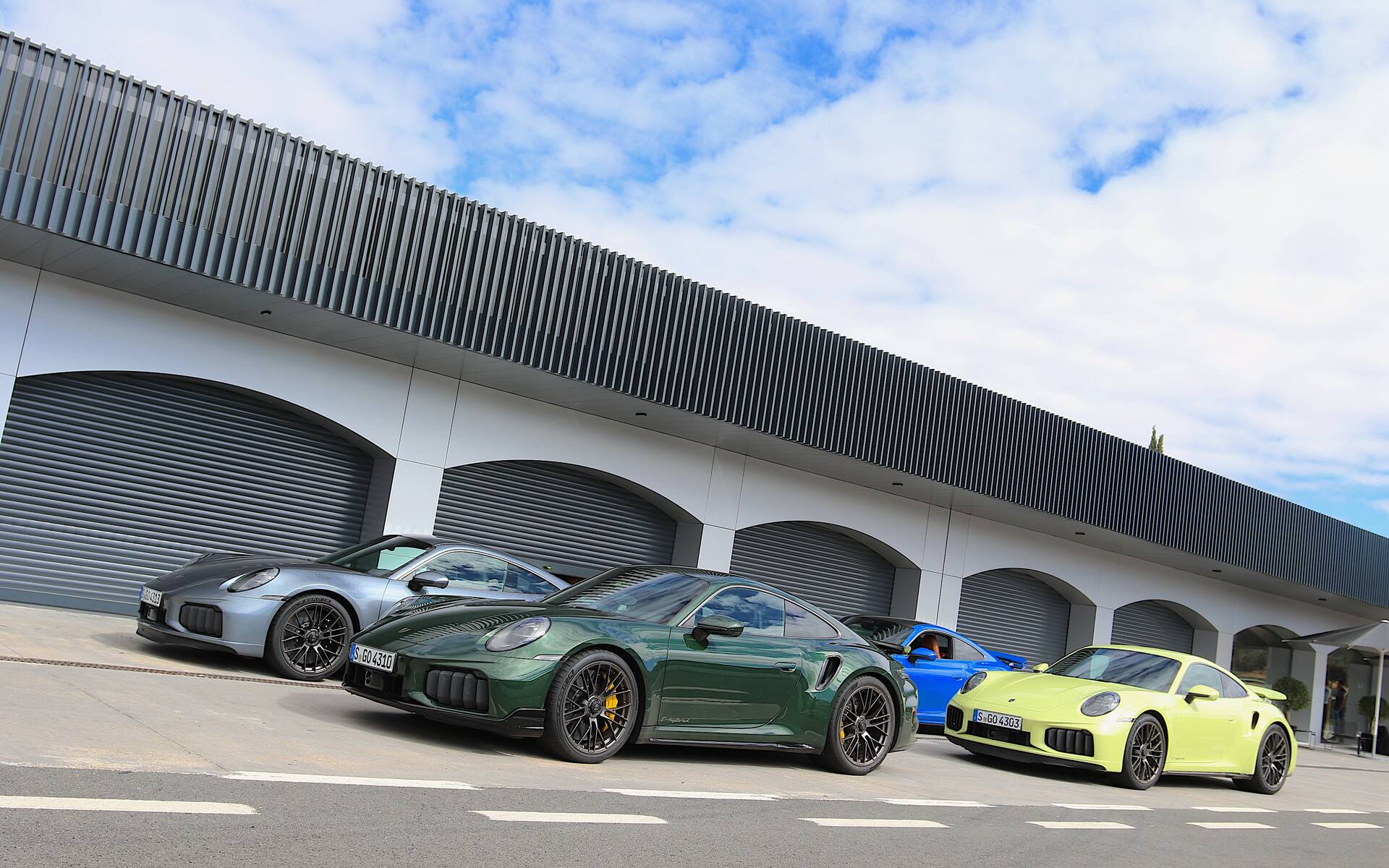
The front end shoots towards the apex with authority and confidence, and the rear end follows without hesitation. However, the more you pick up speed, the more the car's weight enters the equation, causing some front-end instability during progressive braking.
In more general terms, we noted that the 911 Turbo S emphasizes its raw power rather than its refinement. This particular characteristic is also evident on the road, where the engine's thunderous thumps are nothing like, say, the more visceral driving experience of a Carrera T. What’s more, we found the engine sound to be pleasant enough albeit somewhat muffled by the turbos. By comparison, the 911 GT3 produces a more intoxicating soundtrack.
Our Verdict
Ultimately, we believe the 2026 Porsche 911 Turbo S is an accomplished and seriously impressive sports car in more ways than one. However, its stratospheric performance makes it frustrating to drive on the road due to the various speed limits that you can exceed in no time if you’re not careful. Needless to say, with a starting price of $289,300 for the coupe and $304,500 for the convertible, this model is aimed at customers for whom money is never an issue.
As far as we’re concerned, we still prefer a 911 with a manual gearbox, which might be slower based on acceleration times but proves more rewarding to drive overall. If you’re looking for the ultimate 911 experience, the new Turbo S has some serious arguments to make.
Watch: The Car Guide Visits the Porsche Experience Center in Toronto
| Test drive report | |
| Test model | N/A |
|---|---|
| Trim level | Coupé Carrera |
| Price range | $135,600 – $304,500 |
| Price as tested | 342 854 $ |
| Warranty (basic) | 4 years/80,000 km |
| Warranty (powertrain) | 4 years/80,000 km |
| Fuel economy (city/highway/observed) | 12,9 / 9,2 / 15,1 L/100km |
| Options | N/A |
| Competitive models | Aston Martin Vantage, BMW 8 Series, Chevrolet Corvette, Ferrari Roma, Maserati MC20, McLaren GTS |
| Strong points |
|
| Weak points |
|
| Editor's rating | |
| Fuel economy | We achieved a combined 15.1 L/100 km, admittedly by pushing the car on multiple occasions. |
| Comfort | The car felt a bit stiff on the pristine Spanish roads, which doesn’t bode well for rough Canadian roads. |
| Performance | The twin-turbo flat-six with hybrid tech delivers mind-blowing performance. |
| Infotainment | We like the interface overall, although some of the controls require getting used to. |
| Driving | While a joy to drive, the 911 Turbo S emphasizes raw power rather than refinement. |
| Overall | As the most potent production 911 ever, the new Turbo S also benefits from an amazingly competent chassis. Forget it if you don’t plan to hit the track or if you regularly spend time on rough pavement. |