2026 Nissan LEAF: They Say Third Time’s the Charm
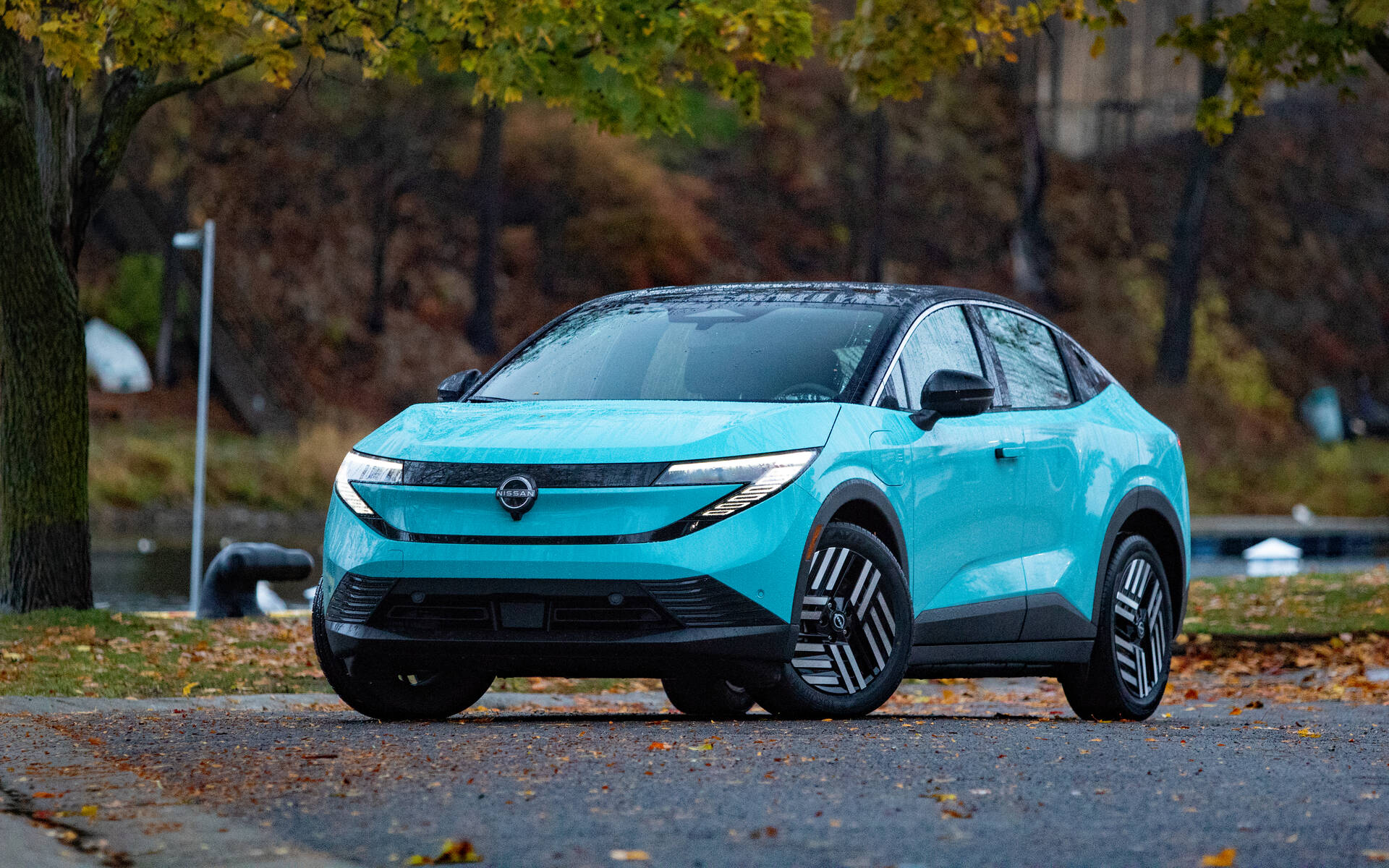
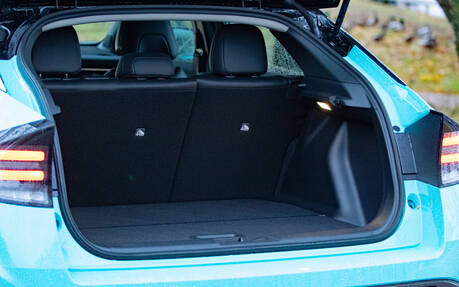
The Nissan LEAF is completely redesigned for 2026. Unlike the first two generations that were basically conventional hatchbacks, this new one is best described as a coupe-style crossover. While shorter in both length and height, it has grown in width, aerodynamic efficiency and overall appeal. Trunk space is not as generous as it used to be, except when the rear seats are folded down.
Is the 2026 Nissan LEAF some sort of compromise, then? To find out for sure, The Car Guide headed to Prince Edward County, Ontario to test drive a Nissan LEAF SV+ (MSRP starting at $47,998). By the way, deliveries of the Japanese-built LEAF to Canadian dealerships have now started.
- Also: Nissan to Pull Ariya Out of 2026 U.S. Lineup, Scale Down LEAF Production
- Also: Nissan Reveals 2026 LEAF Pricing
A Thorough Transformation
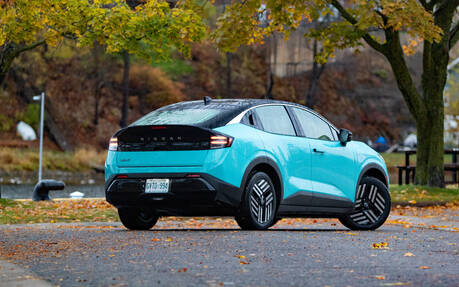
As mentioned above, the first two generations shared a similar body style, but the third marks a radical departure with an emphasis on aerodynamics. The LEAF’s drag coefficient has improved from a respectable 0.29 to an excellent 0.26 thanks to several nifty features, such as retractable door handles, a flat underbody and redesigned lines for improved airflow. These elements not only contribute to significantly increased range (more on that later), but also to the vehicle’s unique design.
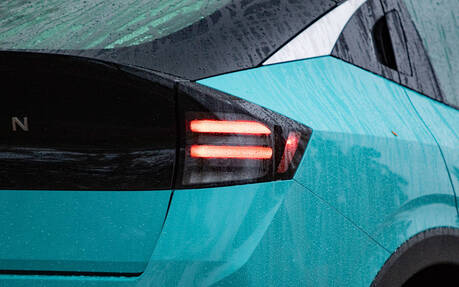
Speaking of which, Nissan designers have incorporated an iconography consisting of two horizontal and three vertical rectangles—a nod to the company's name, “ni-san” in Japanese—all around the new LEAF (headlights, taillights, wheels, interior). In fact, there are 30 of them on the SV+ model and 27 on the Platinum+.
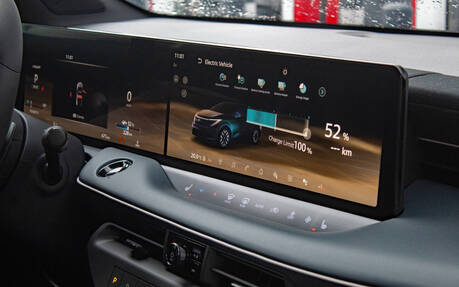
The interior has been extensively refreshed and updated resulting in a much more pleasant and accommodating environment. First-row occupants benefit from a clean, horizontally designed cockpit highlighted by a large digital interface. The latter integrates the instrument cluster and multimedia system, both measuring 14.3 inches in SV+ trim (12.3 inches on S and S+ models). Although the interface is attractive and easy to use, we would have appreciated slightly larger buttons for the infotainment system's settings and menus.
Wireless Apple CarPlay and Android Auto connectivity comes standard across the line, while Google built-in and a wireless phone charger are included in the more upscale SV+ and Platinum+ models. Heated front seats are standard, too, and heated rear seats are optional. The top-line LEAF Platinum+ stands out with a 10-speaker Bose sound system—far superior to the 4- and 6-speaker units found in other models—64-colour ambient lighting and a panoramic sunroof.
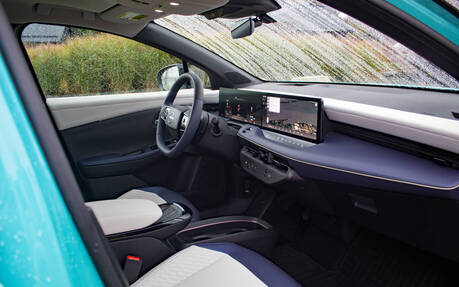
Material selection as well as fit and finish are improved. Colours and contrasts make for a more premium look. Optimized passenger and cargo space is another highlight. Believe it or not, despite the 2026 LEAF actually being smaller than the outgoing generation, headroom is more generous. Same thing for rear-seat legroom. The new Zero Gravity seats provide extra comfort, except we wish the seat bottoms were a little longer.
Disappointingly for some, there is no frunk. As Nissan explained to us, the roomier interior made it essentially impossible. On the flip side, the trunk in the back offers an underfloor compartment that can hold smaller items, while the centre console in the front row has an open design allowing more versatility.
A More Inspiring Drive
Compared to its predecessor, the 2026 Nissan LEAF makes a giant leap forward in terms of technology and driving experience. Handling is more refined despite the increased weight, which still remains under two tons. The LEAF continues to excel in urban driving and proves reassuring even beyond its natural habitat. Body roll is predictable, while the ride is both comfortable and quiet. Steering is precise and surprisingly responsive. Torque steer is now a thing of the past, resulting in a smoother feel under acceleration.
Now, let’s talk about the technical bits. The new 75kWh lithium-ion battery comes with a heat pump and preconditioning system. There's a single motor at the front, producing 214 horsepower and 261 lb-ft of torque, which is more than adequate for the usual daily commutes, although not exactly thrilling. As for regenerative braking, similar to the Ariya, the e-Step function doesn't allow true one-pedal driving with complete stops, nor do the steering wheel paddles (four levels available).
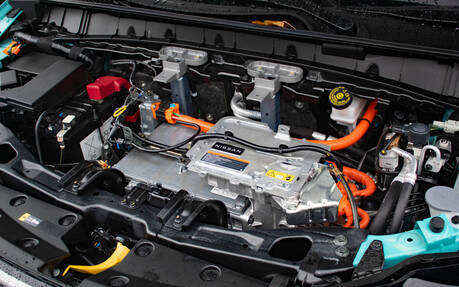
Maximum range is listed at 488 km in S+ trim, 463 km in SV+ trim and 417 km in Platinum+ trim. The variations can be attributed to weight differences between the models (content, wheels, etc.). We drove a LEAF SV+ for nearly 330 km at a temperature of 4 degrees Celsius with a cold battery and recorded a combined energy consumption of 18.2 kWh/100 km. That sounds promising yet still leaves room for improvement. At the end of our trip, we had lost 11.4 km of range (418.6 km) from the 430 km initially displayed on the dashboard (with a battery charged to 98%).
As the time of writing, Nissan was finalizing the range estimate for the entry-level S model equipped with a 53kWh battery, as well as its price. What we can tell you is that the cheapest LEAF is good for 174 horsepower and 254 lb-ft of torque.
One more thing about the driving experience: the 2026 LEAF comes with a number of advanced safety and driver assistance technologies. However, we found that the ProPilot Assist system needs some fine-tuning. To be clear, adaptive cruise control works generally well, but active lane keeping assist tends to overcorrect the vehicle's trajectory and push it towards the outside of the lane. Also, steering corrections are not very smooth.
More Convenient Charging
To facilitate charging at home and on the public grid, Nissan offers a level-2 AC charging port (J1772) on the driver's side and a DC fast charging port (NACS) on the passenger's side, the latter enabling direct access to Tesla’s Superchargers. Maximum DC charging capacity is 150 kW, allowing the LEAF to charge from 10-80% in 35 minutes.
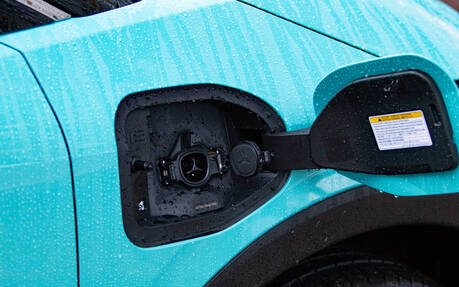
Even better, Nissan smartly leverages the features of its MyNissan mobile app. Once your information is saved, when it's time to charge the LEAF at a public charging station, the vehicle will communicate directly with the charger so you don't need to take out your phone—everything happens automatically. Furthermore, the app can locate charging stations, making apps like Electric Circuit, ChargePoint, FLO and others virtually obsolete. Brilliant.
Another thing you should know is that the LEAF also features a V2L (Vehicle-to-Load) function, which allows it to power external devices or serve as a power source during an outage, delivering up to 3.45 kW.

A Serious Contender
Clearly, the new 2026 Nissan LEAF is a major improvement over its predecessor and a serious threat to other entry-level EVs. No longer an afterthought, it suddenly finds itself at the forefront of the small electric crossover segment, offering longer range than the Hyundai Kona Electric (420 km), Kia Niro EV (407 km) and even the all-new 2027 Chevrolet Bolt (410 km) that we got to take for a quick spin earlier this fall. On the other hand, it’s more expensive than the Bolt and Kona, although this will change soon with the introduction of the base S model featuring a smaller battery.
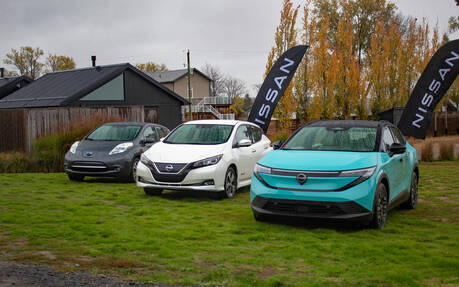
From an EV pioneer that ended up losing its edge, the sleek new LEAF has turned into a relevant and competitive player in today’s market. Will it stand as the benchmark in its class? As far as we can tell, it has all the necessary ingredients.
| Test drive report | |
| Test model | N/A |
|---|---|
| Trim level | SV Plus |
| Price range | $44,998 – $52,798 |
| Price as tested | 47 498 $ |
| Warranty (basic) | 3 years/60,000 km |
| Warranty (powertrain) | 5 years/100,000 km |
| Fuel economy (city/highway/observed) | N/A |
| Options | N/A |
| Competitive models | Fiat 500e, Chevrolet Equinox EV, Hyundai Kona, Kia Niro, 2025 MINI Countryman SE ALL4 |
| Strong points |
|
| Weak points |
|
| Editor's rating | |
| Fuel economy | The new LEAF is fairly efficient and offers longer range than direct rivals. |
| Comfort | There’s more space for passengers, especially in the rear. The Zero Gravity seats provide extra comfort. |
| Performance | Power is ample enough for daily commutes, though not particularly thrilling. |
| Infotainment | The new generation is vastly improved in this area, including the graphics and in-car technology. Alas, some of the on-screen buttons are small. |
| Driving | Much more refined than in the past, the LEAF proves to be sharper with significantly reduced torque steer. |
| Overall | The 2026 LEAF elevates itself to the top of the segment with superior range and competitive prices. |