2026 Polestar 4: From Sweden to Korea and Finally Canada
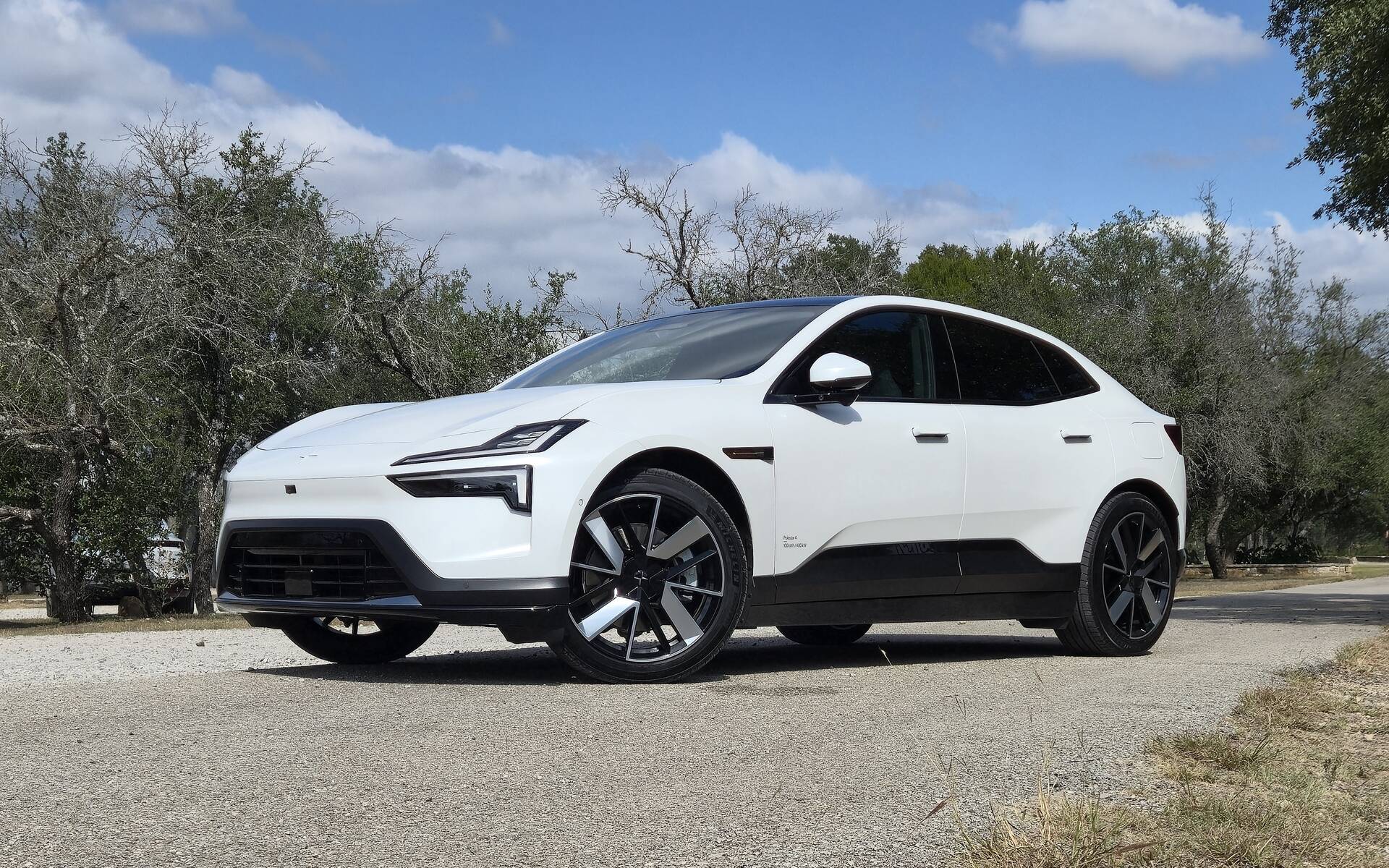
Austin, Texas—The all-new Polestar 4 luxury electric crossover is finally about to launch in North America. We've written about it several times since its original debut at Auto Shanghai in April 2023, having had the opportunity to drive a pre-production model in Sweden and then the real thing in Spain during the first months of 2024.
Unfortunately, with the United States and Canada later imposing a 100% tariff on electric vehicles manufactured in China (Polestar 4 production initially started in Hangzhou), the company had to delay sales in North America until its new factory in Busan, South Korea was ready to ship units.
- Also: 2026 Polestar 4 Officially Launches in Canada, Pricing Details Announced
- Also: 2025 Polestar 2, 3 and 4 Arctic Drive : First Line on the Ice
After doing a test drive on a frozen lake beyond the Arctic Circle last winter, The Car Guide recently had another "first look" at the Polestar 4, this time as a 2026 model, with deliveries to Canadian customers set to begin in early December. The media event took place in Austin, Texas, considered one of the most progressive cities in America—much like the Swedish crossover with coupe-like styling and no rear window happens to be one of the most progressive and innovative vehicles on the market.
Styling Prevails
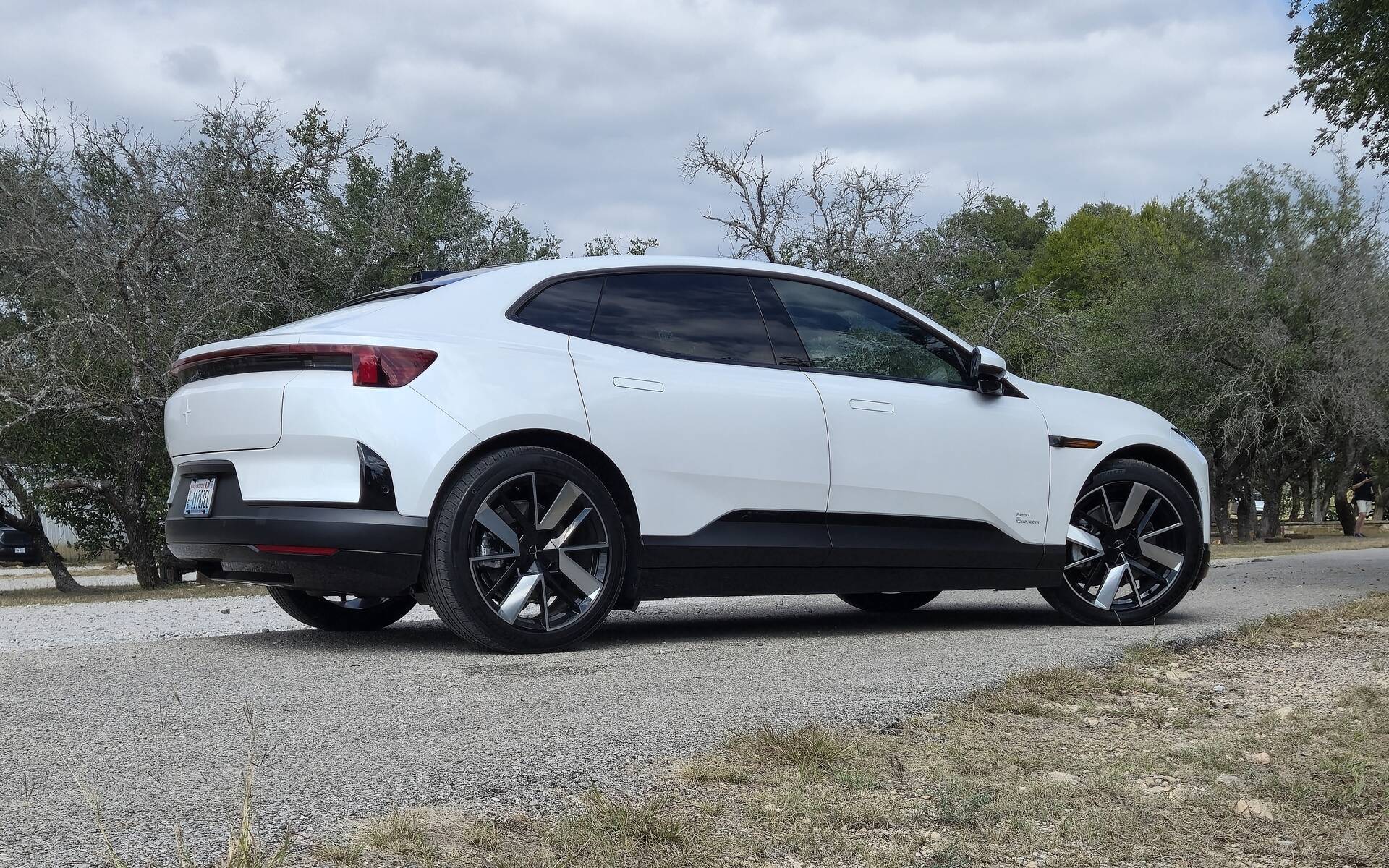
While the Polestar 3 stretches the definition of an SUV, the new Polestar 4 truly is half-car, half-SUV—or a cross between the Polestar 2 and 3. Design was a core part of the development process and, as product manager Ola Aldensjö explains, it all started with a silhouette that was intended to be both elegant and striking.
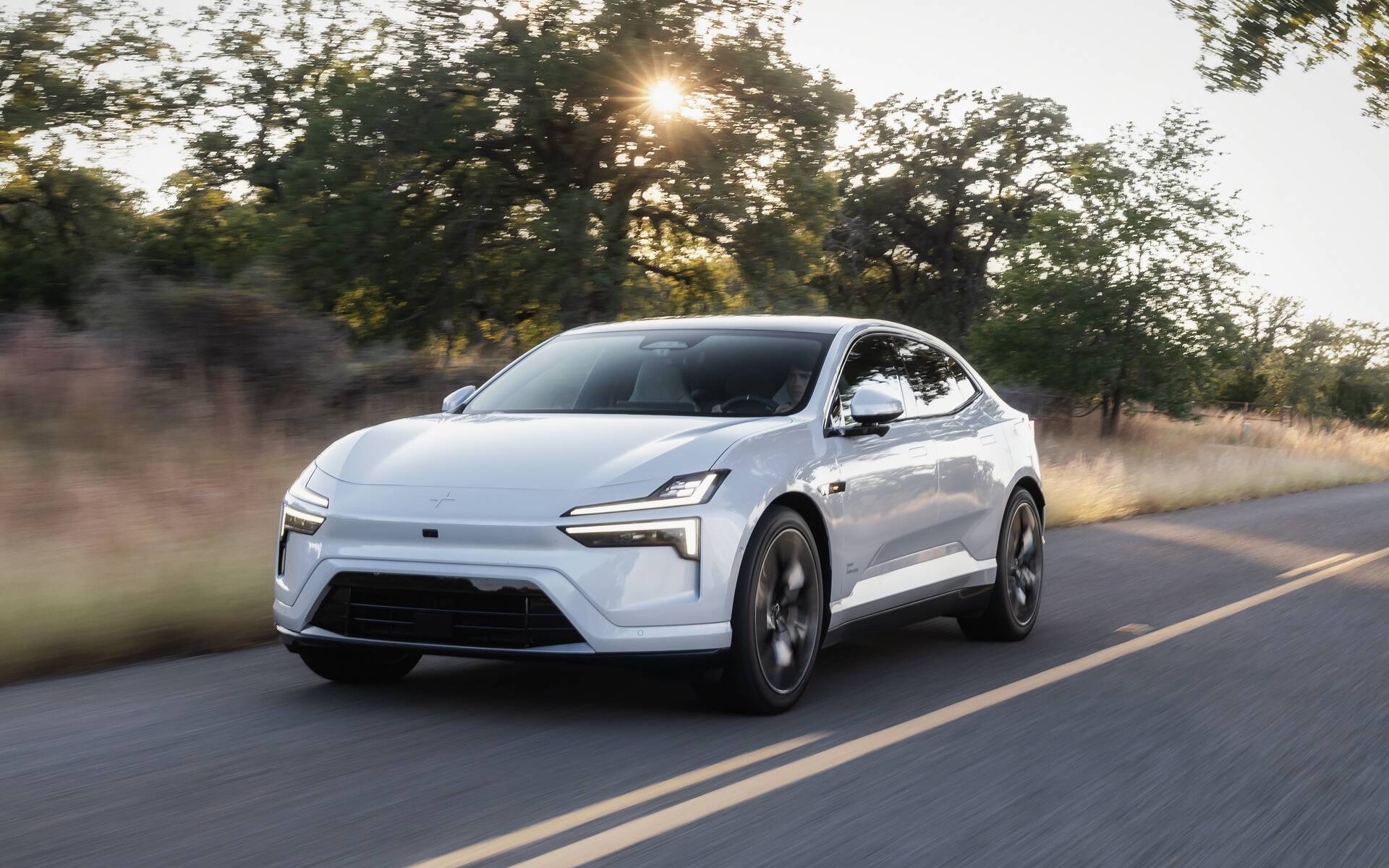
Compared to the 3, the front end has a more sloping profile, the beltline is more angled, and the roofline has been lowered by up to 93 mm with a significant sweep at the rear, creating a unique and refreshing body style in today's automotive landscape. The headlight design is even more assertive and character lines are added to the sides, reinforcing its sporty and racy appearance. Polestar jokingly claims it's the kind of robotic yet sexy design that can appeal to both humans and humanoids.
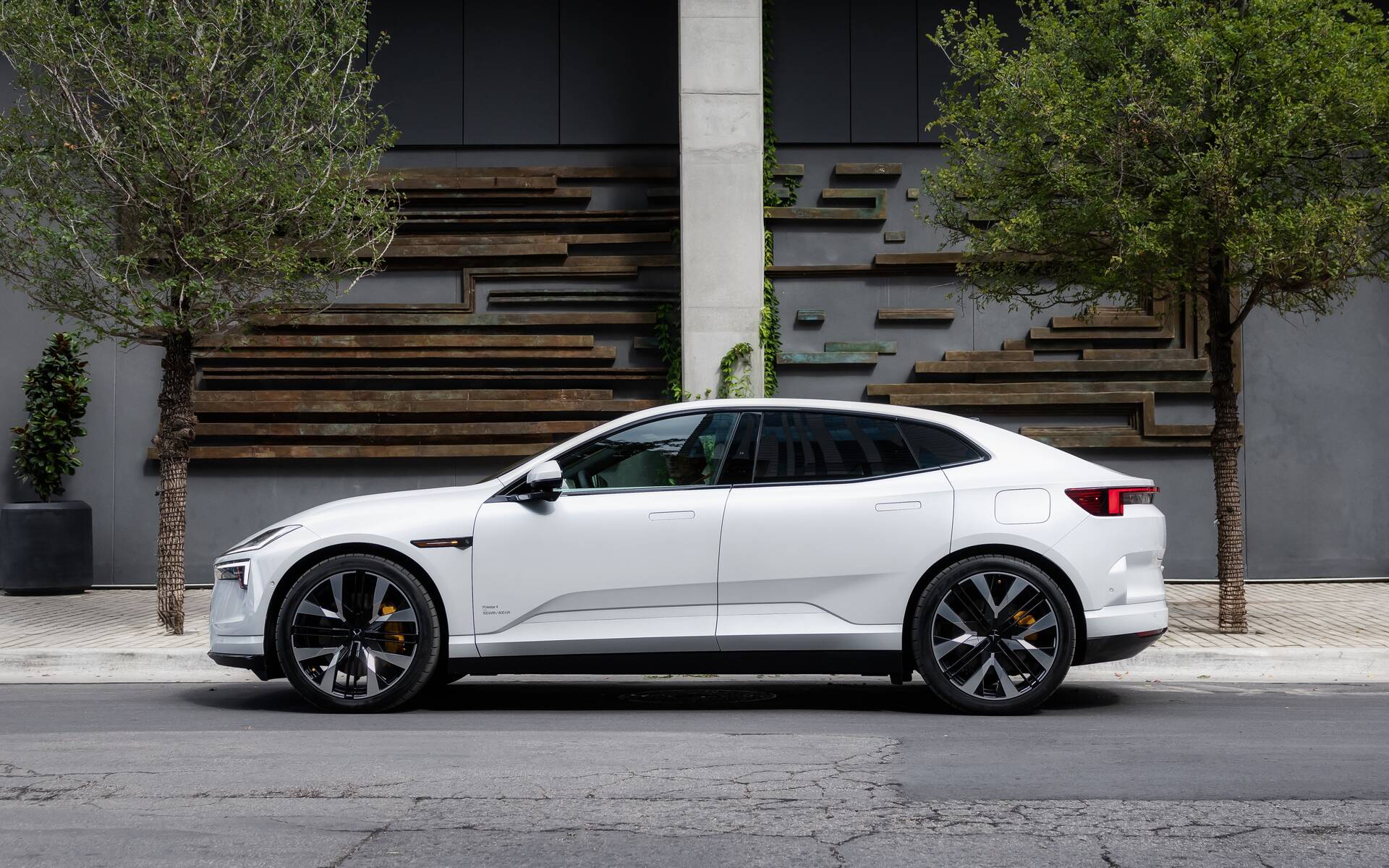
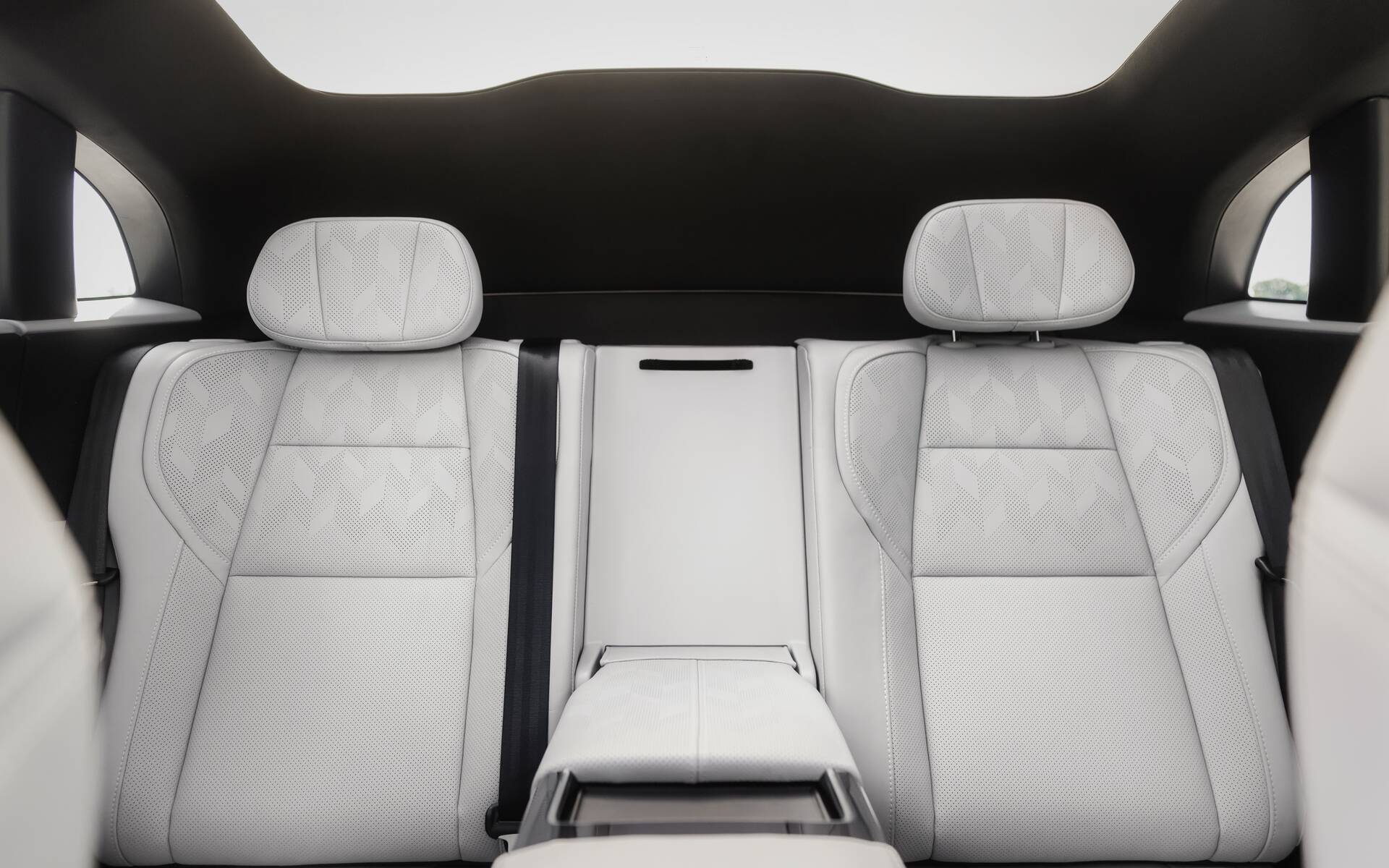
The exterior naturally has been developed with aerodynamic efficiency in mind (the drag coefficient drops from 0.29 for the Polestar 3 to 0.26 for the Polestar 4), but styling is not sacrificed in the name of range. Furthermore, while coupe-style SUVs generally compromise second-row headroom and rear visibility, this isn't so much the case here. The fixed panoramic glass roof extends far back, and the seating position remains low. Moreover, instead of integrating a small rear window that would have significantly reduced the driver’s field of vision in the rearview mirror, Polestar designers chose to eliminate it entirely and add a discreet, roof-mounted HD camera that transmits an image to the mirror. It's a bold move, for sure, but a calculated one in our opinion.
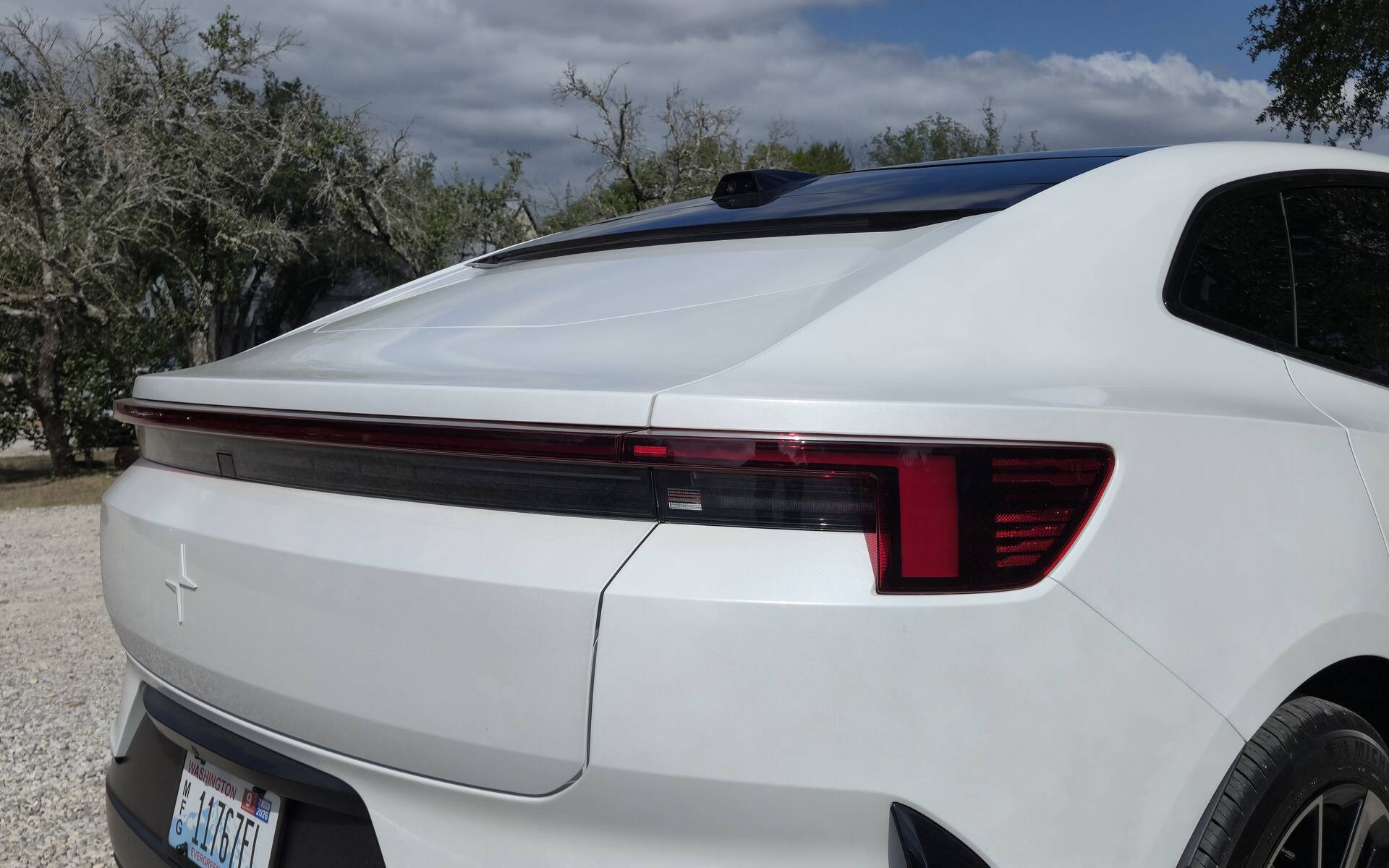
How many SUVs and pickups nowadays offer a digital rearview mirror to improve rear visibility? Polestar does the same with the 4, putting technology at the service of design. Granted, for the driver, the depth of field is different, and it can be more difficult to judge the distance to the vehicle behind, but you get used to it. Also, it's still possible to switch to conventional mirror mode to keep an eye on rear passengers. The big question is: how does snow or rain affect the camera? That’s something we weren't able to verify in sunny Texas. Another test, this time during winter up in Canada, will shed some light on the matter.
Familiar Yet Unique Interior
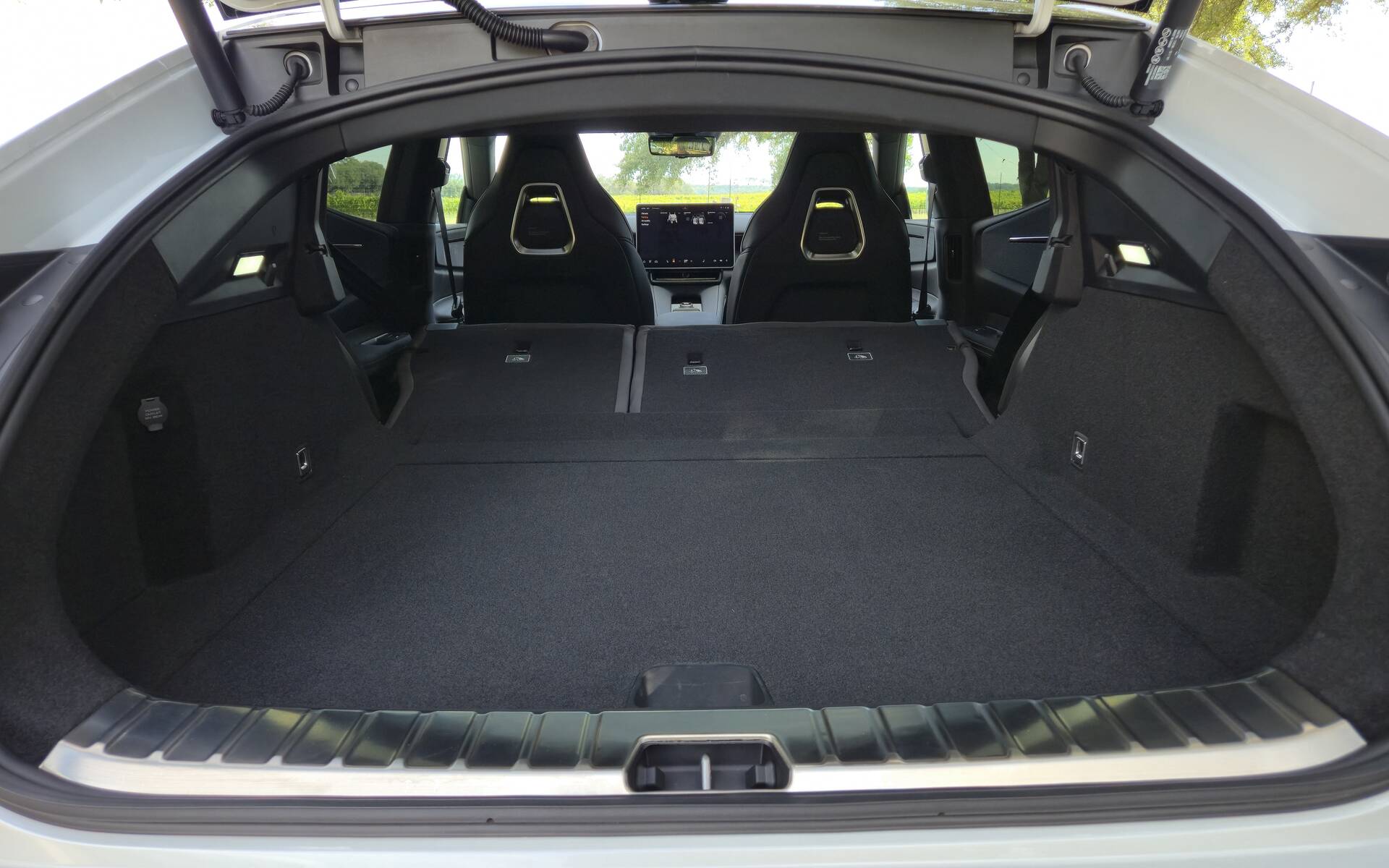
The Polestar 4's cabin is pleasantly spacious, even in the second row as mentioned earlier, where two adults will have no reason to complain. The trunk, of course, is smaller at 526 litres (including underfloor storage) versus the Polestar 3's 597 litres. But, surprisingly, the opposite is true once the rear seats are folded down: 1,536 litres in the “coupe” versus 1,411 litres in the SUV. Let's not forget the 33-litre frunk under the hood, a feature that some rivals lack.
The cockpit puts the driver in a familiar environment—behold the minimalist 10.2-inch digital instrument cluster (three views available), complemented by an optional head-up display—with a few distinctive features that give the Polestar 4 an edge over its larger sibling. For example, the buttons on the steering wheel are far less confusing, while the horizontal 15.4-inch touchscreen doesn’t keep the eyes off the road for quite as long as the 3’s portrait-style display.
Once again, the lack of physical controls proves inconvenient, like for adjusting the ventilation and mirrors or even opening the glove compartment. Temperature adjustment is done using the "+" and "-" buttons, which always remain visible at the bottom of the screen, or by interacting with the voice assistant. Simply saying "Hey Google, I'm cold" is enough to raise the temperature a few degrees.
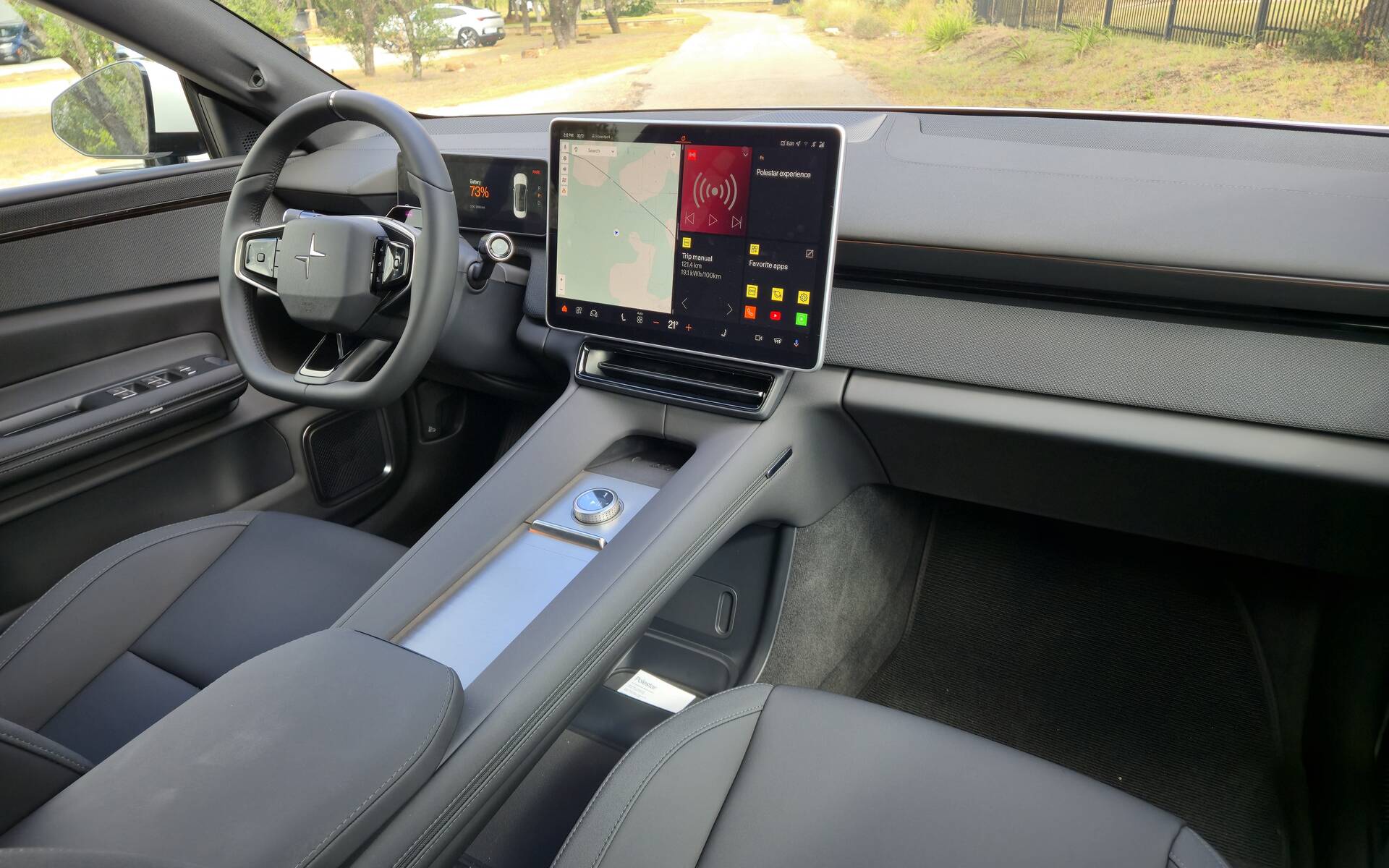
The infotainment system, based on Android Automotive, is packed with information, settings and even animations, so switching between menus or functions requires a bit of patience and practice. We enjoyed having the ability to customize and split the screen by placing frequently used widgets on one side. And great news: no bugs or glitches of any kind marred our experience, which wasn’t the case initially with the Polestar 3.
Before we move on to performance, it's impossible to ignore the attention to detail inside the Polestar 4—Amil Gasanin, head of UX design, told us his team considered over a hundred different shoe models when developing the icon for one-pedal driving—or the oh-so-cool ambient lighting inspired by the solar system. Various inscriptions and labels serve to remind occupants that many of the materials are made from recycled fibres. By the way, the dark and rather drab interior in some models can be replaced with a two-tone decor in Nappa leather or a premium fabric (Tailored Knit) that is custom-cut specifically for this vehicle, thus reducing waste.
0-100 km/h in 3.8 Seconds
Our drive through the streets of Austin and on the roads crisscrossing the cactus-filled countryside was too short (just over 200 km) to properly measure the Polestar 4's real-world range. Thanks to ideal weather, and despite our attempts to push the car from time to time, combined energy consumption was less than 19 kWh/100 km, which is excellent for an all-wheel-drive vehicle weighing 2,355 kg. The front motor disconnects during normal driving to increase fuel efficiency. For reference, the official range estimate by Natural Resources Canada is 451 km (410 km with the Performance Pack), or 499 km when it comes to the single-motor variant.
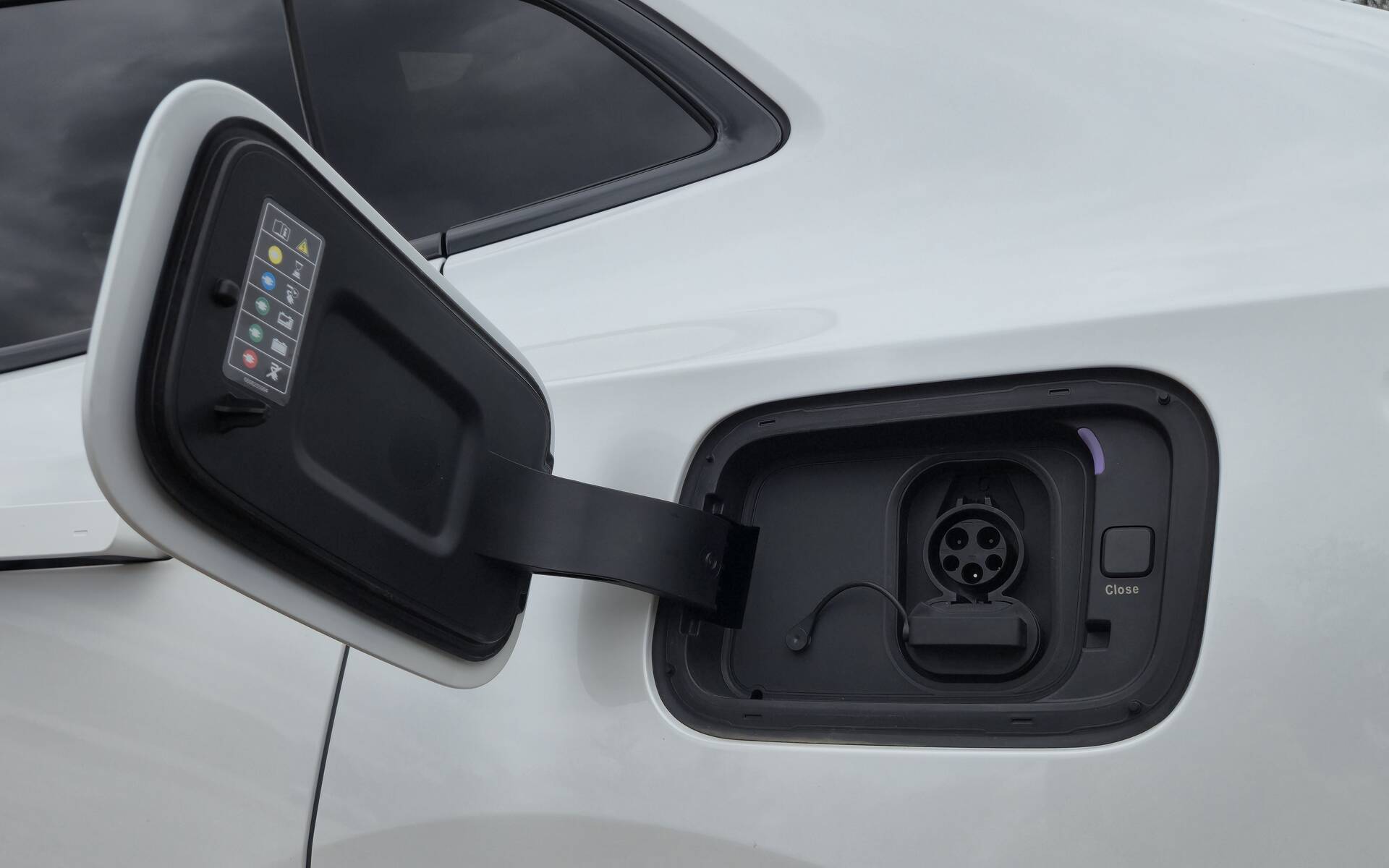
Similarly, the program wasn't about testing charging capacity. However, you should know that Polestar claims a time of 30 minutes to charge the 100kWh battery from 10-80% under optimal conditions using a DC fast charger capable of delivering at least 200 kW. Incidentally, the Polestar 4 currently retains a CCS port (an NACS adapter can be purchased through dealers), but future units will at some point come standard with an NACS port enabling direct access to Tesla Superchargers. At home or at work, a full charge using an AC power source and the 11kW onboard charger takes 11 hours.
While enjoying the comfort and support of the front seats, we definitely enjoyed driving the latest offering from the Swedish brand owned by China’s Geely, which provided the SEA (Sustainable Experience Architecture) platform that also underpins the Volvo EX30. Both vehicles are the fastest in their respective lineups, with the dual-motor Polestar 4 (536 hp, 506 lb-ft) reaching 100 km/h in as little as 3.8 seconds when activating Performance mode on the screen—fast enough to make the tires squeal and your phone slip off its charging pad. The Cadillac Lyriq-V and Optiq-V had better watch out.
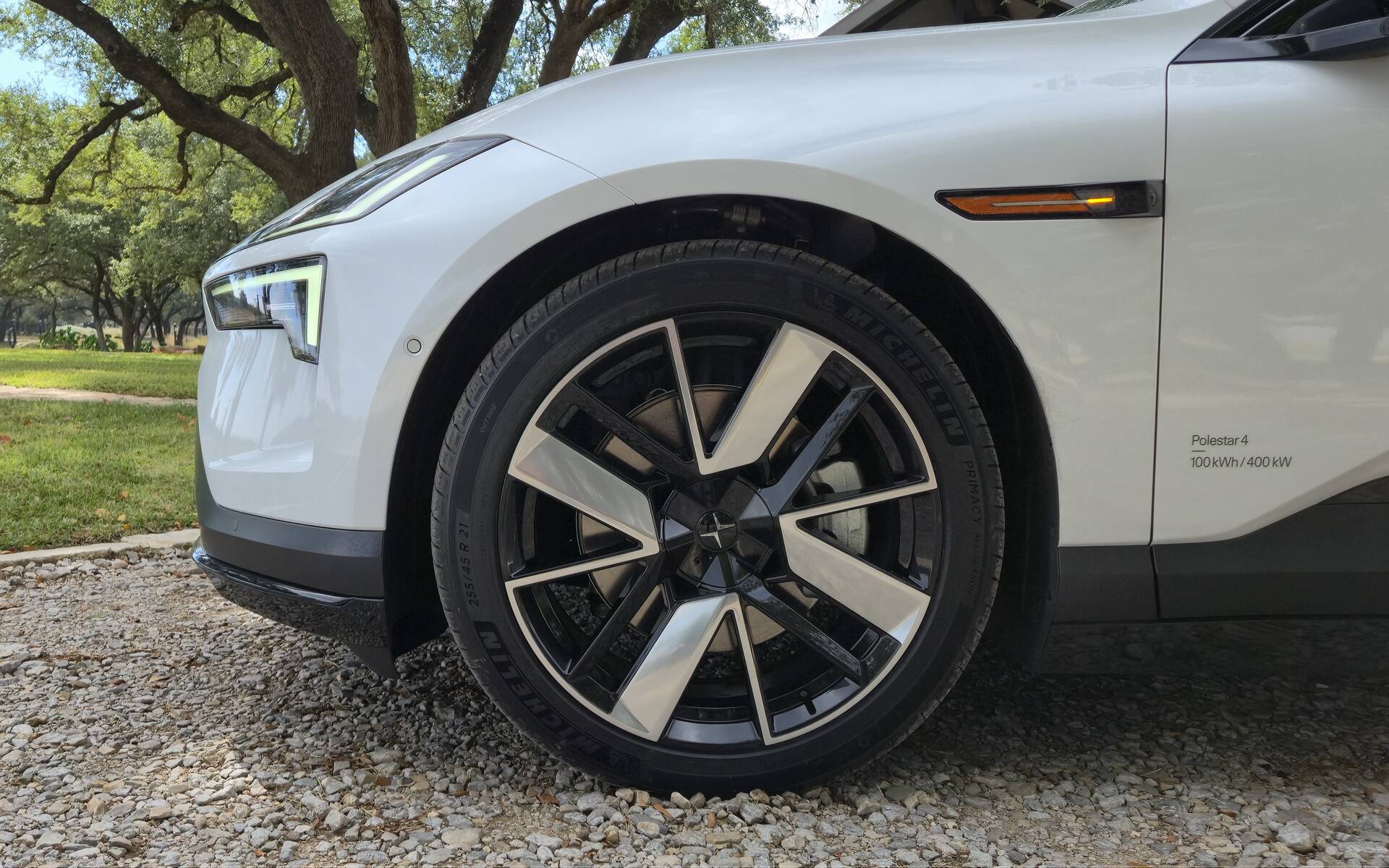
With 20-inch wheels, adaptive ZF dampers and a lowered centre of mass, Polestar’s coupe crossover demonstrates impressive poise and control on the road. The firmness of the suspension and steering can be adjusted at any time (via the touchscreen, again), which we didn't hesitate to do given the winding and bumpy sections we encountered along the way. It’s just too bad that the Polestar 4 doesn't have torque vectoring on the rear axle like the Polestar 3, which allows for even more dynamic cornering.
Pricing and Options
In Canada, the 2026 Polestar 4 can be ordered from base MSRP of $64,900 in single-motor configuration (268 hp, 253 lb-ft). Although we didn't get the opportunity to drive this one during the Austin event, we believe it can meet the demands of everyday driving for a number of people.
That said, for an additional $5,000 only, power, torque and the number of drive wheels double, acceleration and passing manoeuvres are almost twice as fast, while maximum range is amputated by less than 10%. The dual-motor Polestar 4 should clearly be a hit with Canadian customers.
The Plus Pack ($6,800) is worth considering if you can afford it, as it significantly enhances the level of technology, comfort and luxury. Finally, the Performance Pack (which includes the Plus Pack) brings the price up to $85,300. It doesn't increase power, but we recommend it if you want a more aggressive style, more responsive (Pirelli P Zero) tires and (Brembo) brakes, and a performance-tuned chassis.
Watch: 2026 Polestar 4 Hits the Road in North America
| Test drive report | |
| Test model | N/A |
|---|---|
| Trim level | Dual Motor |
| Price range | $64,900 – $74,900 |
| Price as tested | 74 900 $ |
| Warranty (basic) | 4 years/80,000 km |
| Warranty (powertrain) | 4 years/80,000 km |
| Fuel economy (city/highway/observed) | N/A |
| Options | N/A |
| Competitive models | Audi Q6 e-tron, Cadillac LYRIQ, Cadillac OPTIQ, Genesis GV60, Genesis GV70, Jeep Wagoneer S, Lexus RZ, Porsche Macan EV, Volvo EC40, Volvo EX30 |
| Strong points |
|
| Weak points |
|
| Editor's rating | |
| Fuel economy | Under 19 kWh/100 km in ideal conditions with an AWD-equipped luxury crossover? Bravo. |
| Comfort | Some competitors are more comfortable, but the Polestar 4 isn’t too shabby, either. |
| Performance | The dual-motor variant is quite explosive. |
| Infotainment | The infotainment system is smartly designed and highly configurable. Too many functions and settings go through the touchscreen. |
| Driving | Polestar’s coupe crossover demonstrates impressive poise and control on the road. |
| Overall | Polestar made a bold move and deserves praise. Reliability is still a concern. |