2026 Subaru Outback: The Wagon That Finally Embraces Its SUV Soul
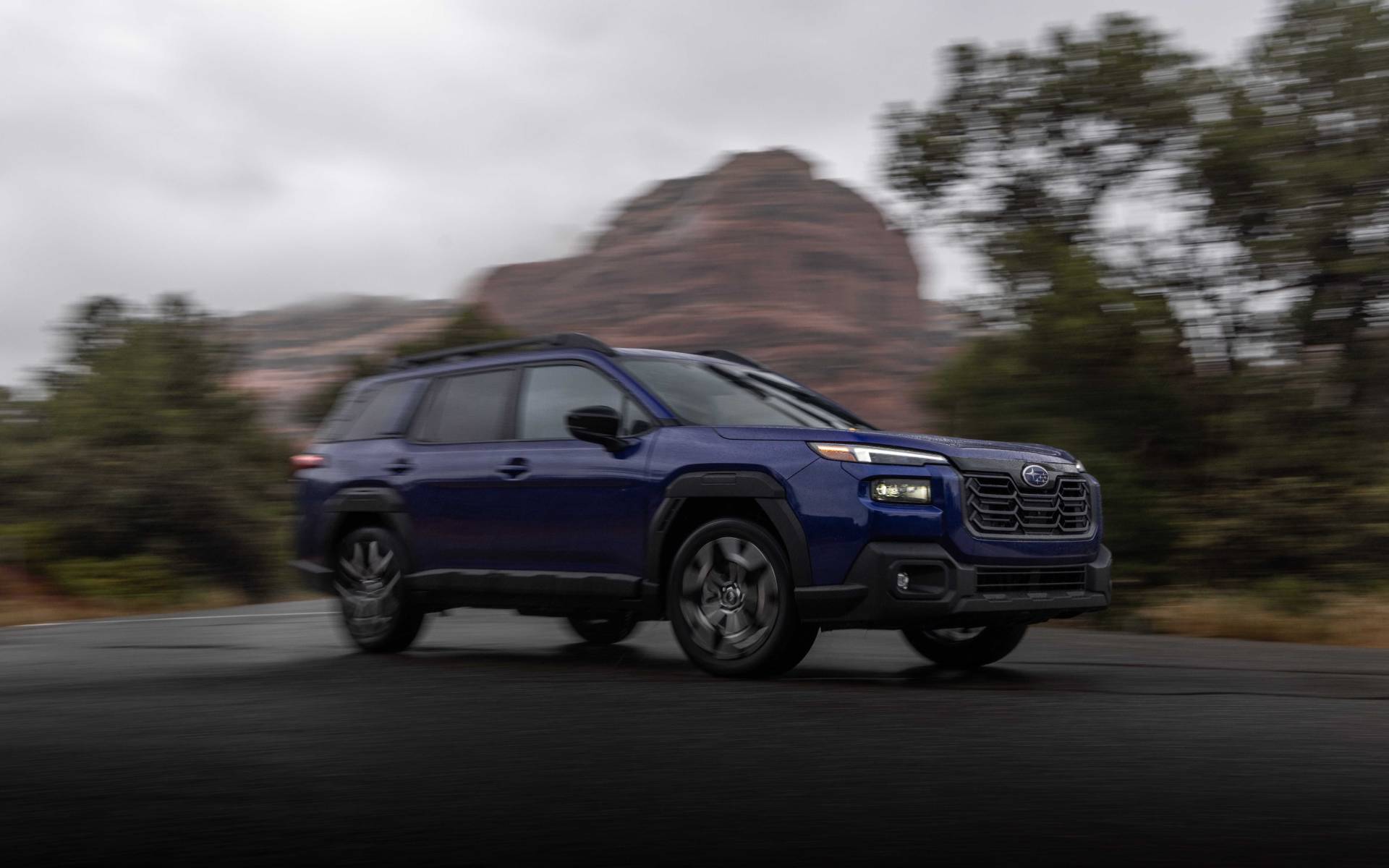
Sedona, Arizona—For thirty years, the Subaru Outback has bridged the gap between car and SUV—a formula the Japanese brand has mastered to perfection. So much so, in fact, that the model’s success pushed the Legacy sedan it was once based on into retirement earlier this year. As for the Legacy Wagon, its fate was sealed back in 2009, leaving the field wide open for the more “rugged” of Subaru’s two long-roof variants.
That was a wise choice, because sales of the high-riding wagon have never stopped climbing, driven in part by the extraordinary loyalty of Subaru customers, but also because the Outback is essentially a Swiss Army knife on wheels. With car-like handling, impressive off-road capability and generous cargo space, the Outback does almost everything well; it doesn’t need to excel in any one specific category.
- Also: 2026 Subaru Outback Simplifies Lineup But Costs Way More
- Also: 2026 Subaru Outback: Five Things to Know
A Whole New Approach
Unveiled at the New York Auto Show last spring, the seventh-generation 2026 Outback certainly caught the attention of the media on the Javits Center floor—although perhaps not for the right reasons. Let’s just say the model’s bold new appearance stands in stark contrast with the more conservative look of its predecessors.
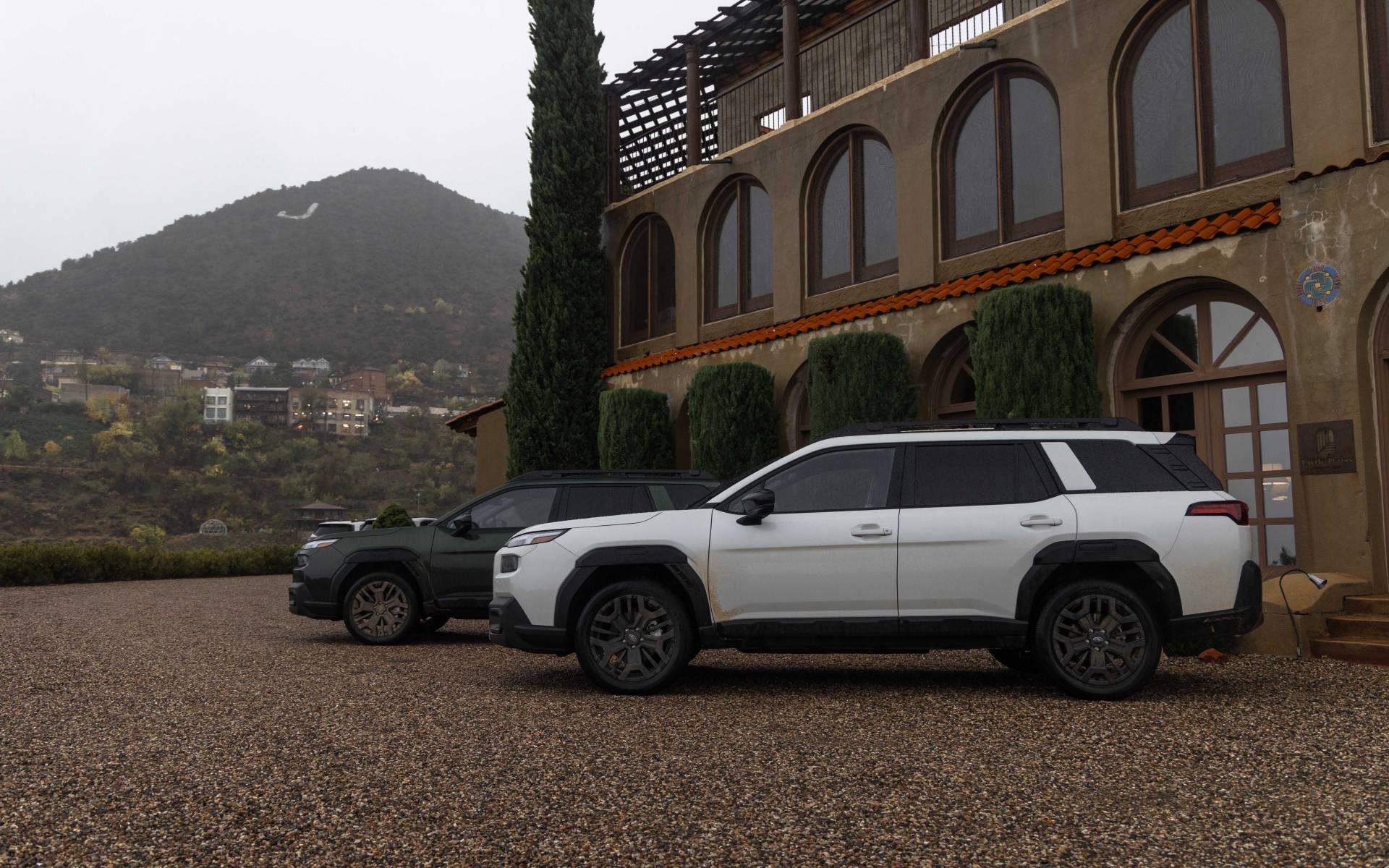
The elimination of the Legacy from the lineup seems to have given more freedom to designers, and since our neighbours to the south love everything that resembles a “truck,” the company’s design direction becomes a bit easier to understand. One thing is certain: the latest Outback is unlikely to go unnoticed in traffic, especially with the even more muscular Wilderness trim arriving in early 2026.
Subaru invited a handful of automotive journalists to Sedona, Arizona for a first encounter with one of its most important models in North America. The following is a review of a unique wagon which, after being freed from its car-derived shackles, finally and completely steps into SUV territory.
The Pictures Don’t Do Justice
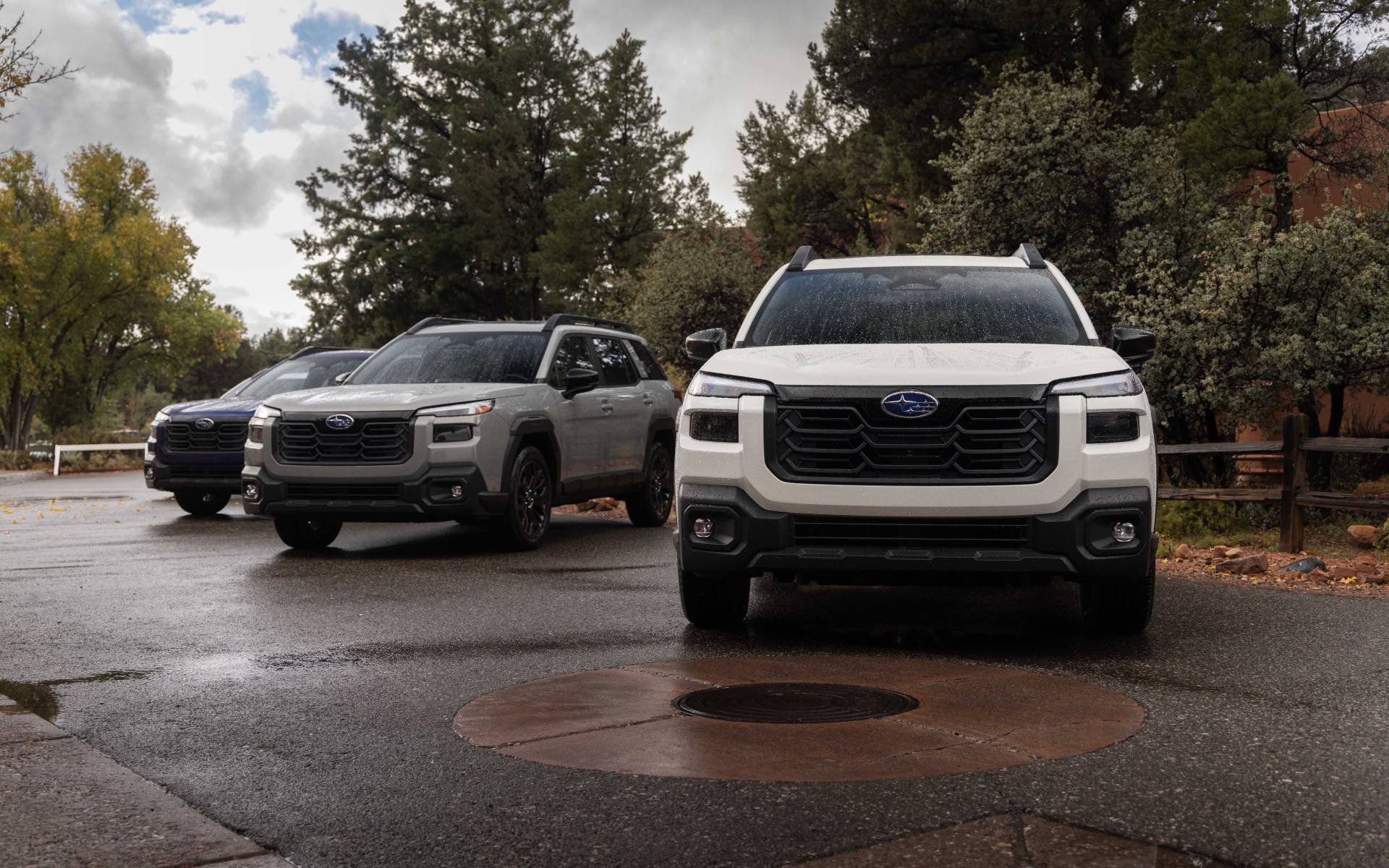
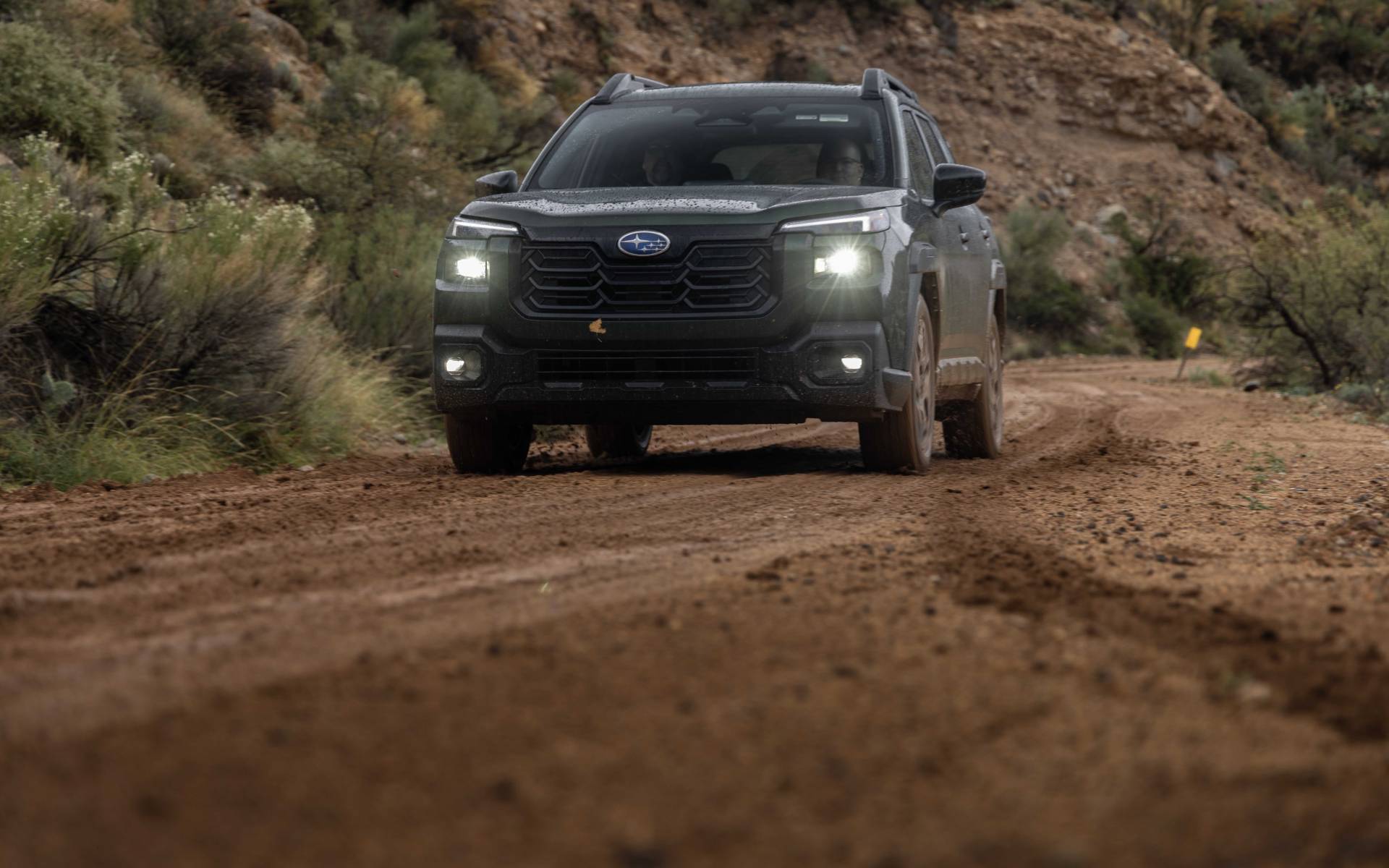
Here is a confession: when the seventh-generation Outback debuted in New York, I didn’t understand it. How could such a beloved wagon be redesigned so drastically? But sometimes perceptions shift along the way, and that’s exactly what happened upon discovering the lineup of 2026 Outbacks parked in front of the hotel near Boynton Canyon, outside Sedona.
Taking time to appreciate the details—the long flat hood, sizeable overhangs, black plastic wheel arch cladding, new roof rails, or even the much more upright front fascia—you start noticing a few familiar traits here and there. Taller than its predecessors, the new Outback approaches Forester-like proportions, though it still conveys a stronger sense of robustness. The real test will come with the launch of the Wilderness model, which pushes the adventure theme even further.
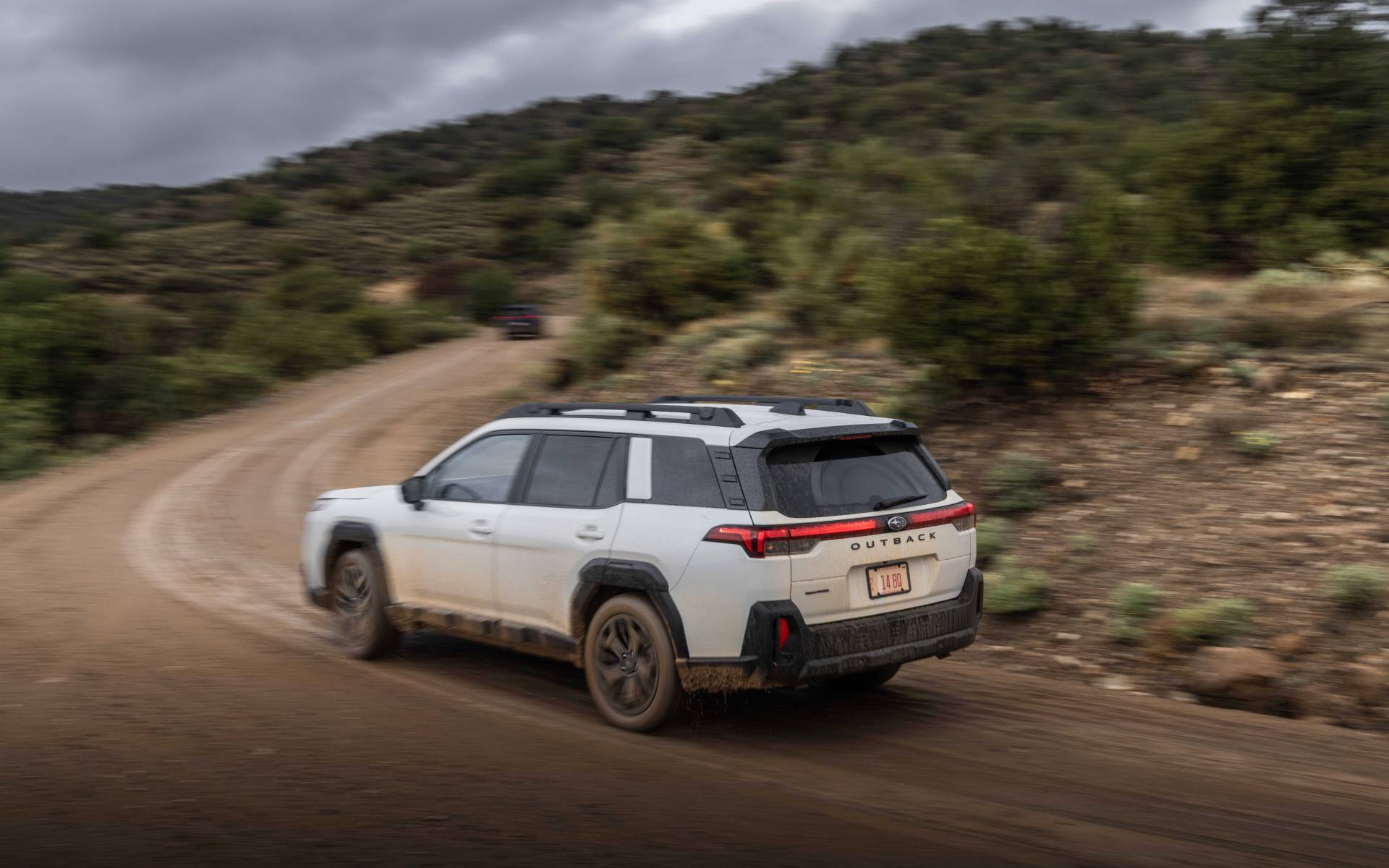
The new Outback is built on the outgoing platform, but Subaru engineers have reinforced the front section with a sturdier subframe. There’s also a greater use of high-strength steel throughout the structure. The wheelbase remains unchanged. All trim levels now come with either 18- or 19-inch alloy wheels—no more steelies. The Wilderness is one exception, riding on unique 17-inch wheels wrapped in all-terrain tires, which makes sense given its off-road aspirations.
It’s also worth noting that the 2026 lineup has been largely simplified. Convenience and Onyx models are gone. Ditto for the non-turbo Premier and Limited models. The result looks like this
- Touring: $40,895 (MSRP)
- Limited XT: $48,195 (MSRP)
- Wilderness: $49,195 (MSRP)
- Premier XT: $51,195 (MSRP)
Go For the Turbo
As you can see above, there’s a pretty big gap between the base model and the others. Subaru Canada’s explanation is simple: consumers north of the border by far prefer the turbo.
In other words, the Outback Touring is mainly there to provide an attractive entry price. The hard-working, naturally aspirated, 2.5-litre flat-four engine delivers 180 hp and 178 ft-lb of torque, but it feels like a consolation next to the available turbocharged 2.4-litre flat-four making 260 hp and 277 ft-lb of torque.
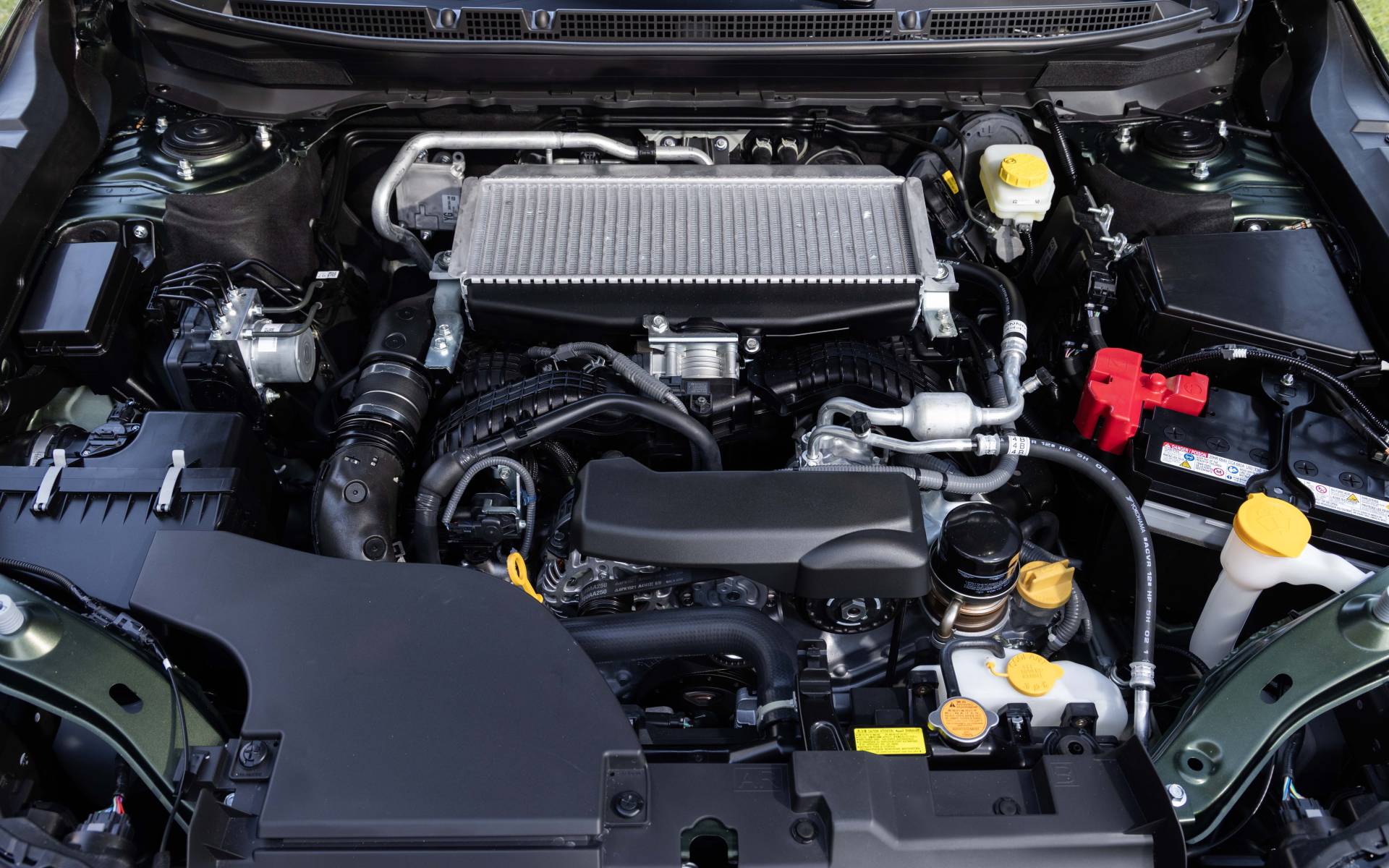
Both engines are paired with a continuously variable transmission featuring an eight-speed manual mode, and of course Subaru’s standard full-time all-wheel drive system. The naturally aspirated Touring model wasn’t available to test in Arizona, but it’s safe to assume that performance won’t be as satisfying as the turbo’s, especially since the new Outback has gained about 45 kg. That said, the difference in weight between the outgoing and incoming Premier XT models is only 16 kg.
Some may criticize Subaru for not innovating in the powertrain department, keeping the same engine duo with minimal changes. No hybrid option—mild, full, or plug-in? Subaru’s answer is clear: the Forester and Crosstrek already offer hybrid systems, while the Solterra and two upcoming EVs—Trailseeker and Uncharted—will cater to drivers more sensitive to electrification. As for the gap between the base Outback and the other models, well, Subaru benefits from having the Forester, which can be richly equipped while retaining the 2.5-litre engine.
Behind the Wheel: SUV or Raised Wagon?
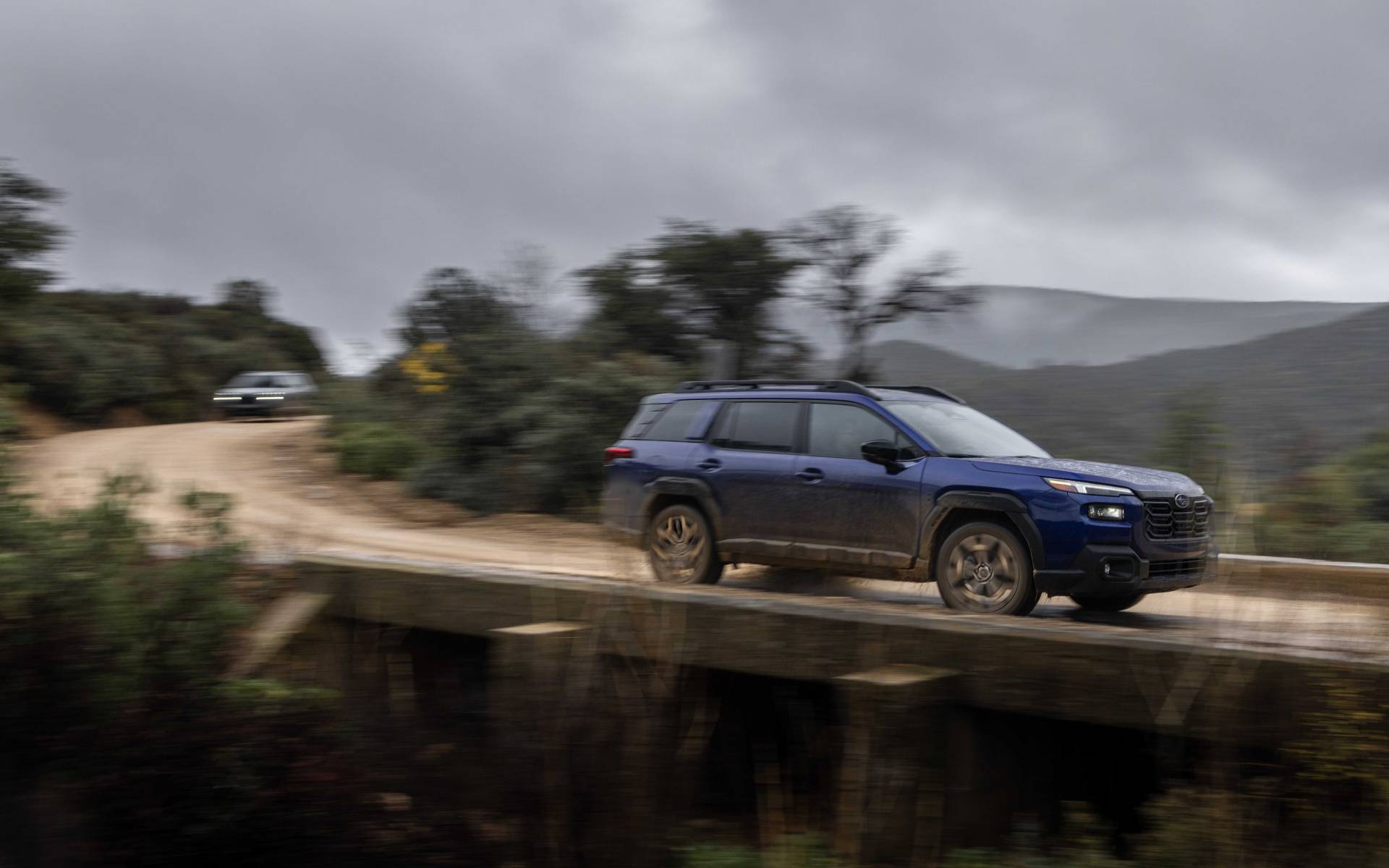
Mother Nature wasn’t kind to us during the media event, unleashing a torrential downpour in the Arizona desert. Can you imagine? By the time we woke up and got ready to hit the road, rain had been falling for hours, turning sections of pavement into pools of water and dirt roads into slippery clay. A few locals even told us they hadn’t seen this much rain in the area in years.
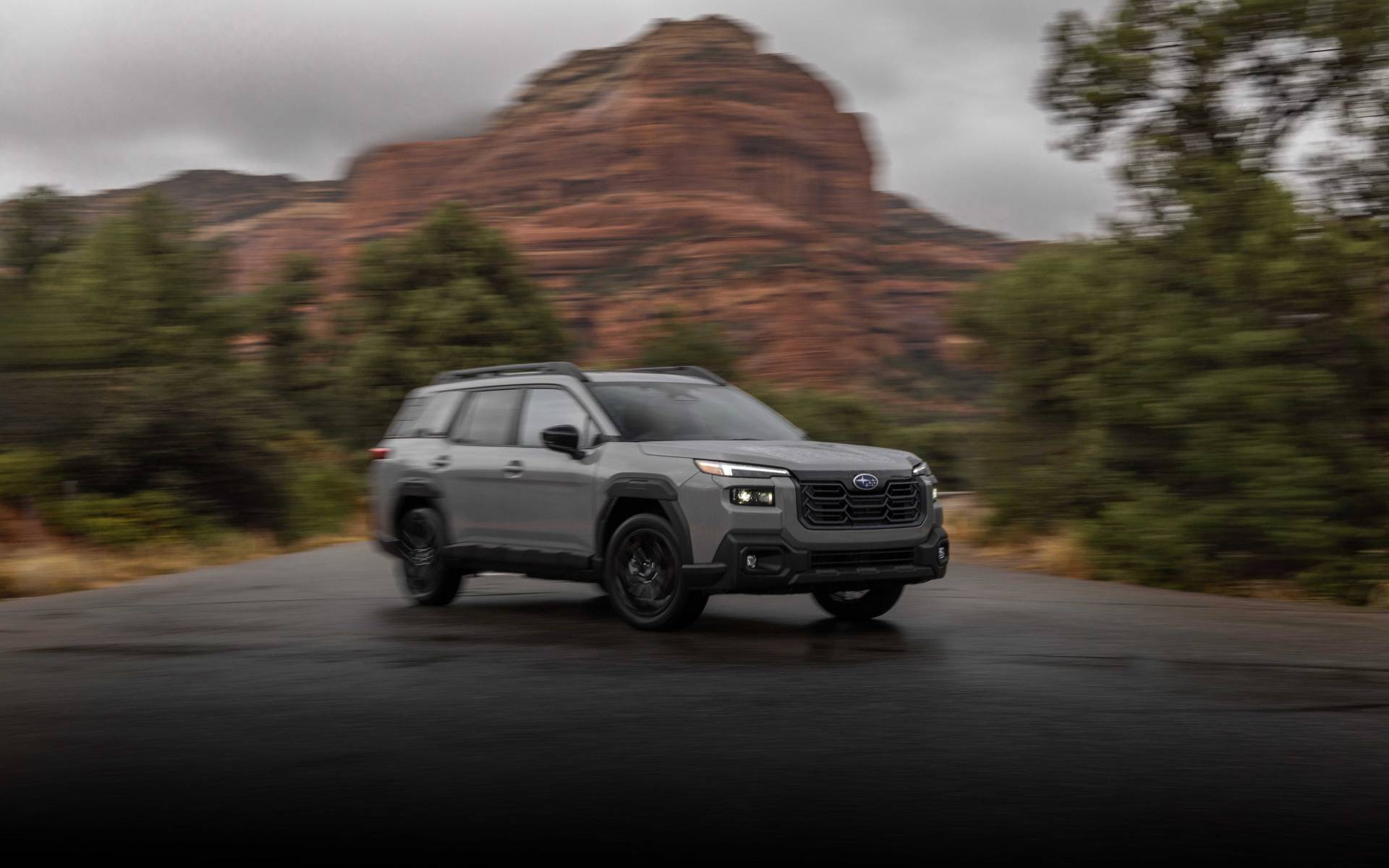
But with Subaru’s full-time all-wheel drive and generous ground clearance (unchanged from the previous model), these conditions never really worried us. What’s more, our initial concerns that the new Outback might drive like a traditional SUV quickly faded after a few turns. Yes, the higher seating position alters the driving stance somewhat, but despite its “truck-like” appearance, the new Outback still feels very much like a high-riding car.
Steering is heavy and precise, the suspension is firm but not harsh, and the rigid chassis inspires confidence—attributes long associated with the Outback. Cabin insulation is one of the areas most improved: Subaru claims a reduction of 2-3 dB depending on frequencies, and it shows. You must press harder on the throttle to really hear the flat-four. The CVT continues to do a good job, even if its simulated gear changes aren’t as crisp as those of a true sports car. On top of that, comfort remains an Outback hallmark.
A More User-Friendly Interior
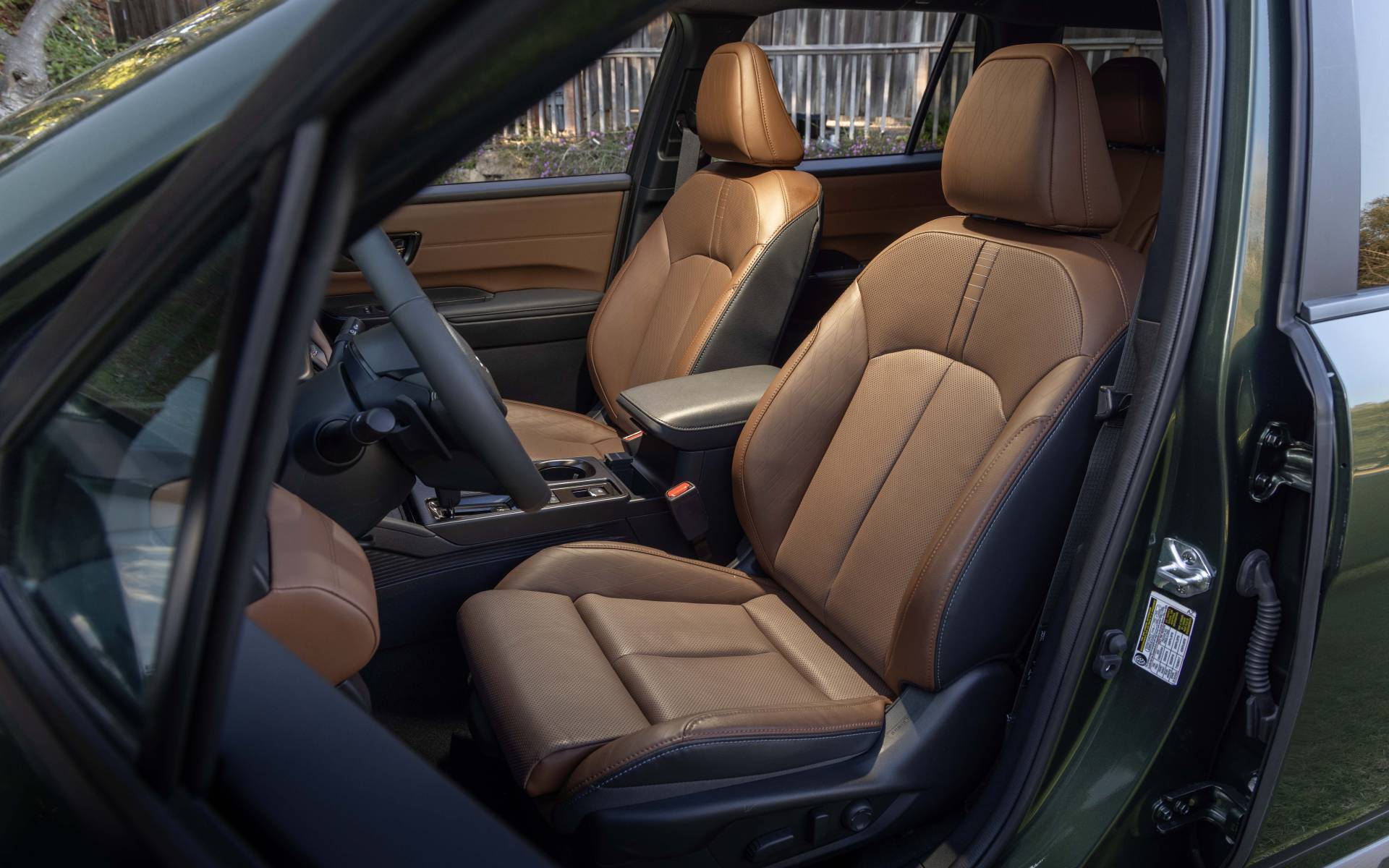
Another key concern was the dashboard, especially the infotainment system which has been criticized in the past for its slow response times. For 2026, the new 12.1-inch touchscreen is more responsive, angled toward the driver and accompanied by a small secondary tablet at its base to make navigation through the apps easier with the right hand. Subaru has also listened to complaints about the lack of physical buttons: the 2026 Outback brings back a row of traditional controls for climate, heated seats and more. The resulting layout is more intuitive.
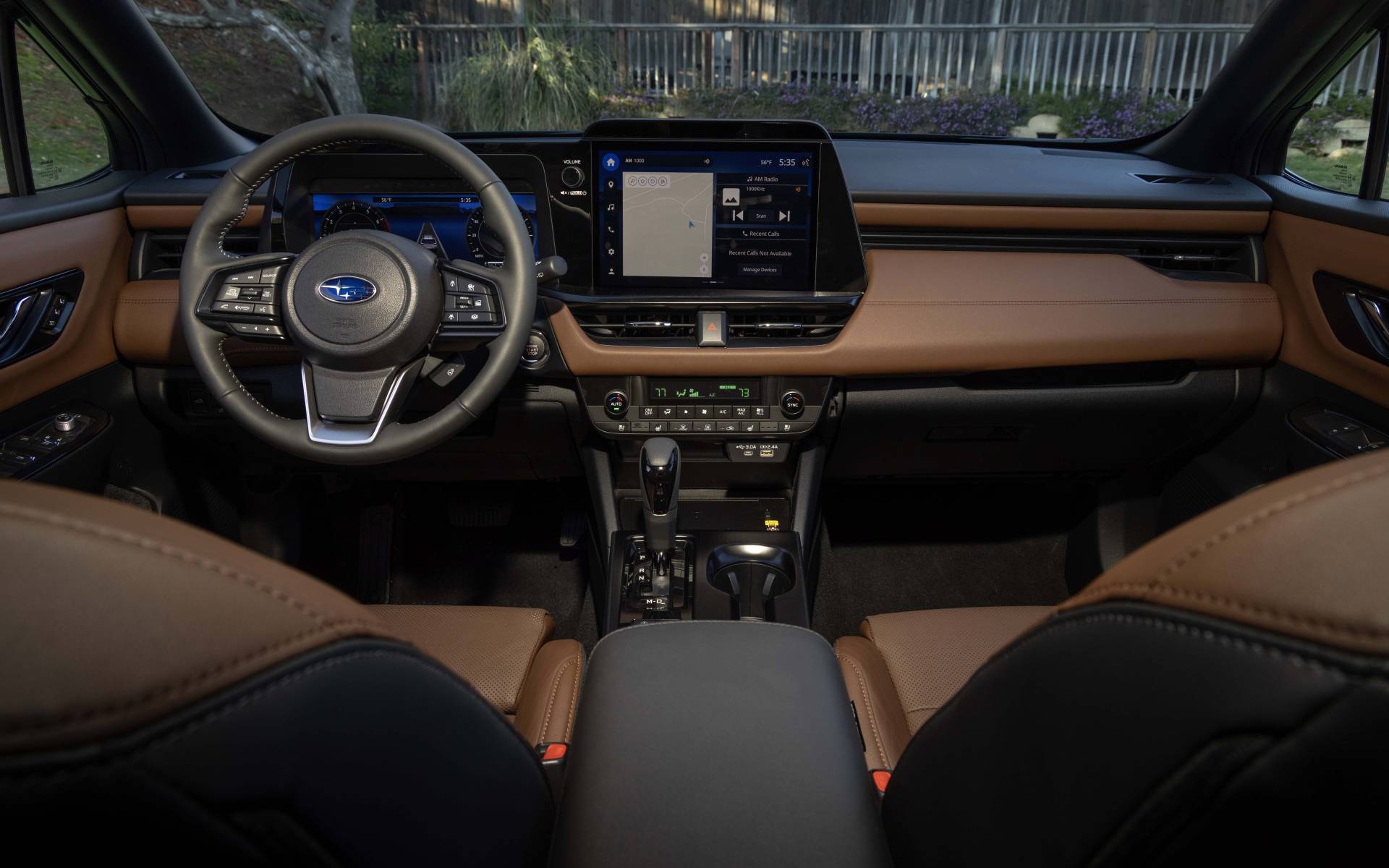
Designers have also added thoughtful touches, such as a cable guide for a second phone stored on a small passenger-side shelf, or a nifty cargo cover that’s no longer cumbersome. Using magnets, the cover can fold into a right-side cargo pocket or serve as a bumper protector or even a dog partition. As for comfort, the 2026 Outback offers more space and more supportive seats.
The Final Word
The exterior has changed, and so has the content—but is this a revolution? No, especially when looking at the specs. However, Subaru has improved the overall experience with a more modern dashboard and its most comprehensive arsenal of technologies ever. In terms of rugged performance, the Outback hasn’t aged a day. It inspires confidence even on rough terrain, its all-wheel drive system is among the best, and driving enjoyment is once again part of the equation with the turbo engine —CVT be damned.
Sure, it’ not perfect. Fuel economy is decent but not great, and the underpowered base engine will likely fade from relevance. But overall, the 2026 Outback could very well surpass its predecessor’s sales—that is, if its truck-inspired design wins over the Subaru faithful.
| Test drive report | |
| Test model | N/A |
|---|---|
| Trim level | Premier XT |
| Price range | $40,895 – $51,195 |
| Price as tested | 51 195 $ |
| Warranty (basic) | 3 years/60,000 km |
| Warranty (powertrain) | 5 years/100,000 km |
| Fuel economy (city/highway/observed) | N/A |
| Options | N/A |
| Competitive models | N/A |
| Strong points |
|
| Weak points |
|
| Editor's rating | |
| Fuel economy | Without any form of electrification, it’s difficult to get fuel consumption below 10 L/100 km with the turbo engine. |
| Comfort | Despite the firm suspension, the new Outback is comfortable. So are the seats. |
| Performance | With the 2.4L turbo engine, performance is adequate, though it would probably be better with a traditional automatic transmission. |
| Infotainment | At last, a modern infotainment system that’s easy to use on a daily basis. |
| Driving | The Subaru Outback inspires confidence and is enjoyable to drive, though not as lively as a WRX, for example. |
| Overall | The design will get people talking, but the new Outback remains an appealing wagon for active drivers. |