What is a Hemi Engine?
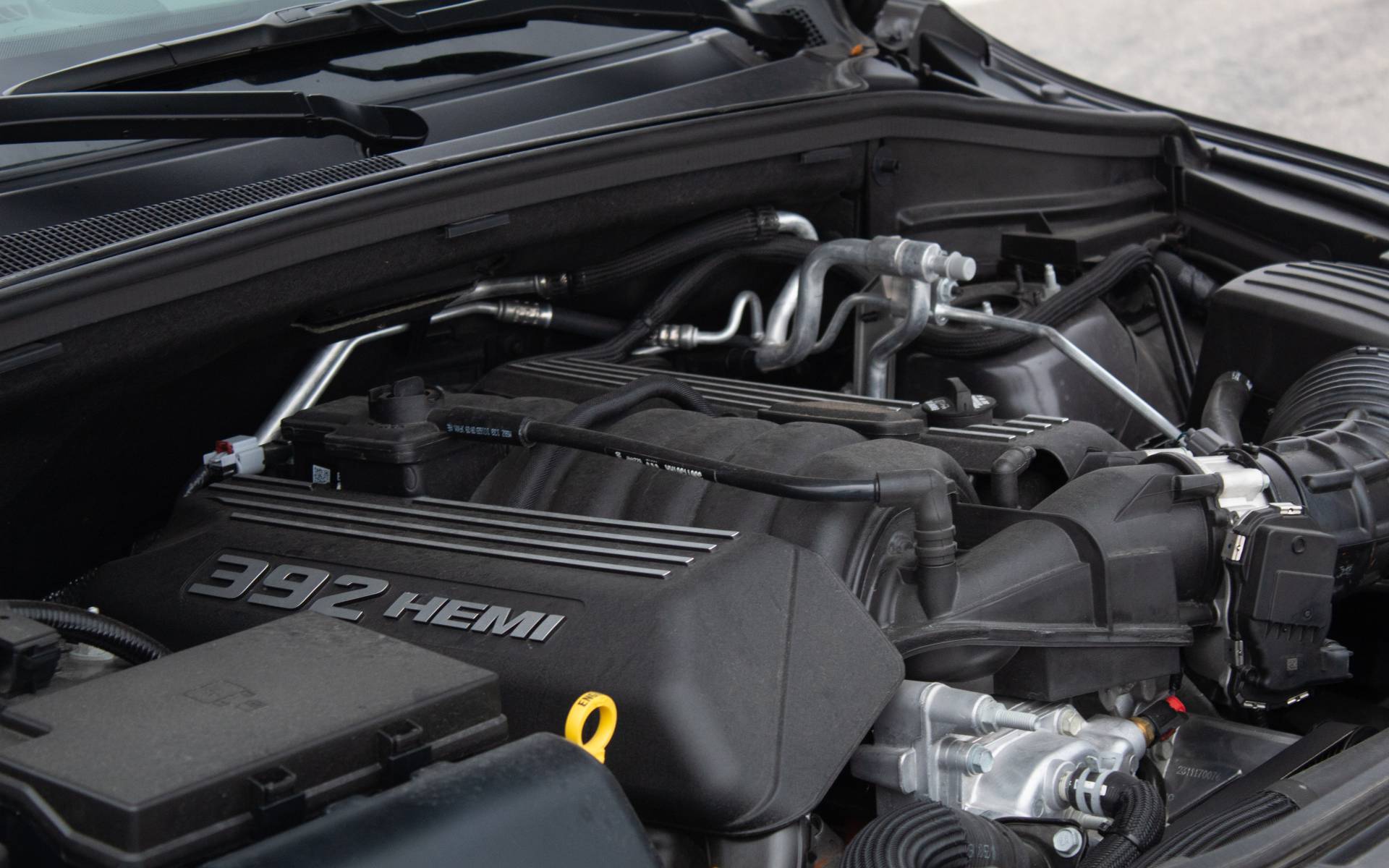
The return of the 5.7-litre HEMI V8 in the Ram 1500—and the 6.4-litre HEMI V8 in the Jeep Wrangler—for the 2026 model year has made plenty of headlines. Even though there are more modern and more powerful options like the twin-turbocharged six-cylinder Hurricane engine from Stellantis, many drivers still prefer the good old eight-cylinder engine. For one thing, the sound (and feel) just isn’t the same.
The average person, on the other hand, might say: what even is a "hemi" engine? Here’s what you need to know.
Not Chrysler’s Invention
Although often associated with the Chrysler Group, the latter had nothing to do with the invention of the hemi engine, which dates back to the early 20th century. Pipe (of Belgium), Fiat, Peugeot, Alfa Romeo, Daimler, Stutz and BMW were among the first automakers to use one. It wasn't until the early 1950s that Chrysler joined the club with a 331-cubic-inch V8 called FirePower.
The name for this type of engine comes from the hemispherical (or semi-hemispherical, to be exact) shape of the combustion chambers. Essentially, this shape allows for the use of two valves per cylinder facing each other rather than being placed almost side by side. This makes it possible to use larger-diameter valves.
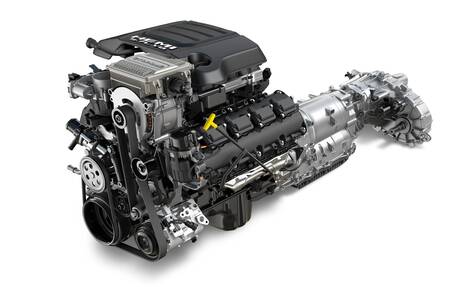
By the way, the word "HEMI" with all caps is a trademark of FCA (formerly Chrysler Group, now part of Stellantis). In lowercase, it is a general term that refers to any engine with a hemispherical combustion chamber.
Pros and Cons
This configuration improves airflow, allowing more air to enter the vehicle and the exhaust to work more efficiently. In the process, it also increases pressure more quickly in the combustion chamber and improves combustion efficiency relative to displacement, which results in better performance.
Hemi engines are quite powerful and benefit acceleration. Generally speaking, they also prove reliable and durable.
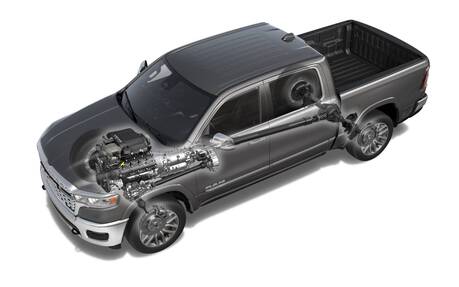
On the flip side, there are inevitable drawbacks. For one, valve adjustment requires more attention. The increased size and weight of the engine also poses a problem. Ditto for nitrogen oxides, which force engineers to take extra steps to mitigate these emissions. And let's be honest: the hemi engines currently on the market are all large-displacement V8 units that guzzle gas like Barney Gumble drinks beer (well, you get the idea).
Case Study: 2026 Ram 1500
Now, in order to help you make a more informed purchase decision, we should compare the performance of a hemi engine with that of a different engine offered in the same vehicle. Let’s take the aforementioned 2026 Ram 1500 (using the same trim level, transmission and 4x4 system):
Specs |
5.7L HEMI V8 |
Twin-turbo 3.0L I6 |
|
Power (hp) |
395 @ 5 600 rpm |
420 @ 5 200 rpm |
|
Torque (lb-ft) |
410 @ 3 950 rpm |
469 @ 3 500 rpm |
|
0-100 km/h |
6.9 s (as tested) |
6.1 s (estimated) |
|
Fuel consumption |
13.3 L/100 km |
11.7 L/100 km |
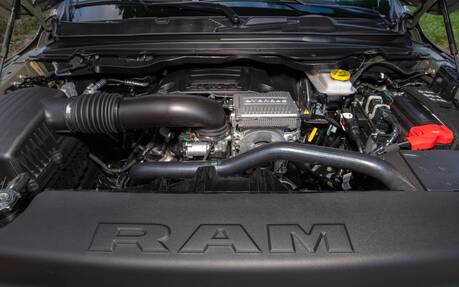
You must know that the Ram 1500's HEMI engine is paired with a mild hybrid system called eTorque, which uses a small electric motor (16 hp, 130 lb-ft) to assist the gasoline engine under certain conditions. Its average fuel consumption, according to Natural Resources Canada's official ratings, is considerably higher than that of the twin-turbo Hurricane, which has two fewer cylinders. In real-world driving, however, the figures are closer. Both engines can run on regular gasoline, by the way (premium gasoline is only required for the high-output or H.O. variant of the Hurricane).