All-New Toyota GR GT Wants to Pick a Fight With Ford Mustang GTD
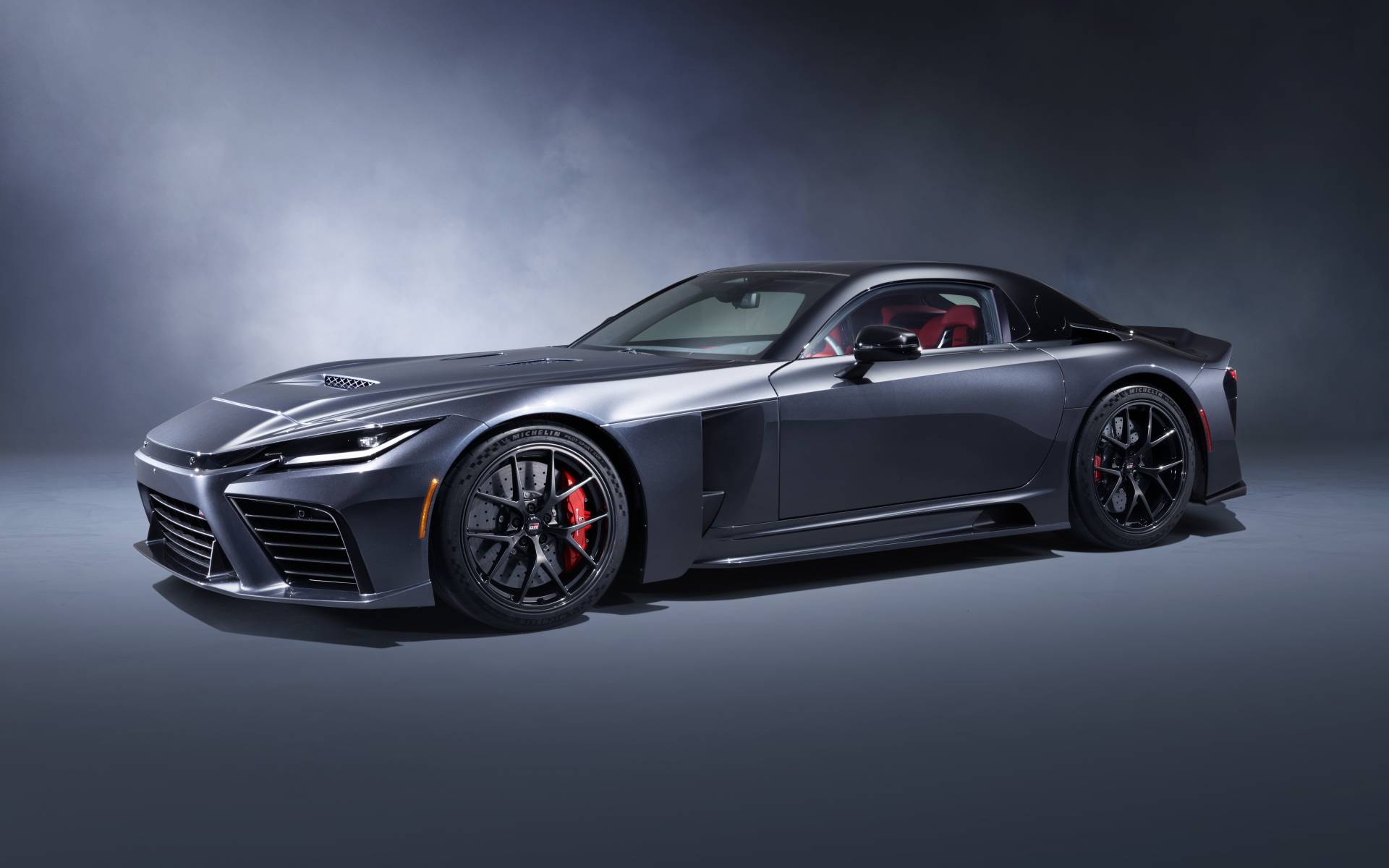
Safety, technology and emissions regulations are making the development of new sports cars increasingly difficult. This is why several manufacturers, including Toyota, are partnering with others to design or redesign models not intended for high-volume production.
The GR86 and GR Supra, co-developed with the Subaru BRZ and BMW Z4, respectively, are prime examples. Furthermore, rumour has it that the next-generation GR86 might share its platform with the future Mazda MX-5, which makes sense given the close ties between these two Japanese automakers.
- Also: New Lexus LFA Concept Revives a Legend But is Fully Electric
- Also: Toyota to Ramp Up GR Corolla Production for North America
The all-new GR GT supercar unveiled today, however, was fully developed in-house, from scratch, using an all-aluminum chassis. It will be counted on to elevate Toyota in the world of motorsport.
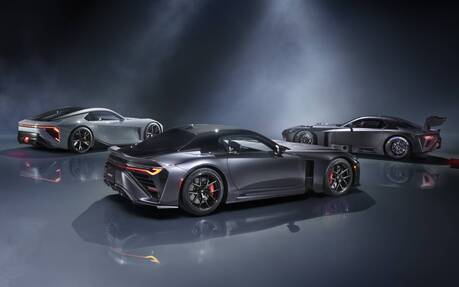
Actually, this car will be sold under Toyota Gazoo Racing (TGR), a newly created standalone brand. Will the future GR86 and other GR models follow suit and leave the Toyota portfolio? For now, it's hard to say. However, from what we’re hearing, only a select few Lexus dealers will be able to sell the GR GT, which will be limited to approximately 50 units in Canada—at least for the first year.
Just imagine how much the GR GT will cost. A good guess would be over $300,000. After all, if Acura managed to sell the last few NSX units for a quarter of a million dollars, it’s safe to assume the exclusive GR GT will be priced even higher. Incidentally, the company’s goal is to revive the spirit of the 1967 Toyota 2000GT and 2010 Lexus LFA. Both of these icons sell for around $1 million (CAD) nowadays, making them the only Japanese cars to reach a seven-figure price.
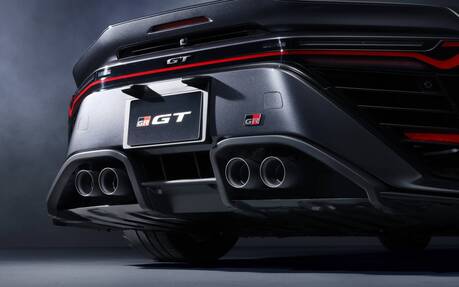
The extremely limited availability of the GR GT is likely to push its value into that select territory in the medium term, even though it features a hybrid powertrain. Not the type that’s designed to save you money at the pump, but rather a system focused purely on performance.
Japanese Power For the Win
With 641 horsepower, the new GR GT becomes the most potent production vehicle out of Asia—in a tie with the Hyundai IONIQ 5 N electric crossover (with Boost mode). It aims to achieve a level of performance never before seen in a Japanese car. How? By building on three key principles: the lowest possible centre of gravity to maximize handling and balance; the lightest possible weight combined with high structural rigidity; and advanced aerodynamic performance.

While performance figures are not yet available, TGR engineers claim it will be possible to reach a top speed in excess of 320 km/h. A twin-turbocharged 4.0-litre V8 is paired with an electric motor housed within the rear-mounted, eight-speed automatic transmission. Generating approximately 630 lb-ft (850 Nm) of torque, the GR GT also seeks to deliver exceptional sound just like the late, V10-powered Lexus LFA did. A specially developed exhaust system will ensure the roar from the V8 sends shivers down the driver’s spine.
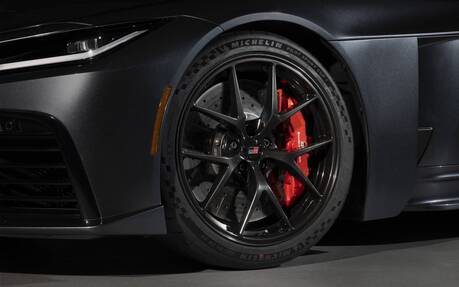
Other features designed to enhance the GR GT's performance include 20-inch Michelin Sport Cup 2 tires, all-aluminum double-wishbone suspension, carbon-ceramic brakes, dry-sump lubrication and short-bore cylinders. The car tips the scales at just 1,750 kg (with a 45/55 weight distribution), stands 4,820 mm long, and offers a meticulously designed driving position that puts the driver close to the ground and right in the middle of the action.
Wicked Looks Inside and Out
Defined by a seemingly endless nose, wide tracks and multiple air intakes, the GR GT’s design prioritizes aerodynamic efficiency above all else including a low drag coefficient combined with tremendous downforce. On that note, Toyota has not officially disclosed the drag coefficient, simply stating that numerous tests have been conducted and that the results show improved lap times.
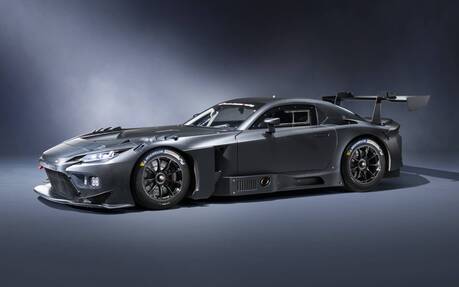
As for styling, the GR GT looks extremely wicked and intimidating, which is admittedly quite rare for a Japanese automobile. It sure won’t be confused with any supercar from Europe, although the proportions are somewhat reminiscent of the Mercedes-AMG GT’s.
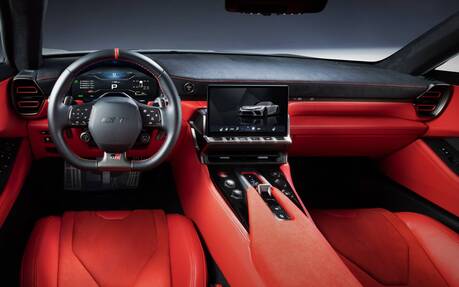
Inside, the cockpit is way more user-friendly than that of the AMG GT. The performance-focused digital instrument cluster is easy to read, while the centre touchscreen is expected to come alive with Toyota’s latest infotainment system. Elsewhere, red leather upholstery, suede-like trim on the dashboard and centre console, as well as several metallic accents combine for a Lexus-style décor with impeccable fit and finish.
On the Track
Looking to enter the world of motorsport, Toyota has also developed the GR GT3 race car, which meets full FIA GT3 specifications. Extensive simulator testing has confirmed that the car is ready for competition. Very little information has been shared so far, other than the fact that it is 35 mm shorter than the GR GT.
TGR is continuing development of the GR GT and GR GT3 with a plan to launch them around 2027. Further details are to be released as they become available.